Mouse Anti-ROS1 antibody
ROS; ros protein; c ros; c-ros; c ros1; MCF3; Oncogene ROS; OTTHUMP00000040389; Proto oncogene c ros 1 protein; Proto oncogene tyrosine protein kinase ROS; Proto oncogene tyrosine protein kinase ROS precursor; Ros1; ROS1C; Transmembrane tyrosine specific
View History [Clear]
Details
Product Name ROS1 Chinese Name 原癌基因ROS1单克隆抗体 Alias ROS; ros protein; c ros; c-ros; c ros1; MCF3; Oncogene ROS; OTTHUMP00000040389; Proto oncogene c ros 1 protein; Proto oncogene tyrosine protein kinase ROS; Proto oncogene tyrosine protein kinase ROS precursor; Ros1; ROS1C; Transmembrane tyrosine specific protein kinase; v ros avian UR2 sarcoma virus oncogene homolog 1; v ros UR2 sarcoma virus oncogene homolog 1; ROS1_HUMAN; Proto-oncogene tyrosine-protein kinase ROS; Proto-oncogene c-Ros; Proto-oncogene c-Ros-1; Receptor tyrosine kinase c-ros oncogene 1; c-Ros receptor tyrosine kinase Research Area Cell biology Signal transduction Apoptosis Kinases and Phosphatases Immunogen Species Mouse Clonality Monoclonal Clone NO. F7Y3 React Species Human Applications WB=1:500-2000,IHC-P=1:100-500,IHC-F=1:200-300,IF=1:100-500 (Paraffin sections need antigen repair)
not yet tested in other applications.
optimal dilutions/concentrations should be determined by the end user.Theoretical molecular weight 258kDa Cellular localization The cell membrane Form Liquid Concentration 1mg/ml immunogen Recombinant human ROS1. Lsotype IgG1,k Purification affinity purified by Protein G Buffer Solution 1M TBS(pH7.4) with 1% BSA, 3% Proclin300 and 50% Glycerol. Storage Shipped at 4℃. Store at -20 °C for one year. Avoid repeated freeze/thaw cycles. Attention This product as supplied is intended for research use only, not for use in human, therapeutic or diagnostic applications. PubMed PubMed Product Detail This proto-oncogene, highly-expressed in a variety of tumor cell lines, belongs to the sevenless subfamily of tyrosine kinase insulin receptor genes. The protein encoded by this gene is a type I integral membrane protein with tyrosine kinase activity. The protein may function as a growth or differentiation factor receptor. [provided by RefSeq, Jul 2008]
Function:
Orphan receptor tyrosine kinase (RTK) that plays a role in epithelial cell differentiation and regionalization of the proximal epididymal epithelium. May activate several downstream signaling pathways related to cell differentiation, proliferation, growth and survival including the PI3 kinase-mTOR signaling pathway. Mediates the phosphorylation of PTPN11, an activator of this pathway. May also phosphorylate and activate the transcription factor STAT3 to control anchorage-independent cell growth. Mediates the phosphorylation and the activation of VAV3, a guanine nucleotide exchange factor regulating cell morphology. May activate other downstream signaling proteins including AKT1, MAPK1, MAPK3, IRS1 and PLCG2.
Subunit:
Interacts with PTPN6 (via SH2 1 domain); the interaction is direct and promotes ROS1 dephosphorylation By similarity. Interacts with PTPN11; may activate the PI3 kinase-mTOR signaling pathway. Interacts with VAV3; constitutive interaction mediating VAV3 phosphorylation.
Subcellular Location:
Cell membrane; Single-pass type I membrane protein.
Tissue Specificity:
Expressed in brain. Expression is increased in primary gliomas.
Post-translational modifications:
Phosphorylated. Probably autophosphorylates. Phosphorylation at Tyr-2274 is required for the interaction with PTPN6 that mediates ROS1 dephosphorylation. Phosphorylation at Tyr-2274 stimulates the kinase activity and the activation of the ERK1 signaling cascade. Phosphorylation at Tyr-2274 and/or Tyr-2334 recruits PTPN11.
DISEASE:
A chromosomal aberration involving ROS1 is found in a glioblastoma multiforme sample. An intra-chromosomal deletion del6(q21q21) is responsible for the formation of GOPC-ROS1 chimeric protein which is localized to the Golgi and has a constitutive receptor tyrosine kinase activity. A SLC34A2-ROS1 chimeric protein produced in non-small cell lung cancer cells also retains a constitutive kinase activity. A third type of chimeric protein CD74-ROS1 was also identified in those cells.
Similarity:
Belongs to the protein kinase superfamily. Tyr protein kinase family. Insulin receptor subfamily.
Contains 9 fibronectin type-III domains.
Contains 1 protein kinase domain.
SWISS:
P08922
Gene ID:
6098
Database links:Entrez Gene: 6098 Human
Omim: 165020 Human
SwissProt: P08922 Human
Unigene: 1041 Human
Product Picture 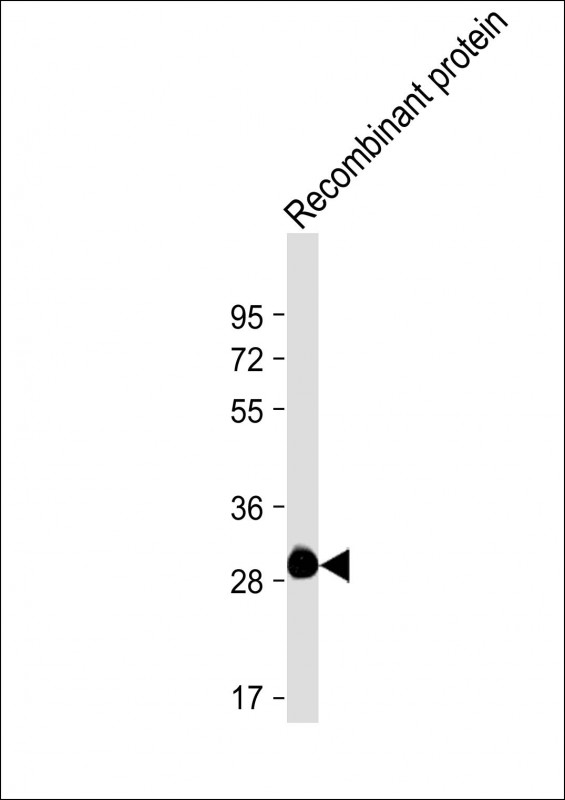 Sample:
Lane 1: Recombinant ROS1 protein
Primary: Anti-ROS1 (SLM-51686M) at 1/4000 dilution
Secondary: IRDye800CW Goat Anti-Mouse IgG at 1/20000 dilution
Predicted band size: 258 kD
Observed band size: 30 kD
Cartpieces
Totalgoods,subtotals:¥Checkout
Partial purchase records(bought amounts latest0)
No one bought this product
User Comment(Total0User Comment Num)
- No comment


 +86 571 56623320
 SUNLONG BIOTECH

