Mouse Anti-ADCYAP1 antibody
Adenylate Cyclase Activating Polypeptide 1 (Pituitary); Prepro-PACAP; PACAP; Pituitary Adenylate Cyclase Activating Polypeptide; PRP-48; PACAP27; PACAP38; ADCYAP1; PACA_HUMAN;
View History [Clear]
Details
Product Name ADCYAP1 Chinese Name ADCYAP1单克隆抗体 Alias Adenylate Cyclase Activating Polypeptide 1 (Pituitary); Prepro-PACAP; PACAP; Pituitary Adenylate Cyclase Activating Polypeptide; PRP-48; PACAP27; PACAP38; ADCYAP1; PACA_HUMAN; Research Area Cell biology Neurobiology Apoptosis Immunogen Species Mouse Clonality Monoclonal Clone NO. G8R3 React Species Human Applications WB=1:500-2000
not yet tested in other applications.
optimal dilutions/concentrations should be determined by the end user.Theoretical molecular weight 19kDa Cellular localization Extracellular matrix Secretory protein Form Liquid Concentration 1mg/ml immunogen Recombinant human ADCYAP1 Lsotype IgG1,κ Purification affinity purified by Protein G Buffer Solution 1M TBS(pH7.4) with 1% BSA, 3% Proclin300 and 50% Glycerol. Storage Shipped at 4℃. Store at -20 °C for one year. Avoid repeated freeze/thaw cycles. Attention This product as supplied is intended for research use only, not for use in human, therapeutic or diagnostic applications. PubMed PubMed Product Detail This gene encodes a secreted proprotein that is further processed into multiple mature peptides. These peptides stimulate adenylate cyclase and increase cyclic adenosine monophosphate (cAMP) levels, resulting in the transcriptional activation of target genes. The products of this gene are key mediators of neuroendocrine stress responses. Alternative splicing results in multiple transcript variants. [provided by RefSeq, Feb 2013]
Function:
Binding to its receptor activates G proteins and stimulates adenylate cyclase in pituitary cells. Promotes neuron projection development through the RAPGEF2/Rap1/B-Raf/ERK pathway. In chromaffin cells, induces long-lasting increase of intracellular calcium concentrations and neuroendocrine secretion. Involved in the control of glucose homeostasis, induces insulin secretion by pancreatic beta cells.
Subunit:
Interacts with ADCYAP1R1 (via N-terminal extracellular domain).
Subcellular Location:
Extracellular region or secreted
Similarity:
Belongs to the glucagon family.
SWISS:
P18509
Gene ID:
116
Database links:Entrez Gene: 116 Human
SwissProt: P18509 Human
Product Picture 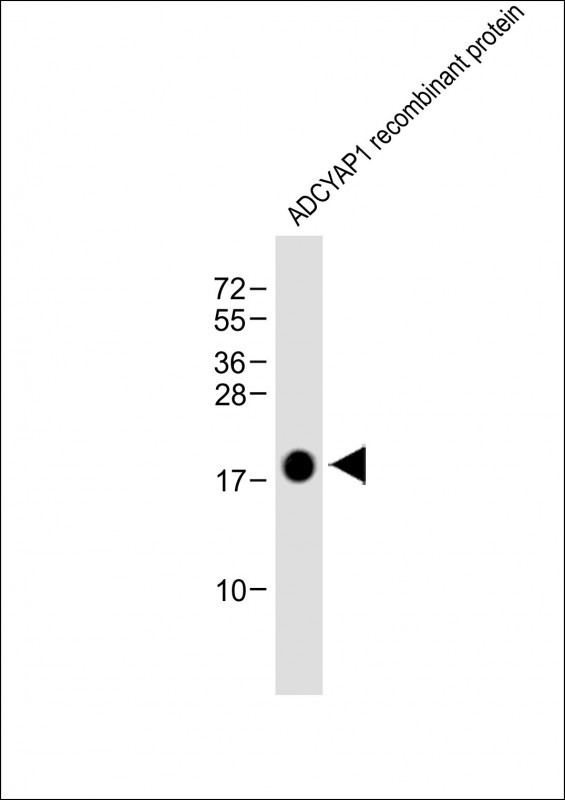 Sample:
Lane 1: ADCYAP1 recombinant protein
Primary: Anti-ADCYAP1 (SLM-51713M) at 1/8000 dilution
Secondary: IRDye800CW Goat Anti-Mouse IgG at 1/20000 dilution
Predicted band size: 19 kD
Observed band size: 19 kD
Cartpieces
Totalgoods,subtotals:¥Checkout
Partial purchase records(bought amounts latest0)
No one bought this product
User Comment(Total0User Comment Num)
- No comment


 +86 571 56623320
 SUNLONG BIOTECH

