Mouse Anti-FGF4 antibody
Fibroblast Growth Factor4; Heparin Secretory Transforming Protein 1; Kaposi Sarcoma Oncogene; Fgf-4; Fgfk; Hstf-1; kFGF; KS3;MGC129266; MGC129267; HBGF-4; HST; HST-1; HSTF1; K-FGF; KS3; FGF4_HUMAN.
View History [Clear]
Details
Product Name FGF4 Chinese Name FGF4单克隆抗体 Alias Fibroblast Growth Factor4; Heparin Secretory Transforming Protein 1; Kaposi Sarcoma Oncogene; Fgf-4; Fgfk; Hstf-1; kFGF; KS3;MGC129266; MGC129267; HBGF-4; HST; HST-1; HSTF1; K-FGF; KS3; FGF4_HUMAN. Research Area Tumour Cardiovascular Signal transduction Growth factors and hormones Immunogen Species Mouse Clonality Monoclonal Clone NO. M8F12 React Species Human(predicted:Hamster) Applications WB=1:500-2000
not yet tested in other applications.
optimal dilutions/concentrations should be determined by the end user.Theoretical molecular weight 19kDa Cellular localization Secretory protein Form Liquid Concentration 1mg/ml immunogen KLH conjugated synthetic peptide derived from human FGF4: 41-200/206 Lsotype IgG1,κ Purification affinity purified by Protein G Buffer Solution 1M TBS(pH7.4) with 1% BSA, 3% Proclin300 and 50% Glycerol. Storage Shipped at 4℃. Store at -20 °C for one year. Avoid repeated freeze/thaw cycles. Attention This product as supplied is intended for research use only, not for use in human, therapeutic or diagnostic applications. PubMed PubMed Product Detail The protein encoded by this gene is a member of the fibroblast growth factor (FGF) family. FGF family members possess broad mitogenic and cell survival activities and are involved in a variety of biological processes including embryonic development, cell growth, morphogenesis, tissue repair, tumor growth and invasion. This gene was identified by its oncogenic transforming activity. This gene and FGF3, another oncogenic growth factor, are located closely on chromosome 11. Co-amplification of both genes was found in various kinds of human tumors. Studies on the mouse homolog suggested a function in bone morphogenesis and limb development through the sonic hedgehog (SHH) signaling pathway. [provided by RefSeq].
Function:
Can transform NIH 3T3 cells from a human stomach tumor (hst) and from karposi's sarcoma (KS3). It has a mitogenic activity.
Subunit:
Interacts with FGFR1, FGFR2, FGFR3 and FGFR4. Affinity between fibroblast growth factors (FGFs) and their receptors is increased by heparan sulfate glycosaminoglycans that function as coreceptors.
Subcellular Location:
Secreted.
Similarity:
Belongs to the heparin-binding growth factors family.
SWISS:
P08620
Gene ID:
2249
Database links:Entrez Gene: 2249 Human
Entrez Gene: 14175 Mouse
SwissProt: P08620 Human
SwissProt: P11403 Mouse
Product Picture 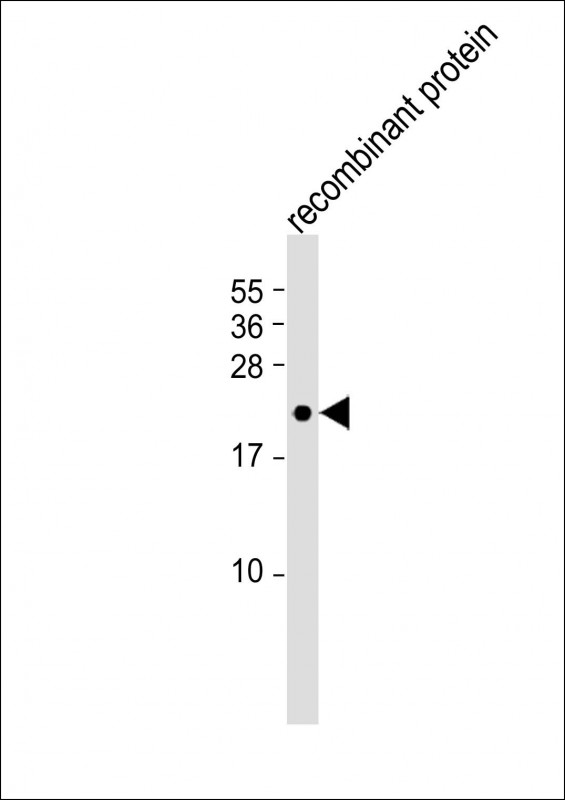 Sample:
Lane 1: FGF4 recombinant protein
Primary: Anti-FGF4 (SLM-51757M) at 1/4000 dilution
Secondary: IRDye800CW Goat Anti-Mouse IgG at 1/20000 dilution
Predicted band size: 19 kD
Observed band size: 22 kD
Cartpieces
Totalgoods,subtotals:¥Checkout
Partial purchase records(bought amounts latest0)
No one bought this product
User Comment(Total0User Comment Num)
- No comment


 +86 571 56623320
 SUNLONG BIOTECH

