The same Pa...
-

-
Heidenhain’s Iron-Hematoxylin Stain Kit
Shop price:$183.0
-
-
Calcein/PI Cell Viability and Cytotoxicity Assay K...
Shop price:$0.0
-
-
Amyloid?Stain Kit(Thioflavin T Method)
Shop price:$165.0
-
-
CTC Quick Stain Kit(Flow Cytometry)
Shop price:$1280.0
-
-
CTC Quick Stain Kit(Fluorescence Microscope)
Shop price:$1280.0

Details
Acid phosphatase (ACP) is widely distributed in various tissues and mainly exists in the lysosomes of cells, making it a common marker enzyme for lysosomes. The acid phosphatase in various animals varies, and the suitable pH for acid phosphatase is 4.5-5.5. Tartrate resistant acid phosphatase (TRAP) is commonly found in normal human alveolar macrophages, spleen of leukemia patients, and cultured induced osteoclasts. Alkaline phosphatase (ALP or AKP) is a type of phosphatase widely distributed in mammalian tissues, mainly present in areas where substance exchange is active (cell membranes), such as the brush edges of intestinal epithelium and renal proximal tubules, the cilia of epididymal epithelium, the bile duct membrane of the liver, and the endothelium of arterioles and capillary arteries. It is also found in lysosomes of intestinal epithelium, neutrophils, and smooth muscle cell membranes. Its activity requires an optimal pH of 9.2~9.8. In addition, ALP is significantly expressed in primary cells or mesenchymal stem cells cultured in osteogenic induction medium for 7-14 days.
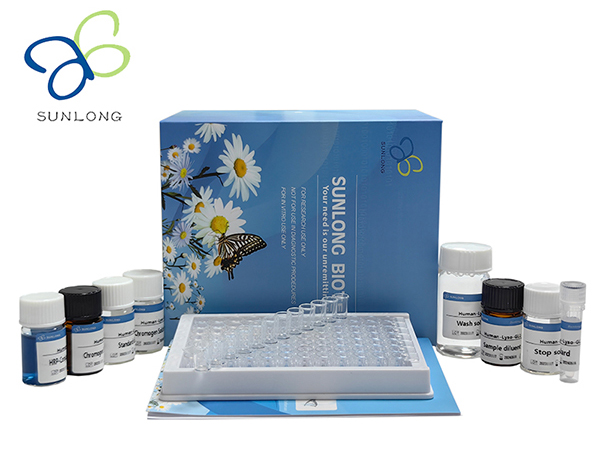
This kit is a combination staining kit for TRAP and ALP, providing both TRAP staining solution and ALP staining solution. By sequentially staining, TRAP and ALP active sites can be displayed on the same slice, with TRAP active sites in purple red and ALP active sites in blue to blue purple. It can be used to detect osteoclasts and osteogenic induction status. This staining kit is suitable for staining bone tissue frozen sections, cultured cells, and cell smears. Due to the easy loss of ALP enzyme activity during dehydration embedding, it is not suitable for staining paraffin sections.
Cartpieces
Totalgoods,subtotals:¥Checkout
Partial purchase records(bought amounts latest0)
User Comment(Total0User Comment Num)
- No comment


 +86 571 56623320
 SUNLONG BIOTECH

