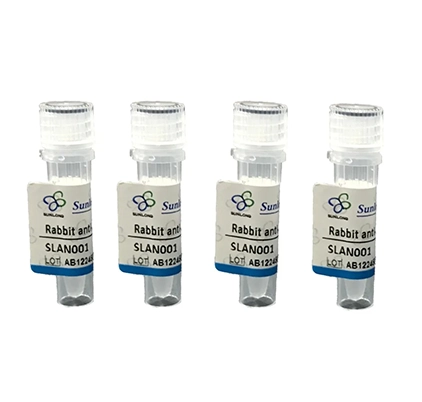
Rabbit Anti-DHODH antibody
DHOdehase; Dhodh; Dihydroorotate dehydrogenase (quinone); Dihydroorotate dehydrogenase; Dihydroorotate dehydrogenase mitochondrial; Dihydroorotate oxidase; Human complement of yeast URA1; mitochondrial; PYRD_HUMAN.
View History [Clear]
Details
Product Name DHODH Chinese Name 二氢乳清酸脱氢酶抗体 Alias DHOdehase; Dhodh; Dihydroorotate dehydrogenase (quinone); Dihydroorotate dehydrogenase; Dihydroorotate dehydrogenase mitochondrial; Dihydroorotate oxidase; Human complement of yeast URA1; mitochondrial; PYRD_HUMAN. Research Area Cell biology Signal transduction Cytoskeleton Immunogen Species Rabbit Clonality Polyclonal React Species (predicted: Human, Mouse, Rat, Dog, Cow, Horse, Rabbit, Sheep, ) Applications IHC-P=1:100-500,IHC-F=1:100-500,ICC/IF=1:100-500,IF=1:100-500,ELISA=1:5000-10000 (Paraffin sections need antigen repair)
not yet tested in other applications.
optimal dilutions/concentrations should be determined by the end user.Theoretical molecular weight 43kDa Cellular localization cytoplasmic Form Liquid Concentration 1mg/ml immunogen KLH conjugated synthetic peptide derived from human DHODH: 251-350/395 Lsotype IgG Purification affinity purified by Protein A Buffer Solution 1M TBS(pH7.4) with 1% BSA, 3% Proclin300 and 50% Glycerol. Storage Shipped at 4℃. Store at -20 °C for one year. Avoid repeated freeze/thaw cycles. Attention This product as supplied is intended for research use only, not for use in human, therapeutic or diagnostic applications. PubMed PubMed Product Detail The protein encoded by this gene catalyzes the fourth enzymatic step, the ubiquinone-mediated oxidation of dihydroorotate to orotate, in de novo pyrimidine biosynthesis. This protein is a mitochondrial protein located on the outer surface of the inner mitochondrial membrane. [provided by RefSeq, Jul 2008]
Function:
Catalyzes the conversion of dihydroorotate to orotate with quinone as electron acceptor.
Subcellular Location:
Mitochondrion inner membrane.
Post-translational modifications:
The uncleaved transit peptide is required for mitochondrial targeting and proper membrane integration.
DISEASE:
Defects in DHODH are the cause of postaxial acrofacial dysostosis (POADS) [MIM:263750]; also known as Miller syndrome. POADS is characterized by severe micrognathia, cleft lip and/or palate, hypoplasia or aplasia of the posterior elements of the limbs, coloboma of the eyelids and supernumerary nipples. POADS is a very rare disorder: only 2 multiplex families, each consisting of 2 affected siblings born to unaffected, nonconsanguineous parents, have been described among a total of around 30 reported cases.
Similarity:
Belongs to the dihydroorotate dehydrogenase family. Type 2 subfamily.
SWISS:
Q02127
Gene ID:
1723
Database links:Entrez Gene: 1723 Human
Entrez Gene: 56749 Mouse
Entrez Gene: 494065 Zebrafish
Omim: 126064 Human
SwissProt: Q02127 Human
SwissProt: O35435 Mouse
Unigene: 654427 Human
Unigene: 23894 Mouse
Unigene: 81502 Rat
Cartpieces
Totalgoods,subtotals:¥Checkout
Partial purchase records(bought amounts latest0)
No one bought this product
User Comment(Total0User Comment Num)
- No comment


 +86 571 56623320
 SUNLONG BIOTECH

