Rabbit Anti-G21 protein/NPR2L antibody
G21 protein; Gene 21 protein; Homologous to yeast nitrogen permease (candidate tumor suppressor); Homologous to yeast nitrogen permease; NPR 2L; NPR L2; NPR like 2; NPR2 like; NPRL 2; NPRL2; Tumor suppressor candidate 4; TUSC 4; TUSC 4 protein; TUSC4; TUS
View History [Clear]
Details
Product Name G21 protein/NPR2L Chinese Name G21蛋白质抗体 Alias G21 protein; Gene 21 protein; Homologous to yeast nitrogen permease (candidate tumor suppressor); Homologous to yeast nitrogen permease; NPR 2L; NPR L2; NPR like 2; NPR2 like; NPRL 2; NPRL2; Tumor suppressor candidate 4; TUSC 4; TUSC 4 protein; TUSC4; TUSC4 protein; NPRL2_HUMAN. Research Area Tumour Cell biology Chromatin and nuclear signals Signal transduction Epigenetics Immunogen Species Rabbit Clonality Polyclonal React Species Human, Rat, (predicted: Mouse, Pig, Cow, Horse, Rabbit, ) Applications WB=1:500-2000,IHC-P=1:100-500,IHC-F=1:100-500,IF=1:100-500 (Paraffin sections need antigen repair)
not yet tested in other applications.
optimal dilutions/concentrations should be determined by the end user.Theoretical molecular weight 44kDa Cellular localization cytoplasmic The cell membrane Form Liquid Concentration 1mg/ml immunogen KLH conjugated synthetic peptide derived from human NPR2L: 221-320/380 Lsotype IgG Purification affinity purified by Protein A Buffer Solution 1M TBS(pH7.4) with 1% BSA, 3% Proclin300 and 50% Glycerol. Storage Shipped at 4℃. Store at -20 °C for one year. Avoid repeated freeze/thaw cycles. Attention This product as supplied is intended for research use only, not for use in human, therapeutic or diagnostic applications. PubMed PubMed Product Detail NPR2L is homologous to yeast nitrogen permease and is a candidate tumor suppressor, being a negative regulator of cell cycle. Most abundant in skeletal muscle, followed by brain, liver, and pancreas, with lower amounts in lung, kidney, placenta, and heart. Expressed in most lung cancer cell lines tested. There are two isoforms, produced by alternative splicing.
Function:
Suppresses Src-dependent tyrosine phosphorylation and activation of PDPK1 and its downstream signaling. Down-regulates PDPK1 kinase activity by interfering with tyrosine phosphorylation at the Tyr-9 Tyr-373 and Tyr-376 residues. May act as a tumor suppressor. Suppresses cell growth and enhanced sensitivity to various anticancer drugs.
Subunit:
Forms a heterodimer with NPRL3. Interacts with PDPK1.
Tissue Specificity:
Most abundant in skeletal muscle, followed by brain, liver and pancreas, with lower amounts in lung, kidney, placenta and heart. Expressed in most lung cancer cell lines tested.
Similarity:
Belongs to the NPR2 family.
SWISS:
Q8WTW4
Gene ID:
10641
Database links:
Entrez Gene: 10641 Human
Entrez Gene: 56032 Mouse
Omim: 607072 Human
SwissProt: Q8WTW4 Human
SwissProt: Q9WUE4 Mouse
Unigene: 437083 Human
Unigene: 11337 Mouse
Product Picture 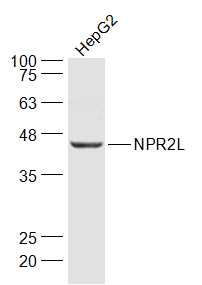 Sample:
HepG2(Human) Cell Lysate at 30 ug
Primary: Anti-NPR2L (SL6079R) at 1/1000 dilution
Secondary: IRDye800CW Goat Anti-Rabbit IgG at 1/20000 dilution
Predicted band size: 44 kD
Observed band size: 44 kD
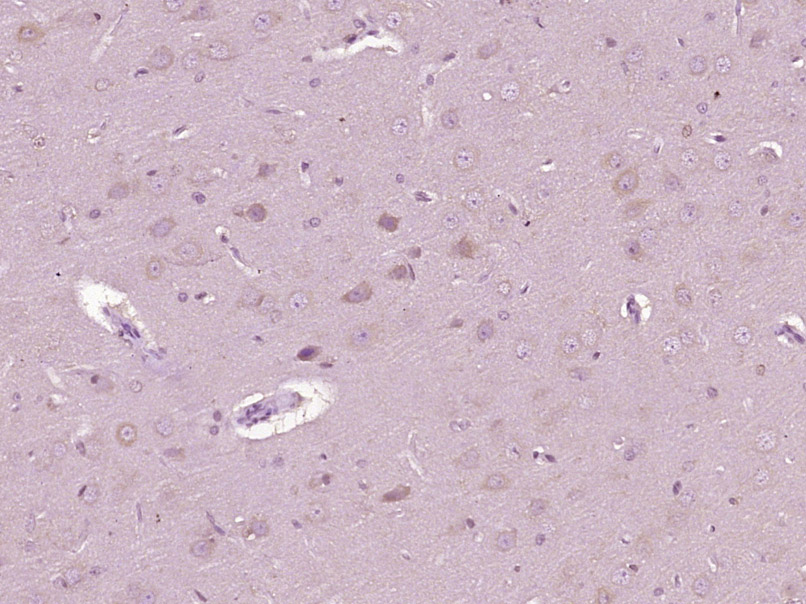 Paraformaldehyde-fixed, paraffin embedded (Rat brain); Antigen retrieval by boiling in sodium citrate buffer (pH6.0) for 15min; Block endogenous peroxidase by 3% hydrogen peroxide for 20 minutes; Blocking buffer (normal goat serum) at 37°C for 30min; Antibody incubation with (G21 protein/NPR2L) Polyclonal Antibody, Unconjugated (SL6079R) at 1:400 overnight at 4°C, followed by operating according to SP Kit(Rabbit) (sp-0023) instructionsand DAB staining.
Cartpieces
Totalgoods,subtotals:¥Checkout
Partial purchase records(bought amounts latest0)
No one bought this product
User Comment(Total0User Comment Num)
- No comment


 +86 571 56623320
 SUNLONG BIOTECH

