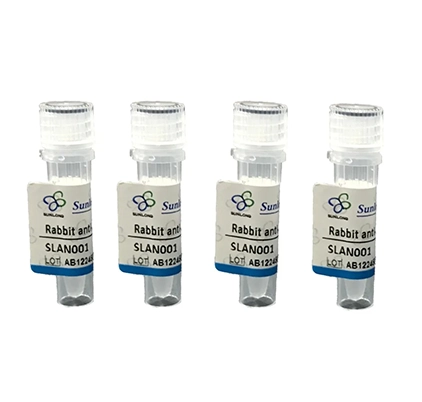
Rabbit Anti-ACVR1B antibody
View History [Clear]
Details
Product Name ACVR1B Immunogen Species Rabbit Clonality Monoclonal Clone NO. A8B3 React Species Human,Mouse Applications WB=1:500-1000,ICC/IF=1:100-500
not yet tested in other applications.
optimal dilutions/concentrations should be determined by the end user.Cellular localization cytoplasmic Form Liquid Concentration 1mg/ml Lsotype IgG/Kappa Purification Affinity purified by Protein A Buffer Solution 1M TBS(pH7.4) with 1% BSA, 3% Proclin300 and 50% Glycerol. Storage Shipped at 4℃. Store at -20 °C for one year. Avoid repeated freeze/thaw cycles. Attention This product as supplied is intended for research use only, not for use in human, therapeutic or diagnostic applications. PubMed PubMed Product Detail Transmembrane serine/threonine kinase activin type 1 receptor forms an activin receptor complex with activin type 2 receptors (ACVR2A or ACVR2B). It transmits activin signals from the cell surface to the cytoplasm, thereby regulating many physiological and pathological processes, including neuronal differentiation and survival, hair follicle development and cycling, pituitary FSH production, wound healing, extracellular matrix production, immunosuppression, and carcinogenesis. Activins are also thought to have paracrine or autocrine roles in ovarian follicle development. In the receptor complex, type 2 receptors (ACVR2A and/or ACVR2B) act as the primary activin receptors, while type 1 receptors (such as ACVR1B) function as downstream sensors of activin signaling. Activin binds to type 2 receptors on the plasma membrane and activates their serine/threonine kinases. The activated type 2 receptors then phosphorylate and activate type 1 receptors, such as ACVR1B. Once activated, the type 1 receptor binds to and phosphorylates the SMAD proteins SMAD2 and SMAD3 on their C-terminal serine residues. SMAD2 and SMAD3 are released into the cytoplasm shortly after binding to the activin receptor and subsequent phosphorylation, where they interact with the common partner SMAD4. This SMAD complex translocates to the nucleus, where it mediates activin-induced transcription. Inhibitory SMAD7 is recruited to ACVR1B via FKBP1A, which can prevent the binding of SMAD2 and SMAD3 to the activin receptor complex, thereby blocking activin signaling. Activin signal transduction is also antagonized by the binding of inhibin B to the receptor via the IGSF1 inhibin co-receptor. ACVR1B also phosphorylates TDP2.
Cartpieces
Totalgoods,subtotals:¥Checkout
Partial purchase records(bought amounts latest0)
No one bought this product
User Comment(Total0User Comment Num)
- No comment


 +86 571 56623320
 SUNLONG BIOTECH

