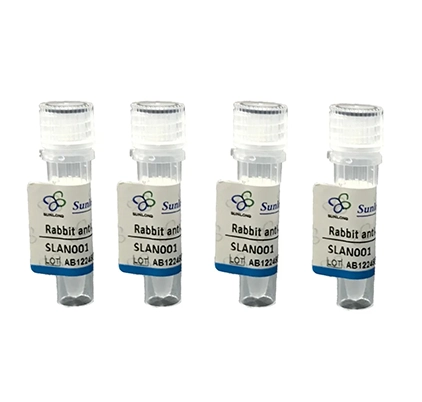
Rabbit Anti-Lysine (pan lactyl) Polyclonal Antibody
Lysine (pan lactyl) | 56-87-1; pan la-Lysine; pan lactyl-Lysine; pan lactyl-Lys;
All categories
View History [Clear]

Details
Product Name Rabbit Anti-Lysine (pan lactyl) Polyclonal Antibody Cat No. SLA0121 Chinese Name 泛乳酸化赖氨酸抗体 Alias Lysine (pan lactyl) | 56-87-1; pan la-Lysine; pan lactyl-Lysine; pan lactyl-Lys; Host Species Rabbit Isotype IgG Clonality Polyclonal React Species Species independent Applications WB (1:500-2000)
IHC-P (1:100-500)
IHC-F (1:100-500)
IF (1:100-500)
ELISA (1:5000-10000)
Not yet tested in other applications.
Optimal working dilutions must be determined by the end user.Immunogen KLH conjugated L-Lactyl Lysine Purification affinity purified by Protein A Concentration 1mg/ml Storage 0.01M TBS (pH7.4) with 1% BSA, 0.02% Proclin300 and 50% Glycerol.
Shipped at 4℃. Store at -20℃ for one year. Avoid repeated freeze/thaw cycles.Background In the nucleus, DNA is tightly packed into nucleosomes generating an environment which is highly repressive towards DNA processes such as transcription. Acetylation of lysine residues within proteins has emerged as an important mechanism used by cells to overcome this repression. The acetylation of non-histone proteins such as transcription factors, as well as histones appears to be involved in this process. Acetylation may result in structural transitions as well as specific signaling within discrete chromatin domains. The role of acetylation in intracellular signaling has been inferred from the binding of acetylated peptides by the conserved bromodomain. Furthermore, recent findings suggest that bromodomain/acetylated-lysine recognition can serve as a regulatory mechanism in protein-protein interactions in numerous cellular processes such as chromatin remodeling and transcriptional activation. The reversible lysine acetylation of histones and non-histone proteins plays a vital role in the regulation of many cellular processes including chromatin dynamics and transcription, gene silencing, cell cycle progression, apoptosis, differentiation, DNA replication, DNA repair, nuclear import, and neuronal repression. More than 20 acetyltransferases and 18 deacetylases have been identified so far, but the mechanistic details of substrate selection and site specificity of these enzymes remain unclear. Over 40 transcription factors and 30 other nuclear, cytoplasmic, bacterial, and viral proteins have been shown to be acetylated in vivo. Attention This product as supplied is intended for research use only, not for use in human, therapeutic or diagnostic applications.
FOR RESEARCH USE ONLY. Not for use in diagnostic or therapeutic procedures.
Partial purchase records(bought amounts latest0)
No one bought this product
User Comment(Total0User Comment Num)
- No comment


 +86 571 56623320

 SUNLONG BIOTECH


