Details
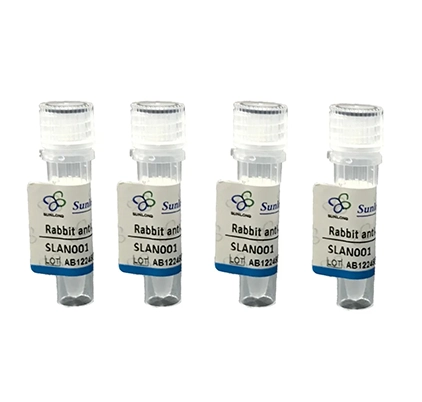
Product Name Rabbit Anti-CRYAB (p-S19) Polyclonal Antibody Cat No. SLA0081 Chinese Name 磷酸化热休克蛋白β5/α晶状体球蛋白B/αB-crystallin抗体 Alias CMD1II; CRYA2; CTPP2; CTRCT16; HEL-S-101; HSPB5; MFM2; MFM2A; MFM2B; Crya-2; P23; AACRYA; CRYAB_HUMAN; CRYAB; Alpha(B)-crystallin; Heat shock protein beta-5 (HspB5); Heat shock protein family B member 5; Renal carcinoma antigen NY-REN-27; Rosenthal fiber component; CRYAB_MOUSE; CRYAB_RAT; crystallin alpha B; crystallin, alpha B; CRYAB (phospho-S19); p-CRYAB; phospho-CRYAB; CRYAB (phospho-Ser19) Host Species Rabbit Isotype IgG Clonality Polyclonal React Species Human,Mouse Applications IHC-P (1:100-500)
IHC-F (1:100-500)
IF (1:100-500)
Not yet tested in other applications.
Optimal working dilutions must be determined by the end user.Immunogen KLH conjugated synthesised phosphopeptide derived from human alpha B Crystallin around the phosphorylation site of Ser19 Purification affinity purified by Protein A Concentration 1mg/ml Predicted MW. 20 kDa Subcellular Location Nucleus Gene ID 1410 Swiss-Prot P02511 Storage 0.01M TBS (pH7.4) with 1% BSA, 0.02% Proclin300 and 50% Glycerol.
Shipped at 4℃. Store at -20℃ for one year. Avoid repeated freeze/thaw cycles.Background Crystallins are separated into two classes: taxon-specific, or enzyme, and ubiquitous. The latter class constitutes the major proteins of vertebrate eye lens and maintains the transparency and refractive index of the lens. Since lens central fiber cells lose their nuclei during development, these crystallins are made and then retained throughout life, making them extremely stable proteins. Mammalian lens crystallins are divided into alpha, beta, and gamma families; beta and gamma crystallins are also considered as a superfamily. Alpha and beta families are further divided into acidic and basic groups. Seven protein regions exist in crystallins: four homologous motifs, a connecting peptide, and N- and C-terminal extensions. Alpha crystallins are composed of two gene products: alpha-A and alpha-B, for acidic and basic, respectively. Alpha crystallins can be induced by heat shock and are members of the small heat shock protein (sHSP also known as the HSP20) family. They act as molecular chaperones although they do not renature proteins and release them in the fashion of a true chaperone; instead they hold them in large soluble aggregates. Post-translational modifications decrease the ability to chaperone. These heterogeneous aggregates consist of 30-40 subunits; the alpha-A and alpha-B subunits have a 3:1 ratio, respectively. Two additional functions of alpha crystallins are an autokinase activity and participation in the intracellular architecture. Alpha-A and alpha-B gene products are differentially expressed; alpha-A is preferentially restricted to the lens and alpha-B is expressed widely in many tissues and organs. Elevated expression of alpha-B crystallin occurs in many neurological diseases; a missense mutation cosegregated in a family with a desmin-related myopathy. [provided by RefSeq, Jul 2008]. Attention This product as supplied is intended for research use only, not for use in human, therapeutic or diagnostic applications.
Validation Images
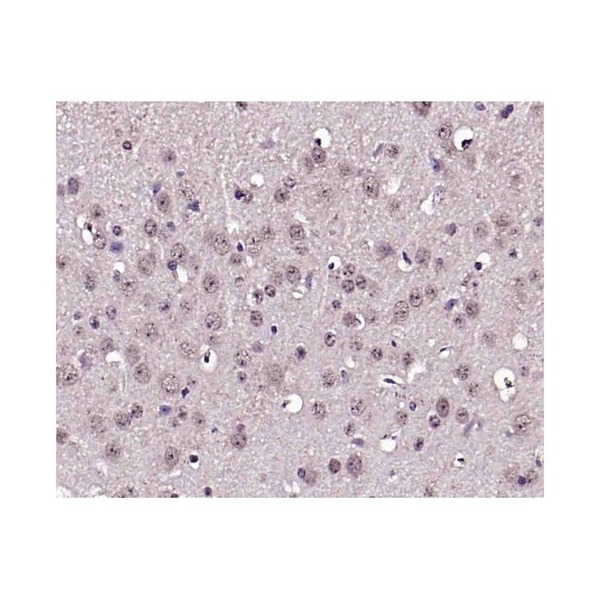
Figure 1. Paraformaldehyde-fixed, paraffin embedded (mouse brain); Antigen retrieval by boiling in sodium citrate buffer (pH6.0) for 15min; Block endogenous peroxidase by 3% hydrogen peroxide for 20 minutes; Blocking buffer (normal goat serum) at 37°C for 30min; Incubation with (phospho-alpha B Crystallin (Ser19) ) Polyclonal Antibody, Unconjugated (SLA0081) at 1:200 overnight at 4°C, followed by operating according to SP Kit(Rabbit) (sp-0023) instructionsand DAB staining.
Figure 2. Paraformaldehyde-fixed, paraffin embedded (human brain glioma); Antigen retrieval by boiling in sodium citrate buffer (pH6.0) for 15min; Block endogenous peroxidase by 3% hydrogen peroxide for 20 minutes; Blocking buffer (normal goat serum) at 37°C for 30min; Incubation with (phospho-alpha B Crystallin (Ser19) ) Polyclonal Antibody, Unconjugated (SLA0081) at 1:200 overnight at 4°C, followed by operating according to SP Kit(Rabbit) (sp-0023) instructionsand DAB staining.
FOR RESEARCH USE ONLY. Not for use in diagnostic or therapeutic procedures.
Ordering & shipping
- Minimum order: 1 unit
- Lead time: varies with order quantity and specifications. Please consult your local distributor or our sales team for confirmation
- Payment: T/T 100% in advance; PayPal; Alibaba Trade Assurance
- Shipping: FedEx / DHL / UPS express; cold-chain packing available on request
- Price: USD, per unit (50ul / 100ul / 200ul)


Partial purchase records(bought amounts latest0)
User Comment(Total0User Comment Num)
- No comment


 +86 571 56623320

 SUNLONG BIOTECH


