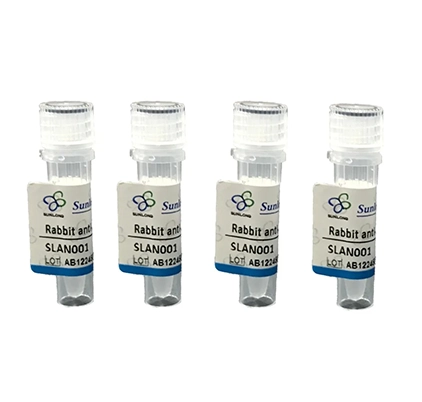
Rabbit Anti-4 Hydroxynonenal/AP Conjugated antibody
4-Hydroxy-2-Nonenal; 4Hydroxynonenal; 4-Hydroxynonenal; 4 HNE; 4HNE; 4-HNE; (E)-4-Hydroxynonenal-dimethylacetal, 4-HNE-DMA.
View History [Clear]
Details
Product Name Anti-4 Hydroxynonenal/AP Chinese Name 碱性磷酸酶(AP)标记的4羟基壬烯酸抗体 Alias 4-Hydroxy-2-Nonenal; 4Hydroxynonenal; 4-Hydroxynonenal; 4 HNE; 4HNE; 4-HNE; (E)-4-Hydroxynonenal-dimethylacetal, 4-HNE-DMA. Product Type Small molecule anti Research Area Cell biology immunology Signal transduction Apoptosis Drugs and Compounds Immunogen Species Rabbit Clonality Polyclonal React Species Species independent Applications
WB=1000-10000,IHC-P=1:100-500,IHC-F=1:100-500not yet tested in other applications.
optimal dilutions/concentrations should be determined by the end user.Molecular weight 0.20229kDa Form Lyophilized or Liquid Concentration 1mg/ml immunogen KLH conjugated to 4 Hydroxynonenal Lsotype IgG Purification affinity purified by Protein A Storage Buffer 1M TBS(pH7.4) with 1% BSA, 3% Proclin300 and 50% Glycerol. Storage Store at -20 °C for one year. Avoid repeated freeze/thaw cycles. The lyophilized antibody is stable at room temperature for at least one month and for greater than a year when kept at -20°C. When reconstituted in sterile pH 7.4 1M PBS or diluent of antibody the antibody is stable for at least two weeks at 2-4 °C. Product Detail background:
Reactive oxygen and nitrogen species (ROS/RNS) have taken center stage in the field of signal transduction. The enzymes responsible for the production of ROS and RNS have been unraveled and the participation of these species in numerous signaling pathways has been documented. The next step is to identify the targets of ROS and RNS and the mechanisms by which they alter their activity in the affected signaling pathway. This book provides relevant chemistry that can be applied across signaling systems and summarizes the current state of knowledge in the area of redox signaling. ROS and RNS have been implicated in inflammation, aging and cancer.
Subcellular Location:
Cytoplasmic
Database links:
CAS Number:18286-49-2
Important Note:
This product as supplied is intended for research use only, not for use in human, therapeutic or diagnostic applications.
Cartpieces
Totalgoods,subtotals:¥Checkout
Partial purchase records(bought amounts latest1)
| Username | Quantity | bought time |
| Wi*** | 2 | 2024-06-21 |
User Comment(Total0User Comment Num)
- No comment


 +86 571 56623320
 SUNLONG BIOTECH

