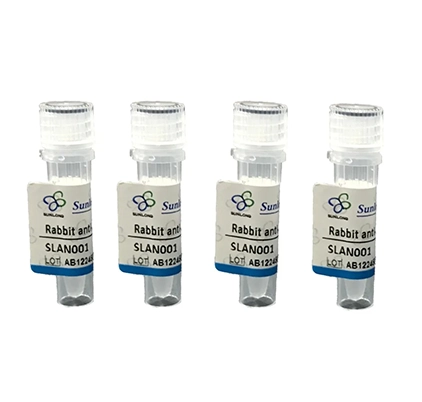
Rabbit Anti-OR52E1/AP Conjugated antibody
Olfactory receptor 52E1; Olfactory receptor family 52 subfamily E member 1; OR52E1P; O52E1_HUMAN.
View History [Clear]
Details
Product Name Anti-OR52E1/AP Chinese Name 碱性磷酸酶(AP)标记的嗅觉受体52E1抗体 Alias Olfactory receptor 52E1; Olfactory receptor family 52 subfamily E member 1; OR52E1P; O52E1_HUMAN. Research Area Cell biology Neurobiology Signal transduction G protein-coupled receptor G protein signal Immunogen Species Rabbit Clonality Polyclonal React Species Human Applications WB=1:500-2000
not yet tested in other applications.
optimal dilutions/concentrations should be determined by the end user.Molecular weight 35kDa Form Lyophilized or Liquid Concentration 1mg/ml immunogen KLH conjugated synthetic peptide derived from human OR52E1 Lsotype IgG Purification affinity purified by Protein A Storage Buffer 1M TBS(pH7.4) with 1% BSA, 3% Proclin300 and 50% Glycerol. Storage Store at -20 °C for one year. Avoid repeated freeze/thaw cycles. The lyophilized antibody is stable at room temperature for at least one month and for greater than a year when kept at -20°C. When reconstituted in sterile pH 7.4 1M PBS or diluent of antibody the antibody is stable for at least two weeks at 2-4 °C. Product Detail background:
Olfactory receptors interact with odorant molecules in the nose, to initiate a neuronal response that triggers the perception of a smell. The olfactory receptor proteins are members of a large family of G-protein-coupled receptors (GPCR) arising from single coding-exon genes. Olfactory receptors share a 7-transmembrane domain structure with many neurotransmitter and hormone receptors and are responsible for the recognition and G protein-mediated transduction of odorant signals. The olfactory receptor gene family is the largest in the genome. The nomenclature assigned to the olfactory receptor genes and proteins for this organism is independent of other organisms. [provided by RefSeq, Jul 2008]
Function:
Olfactory receptors interact with odorant molecules in the nose, to initiate a neuronal response that triggers the perception of a smell. The olfactory receptor proteins are members of a large family of G-protein-coupled receptors (GPCR) arising from single coding-exon genes. Olfactory receptors share a 7-transmembrane domain structure with many neurotransmitter and hormone receptors and are responsible for the recognition and G protein-mediated transduction of odorant signals. The olfactory receptor gene family is the largest in the genome. The nomenclature assigned to the olfactory receptor genes and proteins for this organism is independent of other organisms.
Subcellular Location:
Cell Membrane
Database links:Entrez Gene: 79296 Human
SwissProt: Q8NGJ3 Human
Important Note:
This product as supplied is intended for research use only, not for use in human, therapeutic or diagnostic applications.
Cartpieces
Totalgoods,subtotals:¥Checkout
Partial purchase records(bought amounts latest4)
| Username | Quantity | bought time |
| Na*** | 2 | 2024-08-24 |
| Ka*** | 1 | 2024-08-15 |
| Fr*** | 1 | 2024-06-26 |
| He*** | 2 | 2023-05-28 |
User Comment(Total0User Comment Num)
- No comment


 +86 571 56623320
 SUNLONG BIOTECH

