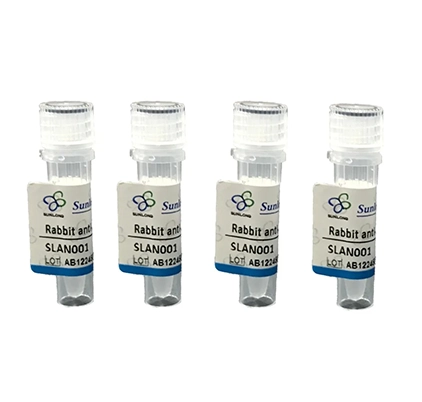
Rabbit Anti-UBE3A/PE Conjugated antibody
ANCR; Angelman syndrome; AS; CTCL tumor antigen se37 2; E6 AP; E6-AP; E6AP antibody E6AP ubiquitin protein ligase; E6AP ubiquitin protein ligase; E6AP ubiquitin-protein ligase; EPVE6AP; HPVE6A; Human papilloma virus E6 associated protein Angelman syndrome
View History [Clear]
Details
Product Name Anti-UBE3A/PE Chinese Name PE标记的人乳头状瘤病毒E6相关蛋白抗体 Alias ANCR; Angelman syndrome; AS; CTCL tumor antigen se37 2; E6 AP; E6-AP; E6AP antibody E6AP ubiquitin protein ligase; E6AP ubiquitin protein ligase; E6AP ubiquitin-protein ligase; EPVE6AP; HPVE6A; Human papilloma virus E6 associated protein Angelman syndrome; Human papilloma virus E6 associated protein; Human papillomavirus E6-associated protein; NY REN 54 antigen; NY REN 54 antigen; Oncogenic protein associated protein E6 AP; Oncogenic protein associated protein E6AP; Oncogenic protein-associated protein E6-AP; Renal carcinoma antigen NY REN 54; Renal carcinoma antigen NY-REN-54; UBE 3A; Ube3a; UBE3A protein; UBE3A_HUMAN; Ubiquitin protein ligase E3A; Ubiquitin-protein ligase E3A. Research Area Tumour Cell biology Chromatin and nuclear signals Neurobiology Signal transduction Cyclin Epigenetics Ubiquitin Immunogen Species Rabbit Clonality Polyclonal React Species Human(predicted:Mouse,Rat,Dog,Pig,Cow,Horse,Rabbit,Sheep) Applications IF=1:100-500
not yet tested in other applications.
optimal dilutions/concentrations should be determined by the end user.Molecular weight 105kDa Form Lyophilized or Liquid Concentration 1mg/ml immunogen KLH conjugated synthetic peptide derived from human UBE3A/E6-AP Lsotype IgG Purification affinity purified by Protein A Storage Buffer 1M TBS(pH7.4) with 1% BSA, 3% Proclin300 and 50% Glycerol. Storage Store at -20 °C for one year. Avoid repeated freeze/thaw cycles. The lyophilized antibody is stable at room temperature for at least one month and for greater than a year when kept at -20°C. When reconstituted in sterile pH 7.4 1M PBS or diluent of antibody the antibody is stable for at least two weeks at 2-4 °C. Product Detail background:
E6-associating protein is a component of the ubiquitin-mediated proteolytic pathway, which selectively targets proteins for degradation by the 26S proteasome. Ubiquitin (Ub) is directly conjugated to protein substrates by the transfer of Ub from an E2 ubiquitin conjugating enzyme to the target protein. This conjugation is facilitated by the enzymatic activity of E3 ubiquitin ligase family members such as E6-AP. Several substrates of E6-AP have been identified and include the tumor suppressor protein p53 and the mammalian homolog of Rad23, HHR23A. Previous studies have indicated that E6-AP associates with the human papillomavirus E6 oncogene, which complexes with p53 and thereby potentiates E6-AP mediated ubiquitination of p53. Genetic mutations that impair E6-AP activity result in the accumulation of p53 in the cytoplasm, and, in many instances, these mutations are associated with the development of the rare neurodevelopmental disorder Angelman syndrome (AS), which is characterized by severe motor dysfunction and mental retardation.
Function:
E3 ubiquitin-protein ligase which accepts ubiquitin from an E2 ubiquitin-conjugating enzyme in the form of a thioester and transfers it to its substrates. Several substrates have been identified including the RAD23A and RAD23B, MCM7 (which is involved in DNA replication), annexin A1, the PML tumor suppressor, and the cell cycle regulator CDKN1B. Additionally, may function as a cellular quality control ubiquitin ligase by helping the degradation of the cytoplasmic misfolded proteins. Finally, UBE3A also promotes its own degradation in vivo.
Subcellular Location:
Nucleus.
Post-translational modifications:
Phosphorylated upon DNA damage, probably by ATM or ATR.
DISEASE:
Defects in UBE3A are a cause of Angelman syndrome (AS) [MIM:105830]; also known as 'happy puppet syndrome'. AS is characterized by features of severe motor and intellectual retardation, microcephaly, ataxia, frequent jerky limb movements and flapping of the arms and hands, hypotonia, hyperactivity, hypopigmentation, seizures, absence of speech, frequent smiling and episodes of paroxysmal laughter, and an unusual facies characterized by macrostomia, a large mandible and open-mouthed expression, a great propensity for protruding the tongue ('tongue thrusting'), and an occipital groove.
Similarity:
Contains 1 HECT (E6AP-type E3 ubiquitin-protein ligase) domain.
Database links:Entrez Gene: 7337 Human
Entrez Gene: 22215 Mouse
Omim: 601623 Human
SwissProt: Q05086 Human
SwissProt: Q96GR7 Human
SwissProt: O08759 Mouse
Unigene: 598862 Human
Unigene: 9002 Mouse
Important Note:
This product as supplied is intended for research use only, not for use in human, therapeutic or diagnostic applications.
Cartpieces
Totalgoods,subtotals:¥Checkout
Partial purchase records(bought amounts latest0)
No one bought this product
User Comment(Total0User Comment Num)
- No comment


 +86 571 56623320
 SUNLONG BIOTECH

