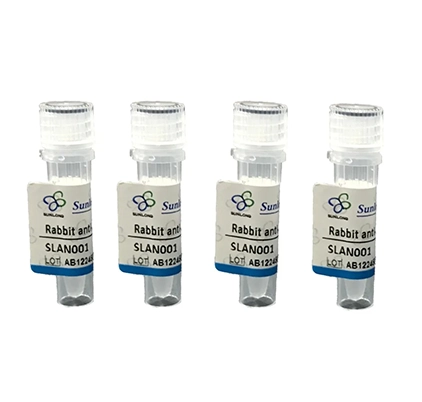
Rabbit Anti-GCDFP15 antibody
PIP_HUMAN; PIP; Prolactin-inducible protein; Gross cystic disease fluid protein 15 (GCDFP-15); Prolactin-induced protein; Secretory actin-binding protein (SABP); gp17; GCDFP15; GPIP4; BRST-2;
View History [Clear]
Details
Product Name GCDFP15 Chinese Name 特异性囊肿病液体蛋白15 Alias PIP_HUMAN; PIP; Prolactin-inducible protein; Gross cystic disease fluid protein 15 (GCDFP-15); Prolactin-induced protein; Secretory actin-binding protein (SABP); gp17; GCDFP15; GPIP4; BRST-2; Research Area Tumour Cell biology immunology TumourCell biologyMaker Immunogen Species Rabbit Clonality Polyclonal React Species Human, (predicted: Mouse, ) Applications IHC-P=1:100-500,IHC-F=1:100-500,IF=1:100-500 (Paraffin sections need antigen repair)
not yet tested in other applications.
optimal dilutions/concentrations should be determined by the end user.Theoretical molecular weight 13kDa Cellular localization Secretory protein Form Liquid Concentration 1mg/ml immunogen KLH conjugated synthetic peptide derived from mouse GCDFP15: 21-120/146 Lsotype IgG Purification affinity purified by Protein A Buffer Solution 1M TBS(pH7.4) with 1% BSA, 3% Proclin300 and 50% Glycerol. Storage Shipped at 4℃. Store at -20 °C for one year. Avoid repeated freeze/thaw cycles. Attention This product as supplied is intended for research use only, not for use in human, therapeutic or diagnostic applications. PubMed PubMed Product Detail Gross cystic disease is a common premenopausal disorder in which gross cysts are the predominant pathologic lesion. It is characterized by production of a fluid secretion which accumulates in the breast cysts. Gross cystic disease fluid is a pathologic secretion from breast composed of several glycoproteins, including a unique 15 kDa monomer protein, GCDFP 15. The cells within the body that produce GCDFP 15 appear to be restricted primarily to those with apocrine function. Studies have found GCDFP 15 to be a highly specific and sensitive marker for breast cancer.
Subunit:
Monomer. Interacts with AZGP1.
Subcellular Location:
Secreted.
Tissue Specificity:
Expressed in pathological conditions of the mammary gland and in several exocrine tissues, such as the lacrimal, salivary, and sweat glands.
Similarity:
Belongs to the PIP family.
SWISS:
P12273
Gene ID:
18716
Database links:
Product Picture 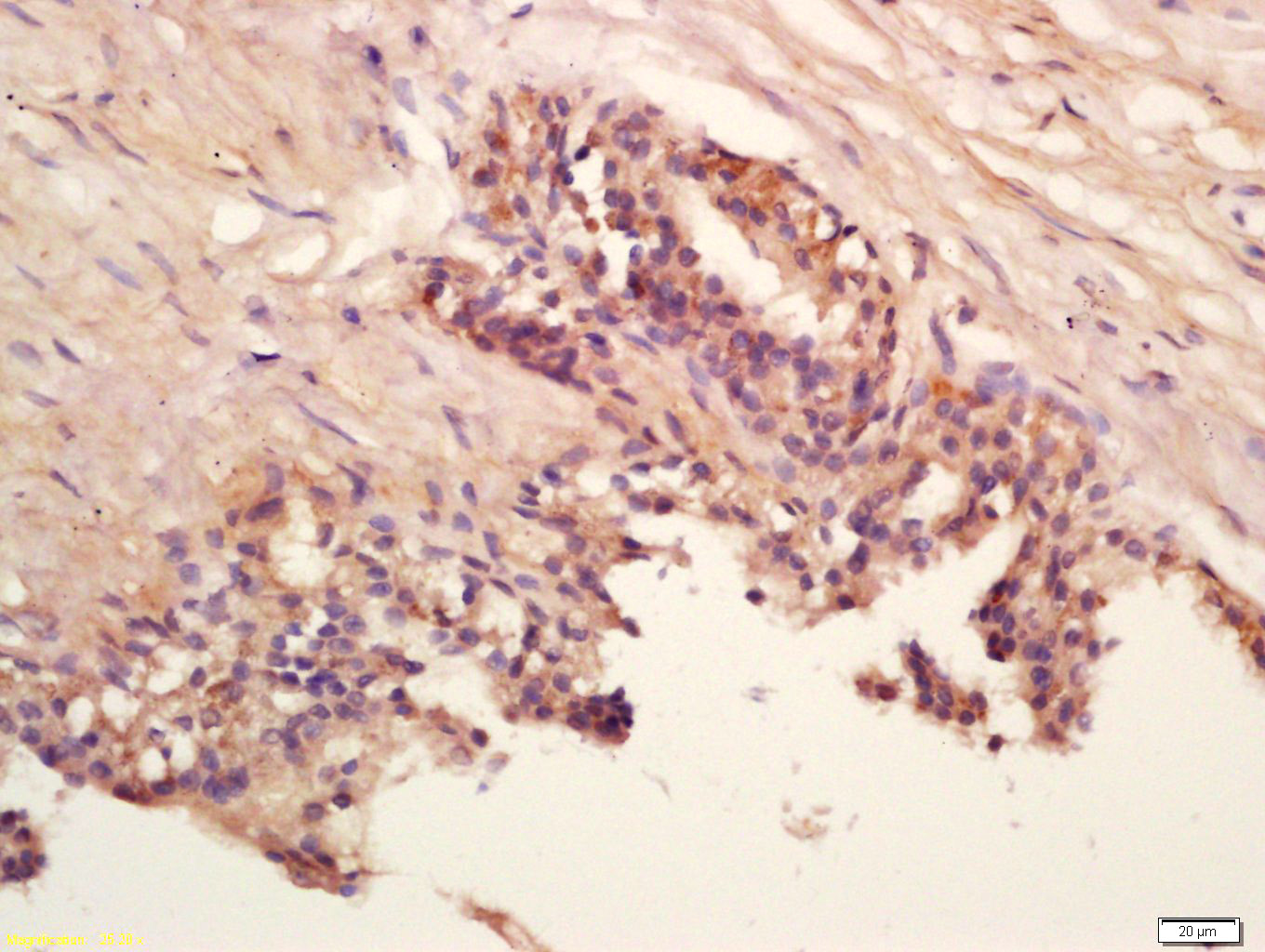 Tissue/cell: human prostate tissue; 4% Paraformaldehyde-fixed and paraffin-embedded;
Antigen retrieval: citrate buffer ( 1M, pH 6.0 ), Boiling bathing for 15min; Block endogenous peroxidase by 3% Hydrogen peroxide for 30min; Blocking buffer (normal goat serum,C-0005) at 37℃ for 20 min;
Incubation: Anti-GCDFP15 Polyclonal Antibody, Unconjugated(SL10273R) 1:200, overnight at 4°C, followed by conjugation to the secondary antibody(SP-0023) and DAB(C-0010) staining
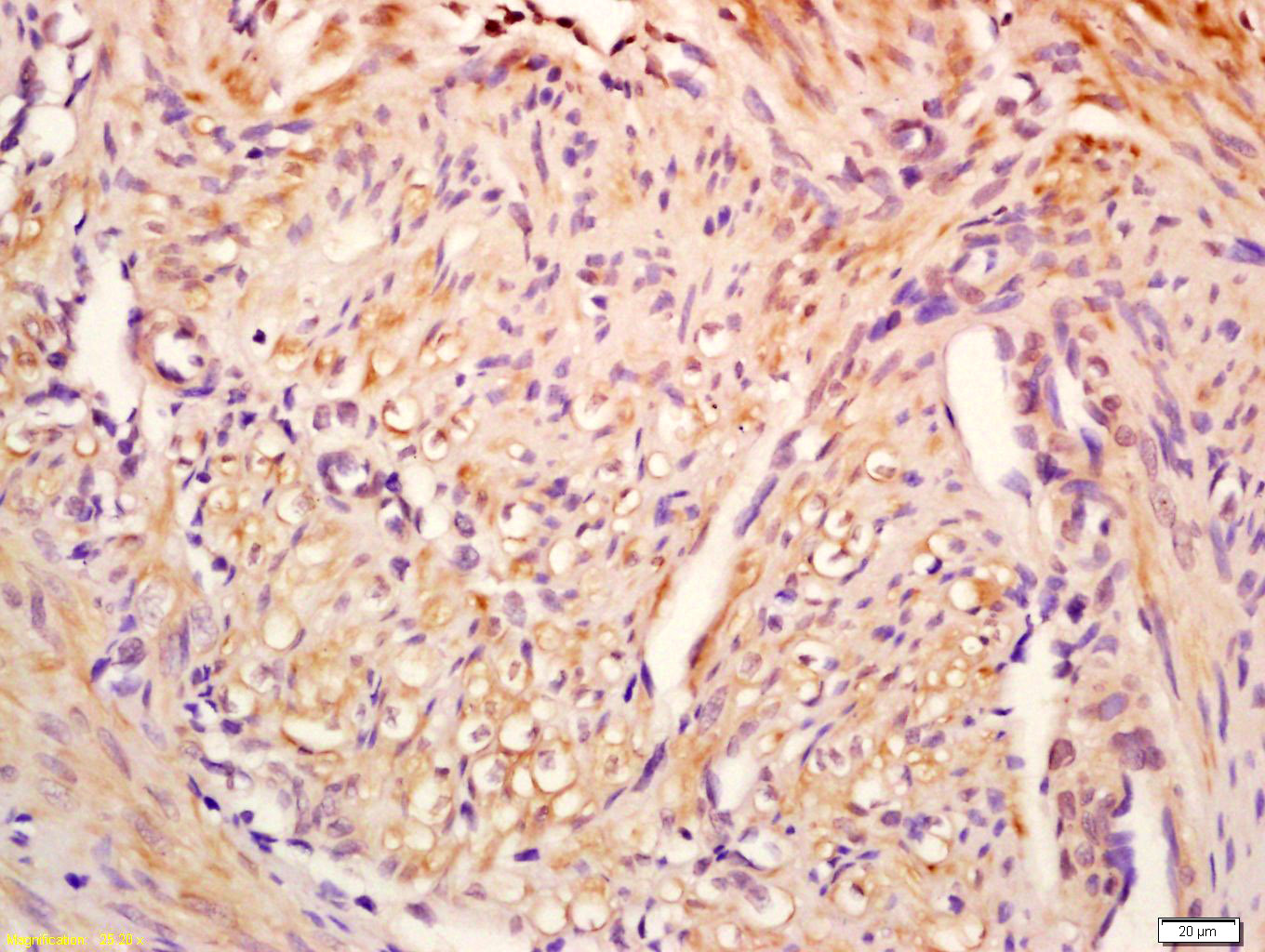 Tissue/cell: Human endometrium tissue; 4% Paraformaldehyde-fixed and paraffin-embedded;
Antigen retrieval: citrate buffer ( 1M, pH 6.0 ), Boiling bathing for 15min; Block endogenous peroxidase by 3% Hydrogen peroxide for 30min; Blocking buffer (normal goat serum,C-0005) at 37℃ for 20 min;
Incubation: Anti-GCDFP15 Polyclonal Antibody, Unconjugated(SL10273R) 1:200, overnight at 4°C, followed by conjugation to the secondary antibody(SP-0023) and DAB(C-0010) staining
Cartpieces
Totalgoods,subtotals:¥Checkout
Partial purchase records(bought amounts latest0)
No one bought this product
User Comment(Total0User Comment Num)
- No comment


 +86 571 56623320
 SUNLONG BIOTECH

