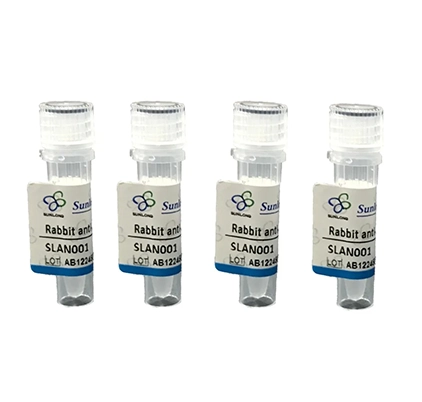
Rabbit Anti-Syntrophin-1+2+3 antibody
SNTA1_HUMAN; SNTB1_HUMAN; SNTB2_HUMAN; Beta-1-syntrophin; Beta-2-syntrophin; alpha-1-syntrophin; Syntrophin-1; Syntrophin-2; Syntrophin-3; 59kDa dystrophin-associated protein A1 basic component 2; SNT1; SNT2; SNT3; SNTA1; SNTB1; SNTB2; Syntrophin alpha 1;
View History [Clear]
Details
Product Name Syntrophin-1+2+3 Chinese Name 互养蛋白1,2,3抗体 Alias SNTA1_HUMAN; SNTB1_HUMAN; SNTB2_HUMAN; Beta-1-syntrophin; Beta-2-syntrophin; alpha-1-syntrophin; Syntrophin-1; Syntrophin-2; Syntrophin-3; 59kDa dystrophin-associated protein A1 basic component 2; SNT1; SNT2; SNT3; SNTA1; SNTB1; SNTB2; Syntrophin alpha 1; Syntrophin beta 1; Syntrophin beta 2. Research Area Cell biology Neurobiology Binding protein Transmembrane protein The cell membrane蛋白 Immunogen Species Rabbit Clonality Polyclonal React Species Mouse,Rat(predicted:Human,Chicken,Dog,Pig,Cow,Rabbit,Sheep) Applications WB=1:500-2000 (Paraffin sections need antigen repair)
not yet tested in other applications.
optimal dilutions/concentrations should be determined by the end user.Theoretical molecular weight 59kDa Cellular localization The cell membrane Form Liquid Concentration 1mg/ml immunogen KLH conjugated synthetic peptide derived from human Syntrophin-1+2+3: 51-150/505 Lsotype IgG Purification affinity purified by Protein A Buffer Solution 1M TBS(pH7.4) with 1% BSA, 3% Proclin300 and 50% Glycerol. Storage Shipped at 4℃. Store at -20 °C for one year. Avoid repeated freeze/thaw cycles. Attention This product as supplied is intended for research use only, not for use in human, therapeutic or diagnostic applications. PubMed PubMed Product Detail Syntrophins are cytoplasmic peripheral membrane scaffold proteins that are components of the dystrophin-associated protein complex. This gene is a member of the syntrophin gene family and encodes the most common syntrophin isoform found in cardiac tissues. The N-terminal PDZ domain of this syntrophin protein interacts with the C-terminus of the pore-forming alpha subunit (SCN5A) of the cardiac sodium channel Nav1.5. This protein also associates cardiac sodium channels with the nitric oxide synthase-PMCA4b (plasma membrane Ca-ATPase subtype 4b) complex in cardiomyocytes. This gene is a susceptibility locus for Long-QT syndrome (LQT) - an inherited disorder associated with sudden cardiac death from arrhythmia - and sudden infant death syndrome (SIDS). This protein also associates with dystrophin and dystrophin-related proteins at the neuromuscular junction and alters intracellular calcium ion levels in muscle tissue. [provided by RefSeq, Jan 2013].
Function:
Adapter protein that binds to and probably organizes the subcellular localization of a variety of membrane proteins. May link various receptors to the actin cytoskeleton and the dystrophin glycoprotein complex. May play a role in the regulation of secretory granules via its interaction with PTPRN.
Subunit:
Monomer and homodimer (Probable). Interacts with the other members of the syntrophin family: SNTA1 and SNTB1; and with the sodium channel proteins SCN4A and SCN5A. Interacts with SAST, MAST205, microtubules and microtubule-associated proteins. Interacts with the dystrophin protein DMD and related proteins DTNA and UTRN, and with the neuroregulin receptor ERBB4. Interacts with PTPRN when phosphorylated, protecting PTPRN from protein cleavage by CAPN1. Dephosphorylation upon insulin stimulation disrupts the interaction with PTPRN and results in the cleavage of PTPRN.
Subcellular Location:
Membrane. Cytoplasmic vesicle, secretory vesicle membrane; Peripheral membrane protein. Cell junction. Cytoplasm, cytoskeleton. Note=Membrane-associated. In muscle, it is exclusively localized at the neuromuscular junction. In insulinoma cell line, it is enriched in secretory granules.
Tissue Specificity:
Ubiquitous. Isoform 1 is the predominant isoform. Weak level of isoform 2 is present in all tested tissues, except in liver and heart where it is highly expressed.
Post-translational modifications:
Phosphorylated. Partially dephosphorylated upon insulin stimulation.
Similarity:
Belongs to the syntrophin family.
Contains 1 PDZ (DHR) domain.
Contains 2 PH domains.
Contains 1 SU (syntrophin unique) domain.
SWISS:
Q13424
Gene ID:
6640
Database links:Entrez Gene: 6640 Human
Entrez Gene: 20648 Mouse
Entrez Gene: 100009179 Rabbit
Omim: 601017 Human
SwissProt: Q13424 Human
SwissProt: Q61234 Mouse
SwissProt: Q28626 Rabbit
Unigene: 31121 Human
Unigene: 1541 Mouse
Unigene: 139656 Rat
Cartpieces
Totalgoods,subtotals:¥Checkout
Partial purchase records(bought amounts latest0)
No one bought this product
User Comment(Total0User Comment Num)
- No comment


 +86 571 56623320
 SUNLONG BIOTECH

