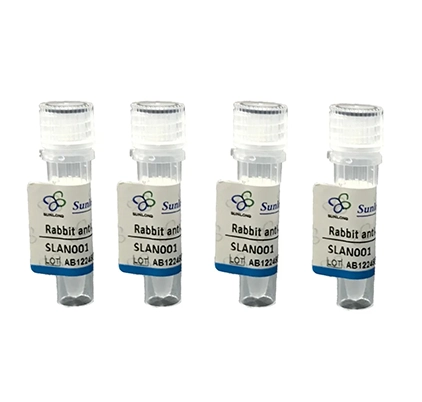
Rabbit Anti-Ubiquitin antibody
FLJ25987; MGC8385; RPS27A; RPS 27A; UBA52; UBA 52; UBA80; UBA 80; UBB; UBC; UB; UBCEP1; UBCEP2; UBCEP 1; UBCEP 2; UBCEP-1; UBCEP-2; Ubiquitin; ubiquitin B; UBC_HUMAN; UBB_HUMAN; RS27A_HUMAN; HMG20; Ubiquitin carboxyl extension protein 80; Ubiquitin; Polyu
All categories
View History [Clear]
Details
Product Name Ubiquitin Chinese Name Ubiquitin蛋白抗体 Alias FLJ25987; MGC8385; RPS27A; RPS 27A; UBA52; UBA 52; UBA80; UBA 80; UBB; UBC; UB; UBCEP1; UBCEP2; UBCEP 1; UBCEP 2; UBCEP-1; UBCEP-2; Ubiquitin; ubiquitin B; UBC_HUMAN; UBB_HUMAN; RS27A_HUMAN; HMG20; Ubiquitin carboxyl extension protein 80; Ubiquitin; Polyubiquitin-C; Polyubiquitin-B. literatures Research Area Tumour Cell biology immunology Neurobiology Apoptosis Ubiquitin Immunogen Species Rabbit Clonality Polyclonal React Species Human, Mouse, Rat, (predicted: Pig, ) Applications WB=1:500-2000,IHC-P=1:100-500,IHC-F=1:100-500,ICC/IF=1:100-500,IF=1:100-500,Flow-Cyt=1ug/Test (Paraffin sections need antigen repair)
not yet tested in other applications.
optimal dilutions/concentrations should be determined by the end user.Theoretical molecular weight 8.5kDa Cellular localization The nucleus cytoplasmic Form Liquid Concentration 1mg/ml immunogen KLH conjugated synthetic peptide derived from human Ubiquitin: 1-76/685 Lsotype IgG Purification affinity purified by Protein A Buffer Solution 1M TBS(pH7.4) with 1% BSA, 3% Proclin300 and 50% Glycerol. Storage Shipped at 4℃. Store at -20 °C for one year. Avoid repeated freeze/thaw cycles. Attention This product as supplied is intended for research use only, not for use in human, therapeutic or diagnostic applications. PubMed PubMed Product Detail This gene encodes ubiquitin, one of the most conserved proteins known. Ubiquitin has a major role in targeting cellular proteins for degradation by the 26S proteosome. It is also involved in the maintenance of chromatin structure, the regulation of gene expression, and the stress response. Ubiquitin is synthesized as a precursor protein consisting of either polyubiquitin chains or a single ubiquitin moiety fused to an unrelated protein. This gene consists of three direct repeats of the ubiquitin coding sequence with no spacer sequence. Consequently, the protein is expressed as a polyubiquitin precursor with a final amino acid after the last repeat. An aberrant form of this protein has been detected in patients with Alzheimer's disease and Down syndrome. Pseudogenes of this gene are located on chromosomes 1, 2, 13, and 17. Alternative splicing results in multiple transcript variants. [provided by RefSeq, Aug 2013]
Function:
Ubiquitin exists either covalently attached to another protein, or free (unanchored). When covalently bound, it is conjugated to target proteins via an isopeptide bond either as a monomer (monoubiquitin), a polymer linked via different Lys residues of the ubiquitin (polyubiquitin chains) or a linear polymer linked via the initiator Met of the ubiquitin (linear polyubiquitin chains). Polyubiquitin chains, when attached to a target protein, have different functions depending on the Lys residue of the ubiquitin that is linked: Lys-6-linked may be involved in DNA repair; Lys-11-linked is involved in ERAD (endoplasmic reticulum-associated degradation) and in cell-cycle regulation; Lys-29-linked is involved in lysosomal degradation; Lys-33-linked is involved in kinase modification; Lys-48-linked is involved in protein degradation via the proteasome; Lys-63-linked is involved in endocytosis, DNA-damage responses as well as in signaling processes leading to activation of the transcription factor NF-kappa-B. Linear polymer chains formed via attachment by the initiator Met lead to cell signaling. Ubiquitin is usually conjugated to Lys residues of target proteins, however, in rare cases, conjugation to Cys or Ser residues has been observed. When polyubiquitin is free (unanchored-polyubiquitin), it also has distinct roles, such as in activation of protein kinases, and in signaling.
Subcellular Location:
Cytoplasm. Nucleus.
Similarity:
Belongs to the ubiquitin family.
Contains 9 ubiquitin-like domains.
SWISS:
P0CG48
Gene ID:
7314
Database links:
Entrez Gene: 100049794 Horse
Entrez Gene: 7314 Human
Entrez Gene: 22187 Mouse
Omim: 191339 Human
SwissProt: Q8MKD1 Horse
SwissProt: P0CG47 Human
SwissProt: P0CG48 Human
SwissProt: P62988 Human
SwissProt: P0CG49 Mouse
SwissProt: P62991 Mouse
Unigene: 356190 Human
Unigene: 520348 Human
Unigene: 282093 Mouse
Unigene: 371592 Mouse
Unigene: 110618 Rat
Unigene: 1253 Rat
Unigene: 3761 Rat
Ubiquitin及类Ubiquitinprotein(Ubls) 存在在多种cells中,有多种cells调控的功能,如cell proliferation、凋亡、cell cycle及DNA修复等。但Ubiquitin途径的异常会导致人类疾病production,including多种形式的Tumour的发生,nerve退变等都与Ubiquitin有关。
相关产品:
Ubiquitin 1-76 peptides (SL10803P);Product Picture 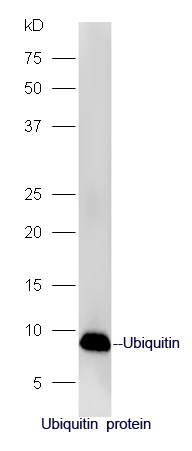 Sample: Ubiquitin protein at 100ng;
Primary: Anti-Ubiquitin (SL1549R) at 1:300 dilution;
Secondary: HRP conjugated Goat-Anti-rabbit IgG(SL0295G-HRP) at 1: 5000 dilution;
Predicted band size: 8.5 kD
Observed band size: 8.5 kD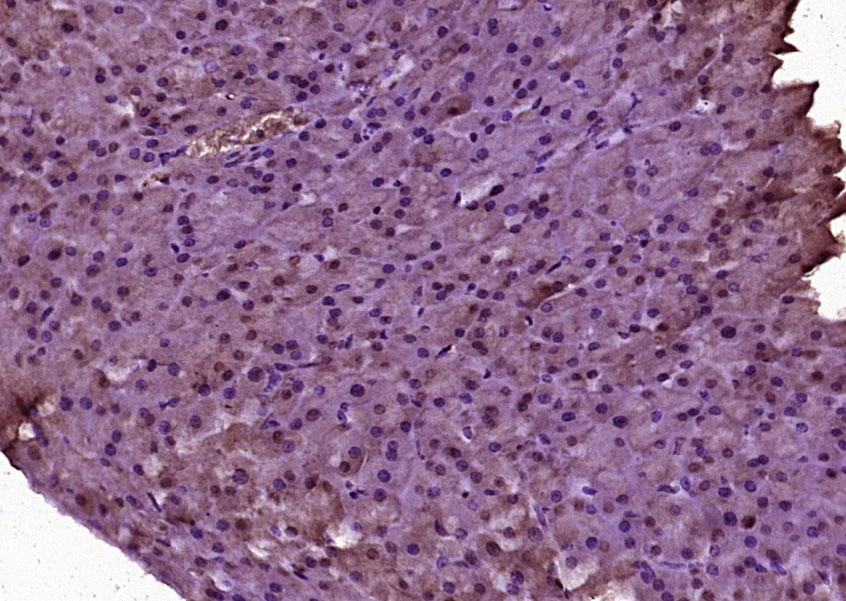 Paraformaldehyde-fixed, paraffin embedded (Mouse pancreas); Antigen retrieval by boiling in sodium citrate buffer (pH6.0) for 15min; Block endogenous peroxidase by 3% hydrogen peroxide for 20 minutes; Blocking buffer (normal goat serum) at 37°C for 30min; Antibody incubation with (Ubiquitin) Polyclonal Antibody, Unconjugated (SL1549R) at 1:400 overnight at 4°C, followed by operating according to SP Kit(Rabbit) (sp-0023) instructionsand DAB staining.
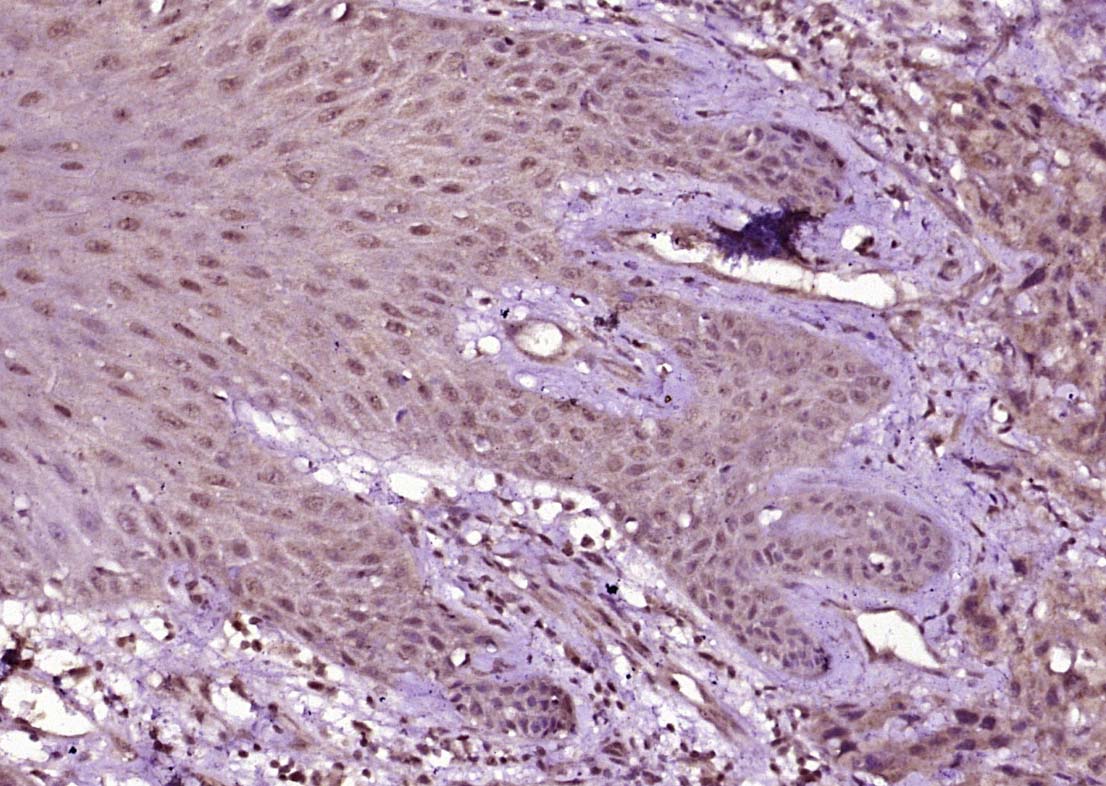 Paraformaldehyde-fixed, paraffin embedded (Human skin carcinoma); Antigen retrieval by boiling in sodium citrate buffer (pH6.0) for 15min; Block endogenous peroxidase by 3% hydrogen peroxide for 20 minutes; Blocking buffer (normal goat serum) at 37°C for 30min; Antibody incubation with (Ubiquitin) Polyclonal Antibody, Unconjugated (SL1549R) at 1:400 overnight at 4°C, followed by operating according to SP Kit(Rabbit) (sp-0023) instructionsand DAB staining.
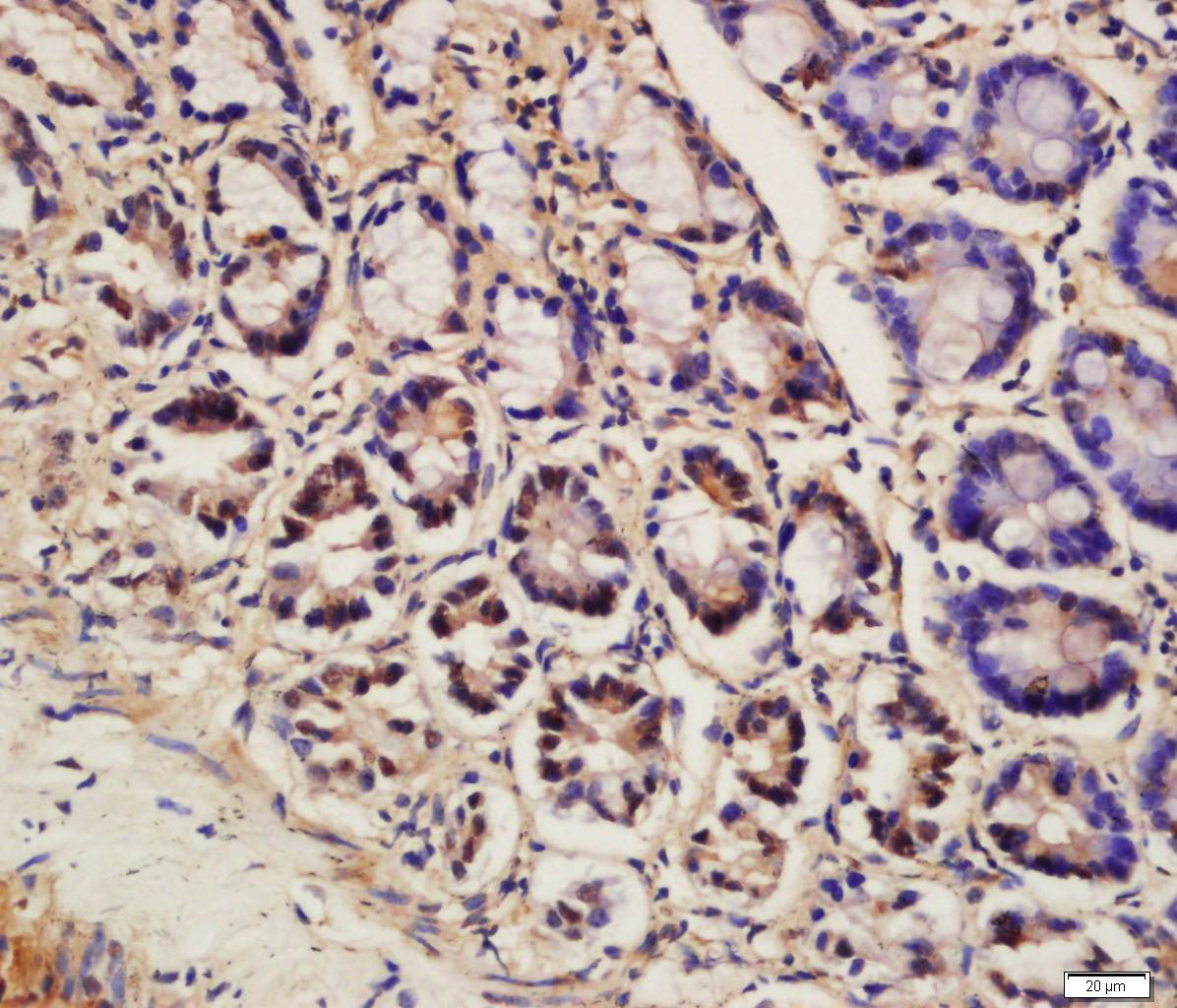 Paraformaldehyde-fixed, paraffin embedded (rat colon tissue); Antigen retrieval by boiling in sodium citrate buffer (pH6.0) for 15min; Block endogenous peroxidase by 3% hydrogen peroxide for 20 minutes; Blocking buffer (normal goat serum) at 37°C for 30min; Antibody incubation with (Ubiquitin) Polyclonal Antibody, Unconjugated (SL1549R) at 1:400 overnight at 4°C, followed by a conjugated secondary (sp-0023) for 20 minutes and DAB staining.
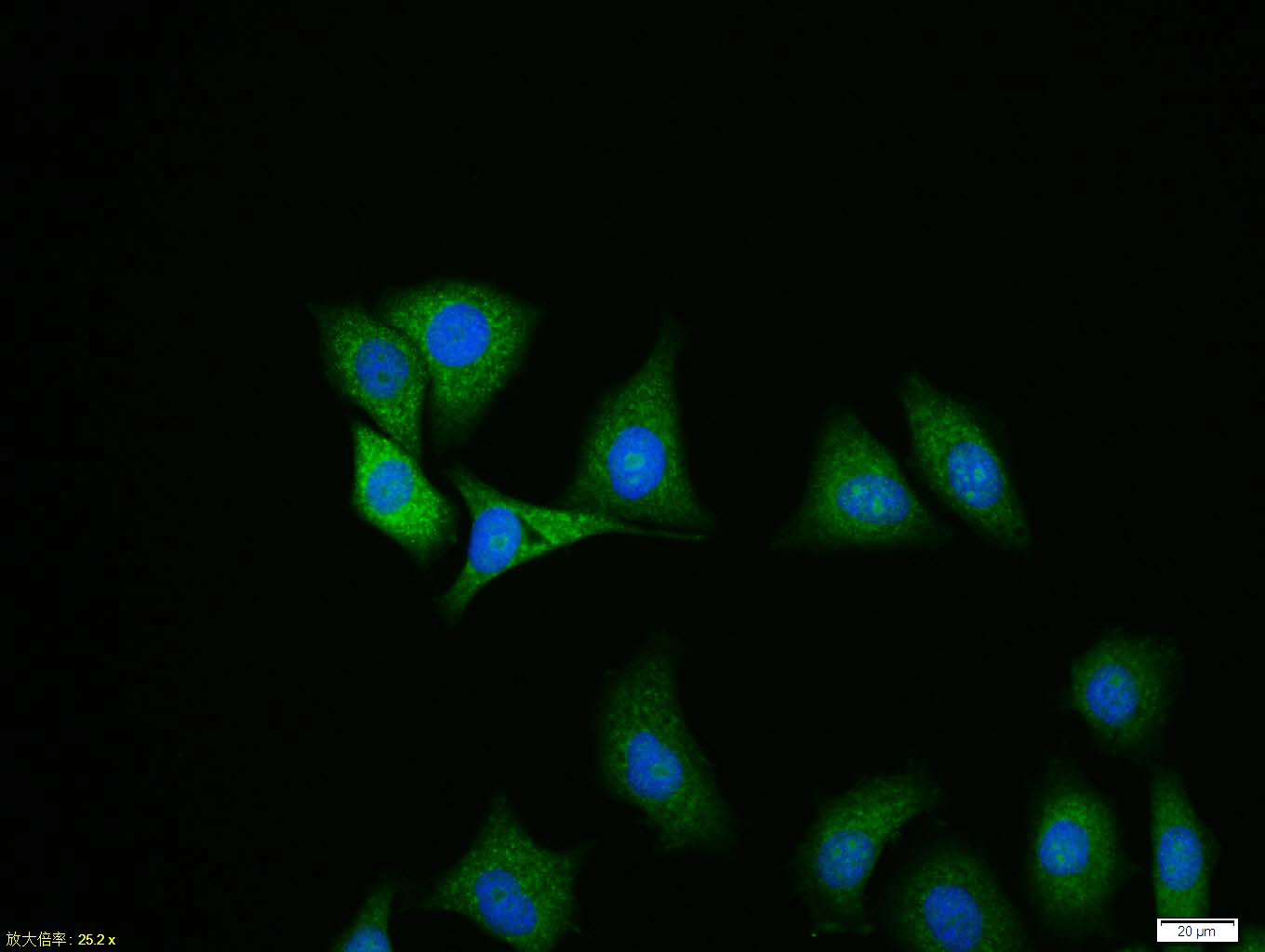 HepG2 cell; 4% Paraformaldehyde-fixed; Triton X-100 at room temperature for 20 min; Blocking buffer (normal goat serum, C-0005) at 37°C for 20 min; Antibody incubation with (Ubiquitin) polyclonal Antibody, Unconjugated (SL1549R) 1:100, 90 minutes at 37°C; followed by a conjugated Goat Anti-Rabbit IgG antibody at 37°C for 90 minutes, DAPI (blue, C02-04002) was used to stain the cell nuclei.
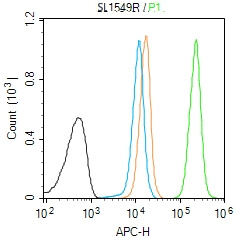 Blank control (Black line): Molt4 (Black).
Primary Antibody (green line):Rabbit Anti-Ubiquitin antibody (SL1549R)
Dilution:1μg /10^6 cells;
Isotype Control Antibody (orange line): Rabbit IgG .
Secondary Antibody (white blue line): Goat anti-rabbit IgG-AF647
Dilution: 1μg /test.
Protocol
The cells were fixed with 4% PFA (10min at room temperature)and then permeabilized with 90% ice-cold methanol for 20 min at room temperature. The cells were then incubated in 5%BSA to block non-specific protein-protein interactions for 30 min at room temperature .Cells stained with Primary Antibody for 30 min at room temperature. The secondary antibody used for 40 min at room temperature. Acquisition of 20,000 events was performed.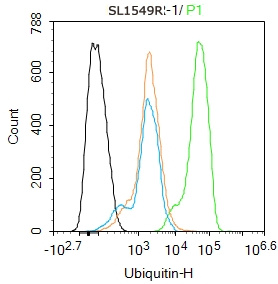 Blank control(black line):HepG2.
Primary Antibody (green line): Rabbit Anti-Ubiquitin antibody (SL1549R)
Dilution:1ug/Test;
Secondary Antibody : Goat anti-rabbit IgG-AF488
Dilution: 0.5ug/Test.
Negative control(white blue line): PBS
Isotype control(orange line): Normal Rabbit IgG
Protocol
The cells were fixed with 4% PFA (10min at room temperature)and then permeabilized with 90% ice-cold methanol for 20 min at -20℃.The cells were then incubated in 5%BSA to block non-specific protein-protein interactions for 30 min at room temperature .Cells stained with Primary Antibody for 30 min at room temperature. The secondary antibody used for 40 min at room temperature. Acquisition of 20,000 events was performed.Ordering & shipping
- Minimum order: 1 unit
- Lead time: varies with order quantity and specifications. Please consult your local distributor or our sales team for confirmation
- Payment: T/T 100% in advance; PayPal; Alibaba Trade Assurance
- Shipping: FedEx / DHL / UPS express; cold-chain packing available on request
- Price: USD, per unit (50ul / 100ul)
Partial purchase records(bought amounts latest3)
| Username | Quantity | bought time |
| Is*** | 1 | 2026-08-10 |
| Sa*** | 1 | 2026-07-24 |
| Ol*** | 1 | 2026-05-30 |
User Comment(Total0User Comment Num)
- No comment


 +86 571 56623320

 SUNLONG BIOTECH


