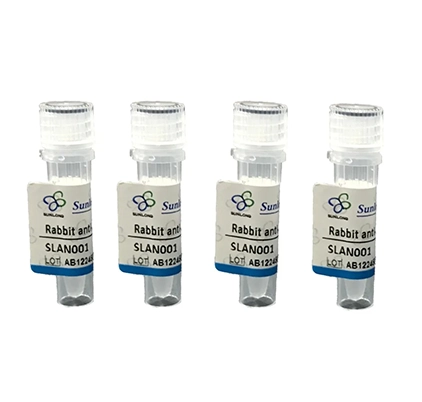
Rabbit Anti-Di-Methyl-Histone H3 (Lys56)antibody
View History [Clear]
Details
Product Name Di-Methyl-Histone H3 (Lys56) Product Type Methylated anti Immunogen Species Rabbit Clonality Polyclonal React Species Human,Mouse,Rat,African Green Monkey Applications WB=1:500-2000,ICC/IF=1:50-200
not yet tested in other applications.
optimal dilutions/concentrations should be determined by the end user.Cellular localization The nucleus Form Liquid Concentration 1mg/ml Lsotype IgG Purification Antigen affinity purification Buffer Solution 1M TBS(pH7.4) with 1% BSA, 3% Proclin300 and 50% Glycerol. Storage Shipped at 4℃. Store at -20 °C for one year. Avoid repeated freeze/thaw cycles. Attention This product as supplied is intended for research use only, not for use in human, therapeutic or diagnostic applications. PubMed PubMed Product Detail Post-translational modifications (PTMs) of histones are key mechanisms in epigenetics for regulating chromatin structure, and are known as the "histone code." Post-translational modifications on histones include acetylation, methylation, phosphorylation, and some newly discovered acyl modifications in recent years. These histone modifications directly affect the binding of chromatin to transcription factors or other epigenetic regulators, altering genome stability and gene transcription, among other processes. Histone methylation typically occurs on lysine and arginine residues of core histones. Histone methylation can both promote and inhibit gene transcription, depending on whether the histone methylation occurs on lysine or arginine, as well as the number of methyl groups (lysine can undergo mono-, di-, and tri-methylation, while arginine can undergo mono-, symmetric, and asymmetric dimethylation). Histone lysine methylation usually occurs at lysine residues 4, 9, 27, 36, 79 of histone H3 and lysine 20 of histone H4; arginine methylation typically occurs at arginine residues 2, 8, 17, 26 of histone H3 and arginine 3 of histone H4. Protein methyltransferases (HMTs) and histone demethylases (HDMs) are the main regulatory factors for methylation modifications.
Cartpieces
Totalgoods,subtotals:¥Checkout
Partial purchase records(bought amounts latest0)
No one bought this product
User Comment(Total0User Comment Num)
- No comment


 +86 571 56623320
 SUNLONG BIOTECH

