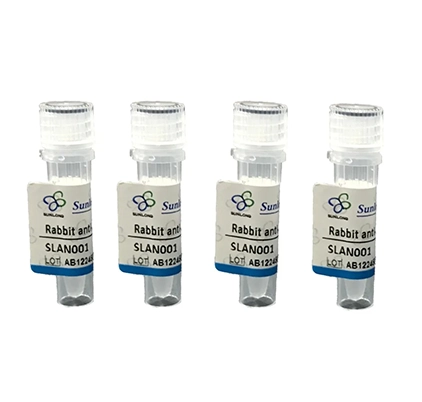
Rabbit Anti-GSK3A antibody
GSK3A_HUMAN; Glycogen synthase kinase-3 alpha; Glycogen synthase kinase 3 alpha; EC:2.7.11.26; Serine/threonine-protein kinase GSK3A; EC:2.7.11.1; GSK 3 alpha; GSK3alpha; GSK-3 alpha; GSK3 alpha; GSK-3alpha; GSK 3A;
View History [Clear]
Details
Product Name GSK3A Chinese Name 糖原合酶激酶3α抗体 Alias GSK3A_HUMAN; Glycogen synthase kinase-3 alpha; Glycogen synthase kinase 3 alpha; EC:2.7.11.26; Serine/threonine-protein kinase GSK3A; EC:2.7.11.1; GSK 3 alpha; GSK3alpha; GSK-3 alpha; GSK3 alpha; GSK-3alpha; GSK 3A; Immunogen Species Rabbit Clonality Polyclonal React Species Human,Rat Applications WB=1:500-1000
not yet tested in other applications.
optimal dilutions/concentrations should be determined by the end user.Theoretical molecular weight 54kDa Cellular localization The nucleus The cell membrane Form Liquid Concentration 1mg/ml Lsotype IgG2a/Kappa Purification Affinity purified by Protein A Buffer Solution 1M TBS(pH7.4) with 1% BSA, 3% Proclin300 and 50% Glycerol. Storage Shipped at 4℃. Store at -20 °C for one year. Avoid repeated freeze/thaw cycles. Attention This product as supplied is intended for research use only, not for use in human, therapeutic or diagnostic applications. PubMed PubMed Product Detail This gene encodes a multifunctional Ser/Thr protein kinase that is implicated in the control of several regulatory proteins including glycogen synthase, and transcription factors, such as JUN. It also plays a role in the WNT and PI3K signaling pathways, as well as regulates the production of beta-amyloid peptides associated with Alzheimer's disease. [provided by RefSeq, Oct 2011]
SWISS:
P49840
Gene ID:
2931
Database links:
Entrez Gene: 2931 Human
SwissProt: P49840 Human
Constitutively active protein kinase acts as a negative regulator in hormone-controlled glucose homeostasis, Wnt signaling, and the regulation of transcription factors and microtubules by phosphorylating and inactivating glycogen synthase (GYS1 or GYS2), CTNNB1/β-catenin, APC, and AXIN1. Most of its substrates require priming phosphorylation. It is regulated by insulin, which promotes glycogen synthesis by phosphorylating and inhibiting GYS1 activity. It regulates hepatic glycogen metabolism, but not that of muscle. It may also mediate the development of insulin resistance by regulating the activation of transcription factors. In Wnt signaling, it regulates the level and transcriptional activity of nuclear CTNNB1/β-catenin. It promotes the processing of amyloid precursor protein (APP) and the formation of APP-derived amyloid plaques in Alzheimer's disease. It may be involved in the regulation of pancreatic β-cell replication. It is also necessary for the establishment of neuronal polarity and axonal growth.
Cartpieces
Totalgoods,subtotals:¥Checkout
Partial purchase records(bought amounts latest0)
No one bought this product
User Comment(Total0User Comment Num)
- No comment


 +86 571 56623320
 SUNLONG BIOTECH

