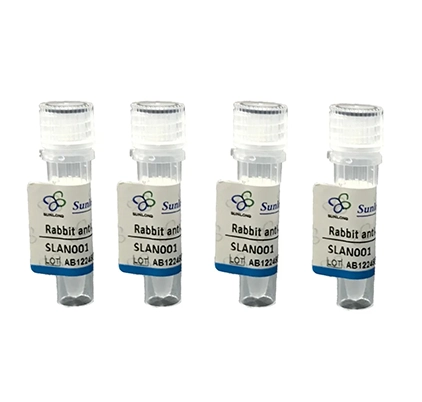
Details
Product Name Keratin 4 Chinese Name 细胞角蛋白4Recombinant rabbit monoclonal anti Alias CK 4; CK4; CYK 4; CK-4; CYK4; Cytokeratin4; Cytokeratin-4; FLJ31692; K4; Keratin 4; Keratin-4; Keratin type II cytoskeletal 4; Keratin4; KRT 4; KRT4; K2C4_HUMAN; Keratin, type II cytoskeletal 4; K4; Type-II keratin Kb4. Research Area Tumour Signal transduction epithelial cells Immunogen Species Rabbit Clonality Monoclonal Clone NO. C2H9 React Species Human,Mouse,Rat Applications WB (1:500-2000), IHC-P (1:100-500), IHC-F (1:100-500), IF (1:100-500)
Not yet tested in other applications.
Optimal working dilutions must be determined by the end user.Theoretical molecular weight 57kDa Cellular localization The nucleus cytoplasmic Form Liquid Concentration 1mg/ml immunogen KLH conjugated synthetic peptide derived from human Keratin 4 Lsotype IgG Purification affinity purified by Protein A Buffer Solution 1M TBS(pH7.4) with 1% BSA, 3% Proclin300 and 50% Glycerol. Storage Shipped at 4℃. Store at -20 °C for one year. Avoid repeated freeze/thaw cycles. Attention This product as supplied is intended for research use only, not for use in human, therapeutic or diagnostic applications. PubMed PubMed Product Detail The protein encoded by this gene is a member of the keratin gene family. The type II cytokeratins consist of basic or neutral proteins which are arranged in pairs of heterotypic keratin chains coexpressed during differentiation of simple and stratified epithelial tissues. This type II cytokeratin is specifically expressed in differentiated layers of the mucosal and esophageal epithelia with family member KRT13. Mutations in these genes have been associated with White Sponge Nevus, characterized by oral, esophageal, and anal leukoplakia. The type II cytokeratins are clustered in a region of chromosome 12q12-q13. [provided by RefSeq, Jul 2008]
Subunit:
Heterotetramer of two type I and two type II keratins. Keratin-4 is generally associated with keratin-13.
Tissue Specificity:
Detected in the suprabasal layer of the stratified epithelium of the esophagus, exocervix, vagina, mouth and lingual mucosa, and in cells and cell clusters in the mucosa and serous gland ducts of the esophageal submucosa (at protein level). Expressed widely in the exocervix and esophageal epithelium, with lowest levels detected in the basal cell layer.
DISEASE:
Defects in KRT4 are a cause of white sponge nevus of cannon (WSN) [MIM:193900]. WSN is a rare autosomal dominant disorder which predominantly affects non-cornified stratified squamous epithelia. Clinically, it is characterized by the presence of soft, white, and spongy plaques in the oral mucosa. The characteristic histopathologic features are epithelial thickening, parakeratosis, and vacuolization of the suprabasal layer of oral epithelial keratinocytes. Less frequently the mucous membranes of the nose, esophagus, genitalia and rectum are involved.
Similarity:
Belongs to the intermediate filament family.
SWISS:
P19013
Gene ID:
3851
Database links:Entrez Gene: 3851 Human
Omim: 123940 Human
SwissProt: P19013 Human
Unigene: 654610 Human
Unigene: 706527 Human
Structural Proteins Cytokeratins are a family of structurally related proteins that form cytoskeletal intermediate filaments in epithelial cells. Keratins often exist in pairs in epithelial cells and have tissue and cell specificity. The specific keratins present in the oral mucosa, nasal cavity, esophagus and anogenital epithelium are CK4 and CK13. CK4 is a type II keratin that is commonly present in non-keratinized squamous epithelial cells; CK4 is expressed in basal cells and is also expressed in squamous cell carcinoma.Product Picture
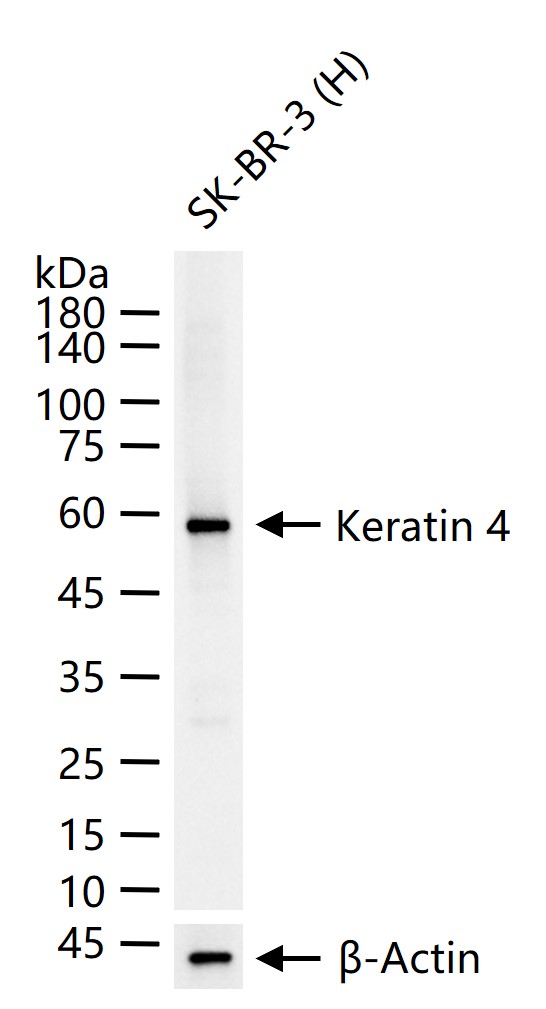
Figure 1. 25 ug total protein per lane of various lysates (see on figure) probed with Keratin 4 monoclonal antibody, unconjugated (SLM-60219R) at 1:1000 dilution and 4°C overnight incubation. Followed by conjugated secondary antibody incubation at r.t. for 60 min
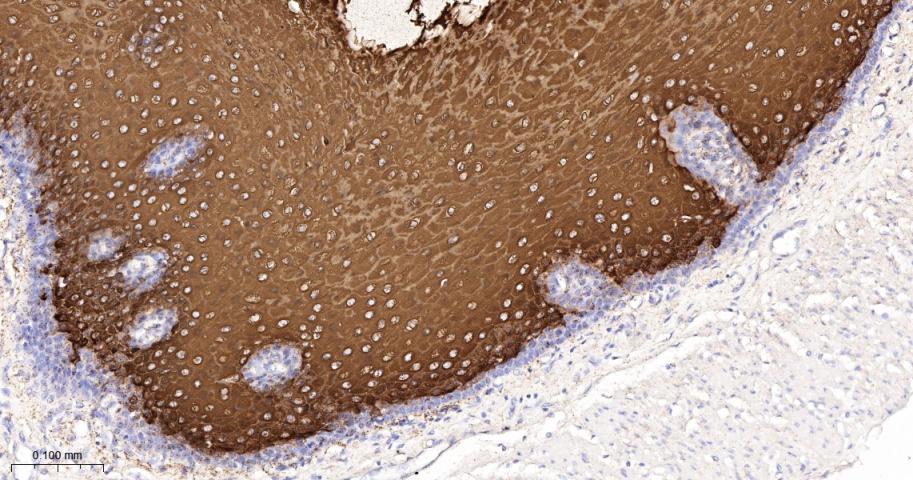
Figure 2. Paraformaldehyde-fixed, paraffin embedded Human Esophagus; Antigen retrieval by boiling in sodium citrate buffer (pH6.0) for 15 min; The section was incubated with Keratin 4 Monoclonal Antibody, Unconjugated (SLM-60219R) at 1:200 overnight at 4°C, followed by conjugation to the SL0295G-HRP and DAB (C-0010) staining
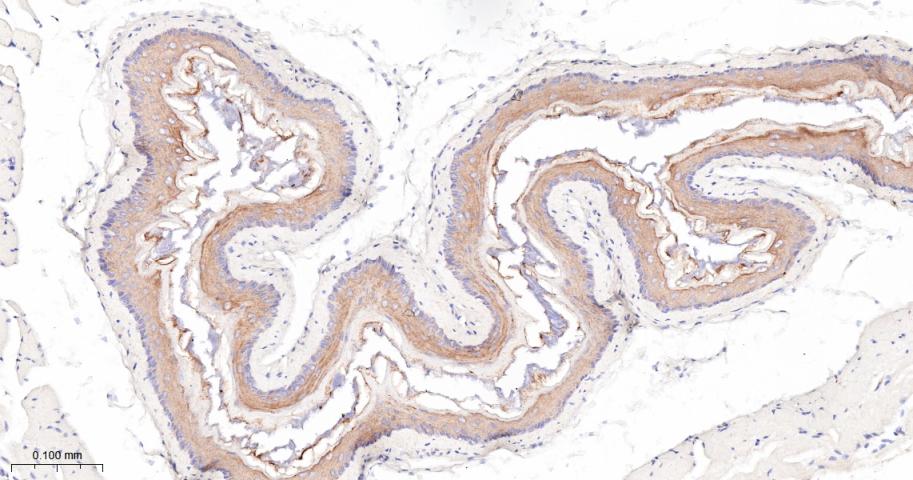
Figure 3. Paraformaldehyde-fixed, paraffin embedded Mouse Esophagus; Antigen retrieval by boiling in sodium citrate buffer (pH6.0) for 15 min; The section was incubated with Keratin 4 Monoclonal Antibody, Unconjugated (SLM-60219R) at 1:200 overnight at 4°C, followed by conjugation to the SL0295G-HRP and DAB (C-0010) staining
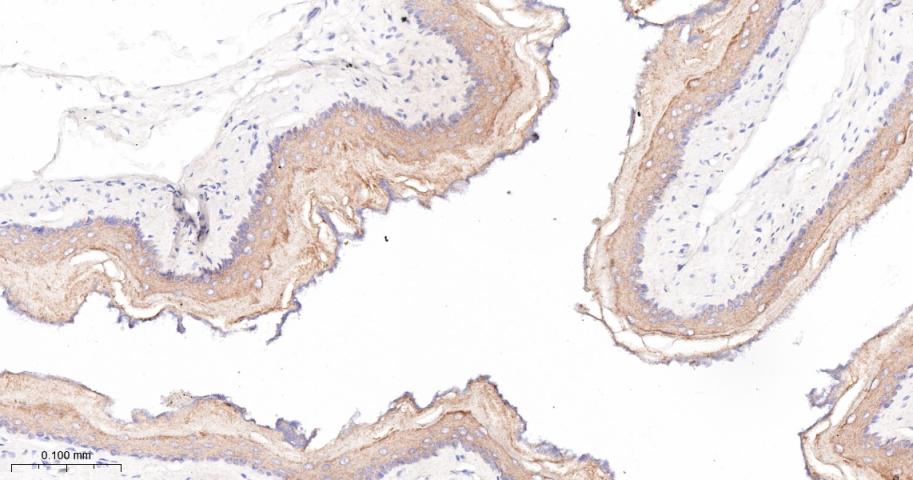
Figure 4. Paraformaldehyde-fixed, paraffin embedded Rat Esophagus; Antigen retrieval by boiling in sodium citrate buffer (pH6.0) for 15 min; The section was incubated with Keratin 4 Monoclonal Antibody, Unconjugated (SLM-60219R) at 1:200 overnight at 4°C, followed by conjugation to the SL0295G-HRP and DAB (C-0010) staining
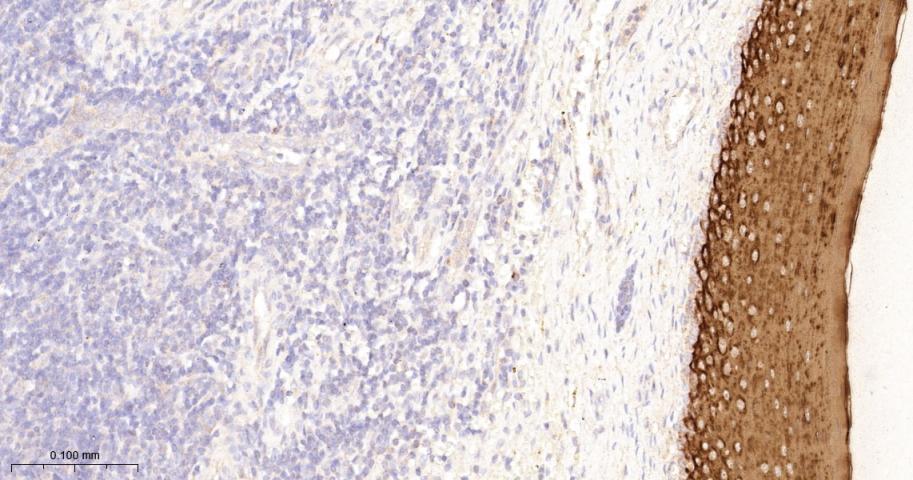
Figure 5. Paraformaldehyde-fixed, paraffin embedded Human Tonsil; Antigen retrieval by boiling in sodium citrate buffer (pH6.0) for 15 min; The section was incubated with Keratin 4 Monoclonal Antibody, Unconjugated (SLM-60219R) at 1:200 overnight at 4°C, followed by conjugation to the SL0295G-HRP and DAB (C-0010) staining
Ordering & shipping
- Minimum order: 1 unit
- Lead time: varies with order quantity and specifications. Please consult your local distributor or our sales team for confirmation
- Payment: T/T 100% in advance; PayPal; Alibaba Trade Assurance
- Shipping: FedEx / DHL / UPS express; cold-chain packing available on request
- Price: USD, per unit (50ul / 100ul)
Partial purchase records(bought amounts latest4)
| Username | Quantity | bought time |
| Ni*** | 1 | 2026-08-07 |
| Vi*** | 1 | 2026-06-07 |
| Ga*** | 1 | 2026-04-19 |
| Sa*** | 1 | 2026-03-28 |
User Comment(Total0User Comment Num)
- No comment


 +86 571 56623320

 SUNLONG BIOTECH


