
The same Pa...
-

-
Eosin Y Aqueous Solution,0.5%
Shop price:$83.0
-
-
Alcoholic Hematoxylin Solutin,5%
Shop price:$183.0
-
-
Celestine Blue Stain Solution
Shop price:$50.0
-
-
Hematoxylin-Eosin(HE) Differentiation Solution
Shop price:$50.0
-
-
Lithium Carbonate Solution,0.05%
Shop price:$28.0
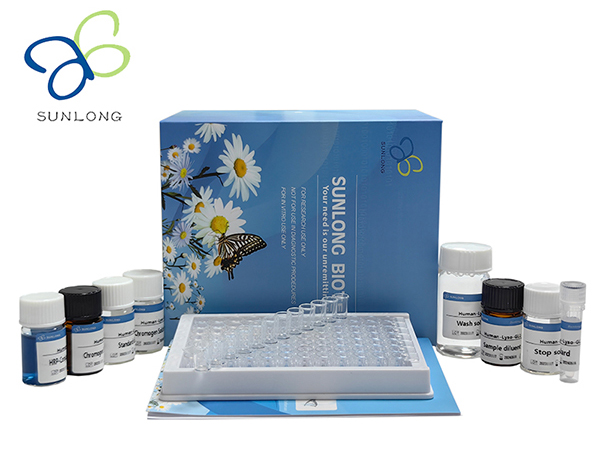
Details
Note: This product is supplied as a lyophilized powder. Before use, briefly centrifuge the vial, then dissolve in an appropriate solvent.
Storage: Store at -20°C in a dry, dark place. Valid for 1 year. If reconstituted into a solution, aliquot in small volumes.
Introduction
Phalloidin is a toxin isolated from the deadly Amanita phalloides mushroom. It is a bicyclic peptide that specifically binds to F-actin [1]. Fluorescently labeled phalloidin facilitates the convenient study of F-actin distribution. Within phalloidin, an unusual thioether bridge forms an internal loop between cysteine and tryptophan residues. At elevated pH, this thioether bond is cleaved, causing phalloidin to lose its affinity for actin.
Fluorescently labeled phalloidin can stain F-actin at nanomolar levels [1-3]. In various plant and animal cells, the labeled phalloidin has similar affinities for large and small filaments, binding on average one phalloidin molecule per actin subunit. Unlike antibodies, the binding affinity of phalloidin to actin does not vary significantly across species. Non-specific staining is negligible, and the contrast between stained and unstained regions is very high. Phalloidin shifts the monomer/polymer equilibrium towards the polymeric state, reducing the critical concentration for polymerization by about 30-fold [3,4]. Phallotoxins stabilize F-actin by inhibiting the depolymerization caused by cytochalasin, potassium iodide, and elevated temperatures. Because phalloidin conjugates are small, with a diameter of approximately 12-15 Å and a molecular weight<2000 Daltons, various actin-binding proteins, including myosin, tropomyosin, and post-troponin, can still bind to phalloidin-labeled actin. More importantly, phalloidin-labeled actin filaments retain their function; labeled glycerinated muscle fibers continue to contract, and labeled actin filaments can still move [5,6]. Fluorescently labeled phalloidin can also be used for quantitative studies of F-actin in cells [7,8].
Protocols:
1. Preparation of Stock Solution:
Fluorescently Labeled Phalloidin: Dissolve the lyophilized powder in the brown vial with an appropriate volume of methanol or sterile water to prepare a stock solution of 200 T/mL (for a 300 T dye, add 1.5 mL of liquid).
Note: One unit (T) of fluorescently labeled phalloidin is defined as the amount of dye used to stain one slide of loaded cells. The recommended dilution ratio for use is 1:40-1:200, which corresponds to adding 1-5 μL of the 200 T/mL stock solution to a total staining volume of 200 μL.
Note: The dilution ratio can be adjusted based on actual staining results.
2. Cell Staining:
A. Fixed Cell Staining
The following protocol is for staining adherent cells grown on glass coverslips or 8-well chamber slides. Phalloidin can also be used to stain fixed frozen tissue sections but is not recommended for paraffin-embedded tissue sections.
1) Wash the cells three times with PBS.
2) Fix the cells with 4% paraformaldehyde in PBS for 20 minutes at room temperature.
Note: Methanol can disrupt actin during fixation. Therefore, it is best to avoid fixatives containing any methanol. The preferred fixative is paraformaldehyde without methanol.
4) Wash the cells three times with PBS.
5) Permeabilize the cells with 0.4% Triton X-100 in PBS for 10 minutes at room temperature.
6) Wash the cells three times with PBS.
7) Dilute 1-5 μL of the fluorescently labeled phalloidin stock solution in 200 μL of PBS, and add it to a coverslip or well. Incubate at room temperature for 20 minutes to stain.
Note: The staining volume can be adjusted according to the sample. To prevent evaporation of the staining solution during incubation, the coverslip can be placed in a sealed container.
9) Wash the cells two to three times with PBS.
10) Observe under a fluorescence microscope. This product has excellent photostability, and samples can be imaged in PBS. However, for optimal results, an antifade reagent can be used.
B. Live Cell Staining
Fluorescently labeled phalloidin is not cell-permeable and therefore has not been widely used for live cell labeling. However, reports suggest that live cells may be labeled through endocytosis or unknown mechanisms [9-12]. Generally, more dye is needed to stain live cells. Alternatively, fluorescently labeled phalloidin can be injected into cells to monitor actin distribution and cell movement [13-16].
Reference
1.Wieland, T. in Phallotoxins, Springer-Verlag, New York (1986);
2. J Muscle Res Cell Motil 9, 370 (1988);
3. Methods Enzymol 85, 514 (1982);
4. Eur J Biochem 165, 125 (1987);
5. Nature 326, 805 (1987);
6. Proc Natl Acad Sci USA 83, 6272 (1986);
7. Blood 69, 945 (1987);
8. Anal Biochem 200, 199 (1992);
9. J Cell Biol 105, 1473 (1987);
10. Proc Natl Acad Sci USA 77, 980 (1980);
11. Nature 284, 405 (1980);
12. CRC Crit Rev Biochem 5, 185 (1978);
13. J Cell Biol 106, 1229 (1988);
14. J Cell Biol 103, 265a (1986);
15. Eur J Cell Biol 24, 176 (1981);
16. Proc Natl Acad Sci USA 74, 5613 (1977)
Cartpieces
Totalgoods,subtotals:¥Checkout
Partial purchase records(bought amounts latest0)
User Comment(Total0User Comment Num)
- No comment


 +86 571 56623320
 SUNLONG BIOTECH

