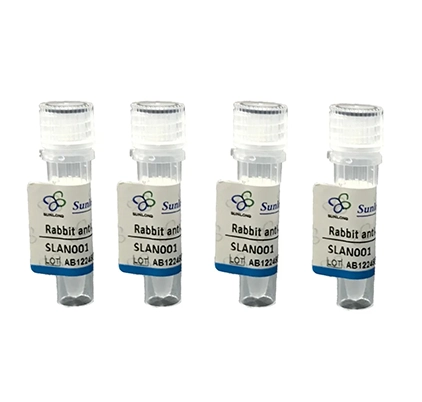
Rabbit Anti-GPR106/Biotin Conjugated antibody
G protein coupled receptor 106; G-protein coupled receptor 106; G protein coupled receptor affecting testicular descent; GPR106; GPR-106; GREAT; INSL3R; Leucine rich repeat containing G protein coupled receptor 8; LGR8; Relaxin/insulin-like family peptide
All categories
View History [Clear]
Details
Product Name Anti-GPR106/Biotin Chinese Name 生物素标记的G protein-coupled receptor106抗体 Alias G protein coupled receptor 106; G-protein coupled receptor 106; G protein coupled receptor affecting testicular descent; GPR106; GPR-106; GREAT; INSL3R; Leucine rich repeat containing G protein coupled receptor 8; LGR8; Relaxin/insulin-like family peptide receptor 2; Relaxin family peptide receptor 2; Relaxin receptor 2; Relaxin receptor-2; RXFP 2; RXFP-2; RXFP2; RXFPR2; RXFP2_HUMAN; GPCR LGR8. Research Area Cell biology Neurobiology Signal transduction The cell membraneReceptor Endocrinopathy G protein-coupled receptor Immunogen Species Rabbit Clonality Polyclonal React Species Rat(predicted:Human,Mouse,Dog,Pig,Cow,Horse,Rabbit,Sheep) Applications IHC-P=1:100-500,IHC-F=1:100-500,IF=1:100-500
not yet tested in other applications.
optimal dilutions/concentrations should be determined by the end user.Molecular weight 86kDa Form Lyophilized or Liquid Concentration 1mg/ml immunogen KLH conjugated synthetic peptide derived from human GPR106 Lsotype IgG Purification affinity purified by Protein A Storage Buffer 1M TBS(pH7.4) with 1% BSA, 3% Proclin300 and 50% Glycerol. Storage Store at -20 °C for one year. Avoid repeated freeze/thaw cycles. The lyophilized antibody is stable at room temperature for at least one month and for greater than a year when kept at -20°C. When reconstituted in sterile pH 7.4 1M PBS or diluent of antibody the antibody is stable for at least two weeks at 2-4 °C. Product Detail background:
This gene encodes a member of the GPCR (G protein-coupled, 7-transmembrane receptor) family. Mutations in this gene are associated with cryptorchidism. Alternatively spliced transcript variants encoding different isoforms have been found for this gene.[provided by RefSeq, Oct 2009].
Function:
The activity of this relaxin receptor is mediated by G proteins leading to stimulation of adenylate cyclase and an increase of cAMP and may also be a receptor for Leydig insulin-like peptide. LGR8 has been reported in blood, bone marrow, brain, kidney, muscle, testis, thyroid, and uterus.
Subcellular Location:
Cell membrane; Multi-pass membrane protein.
Tissue Specificity:
Expressed mainly in the brain, kidney, muscle, testis, thyroid, uterus, peripheral blood cells and bone marrow.
DISEASE:
Defects in RXFP2 are a cause of cryptorchidism (CRYPTO) [MIM:219050]; also known as impaired testicular descent. It is one of the most frequent congenital abnormalities in humans, involving 2-5% of male births. Cryptorchidism is associated with increased risk of infertility and testicular cancer.
Similarity:
Belongs to the G-protein coupled receptor 1 family.
Contains 1 LDL-receptor class A domain.
Contains 10 LRR (leucine-rich) repeats.
Database links:Entrez Gene: 122042 Human
Entrez Gene: 140498 Mouse
Omim: 606655 Human
SwissProt: Q8WXD0 Human
SwissProt: Q91ZZ5 Mouse
Unigene: 680763 Human
Unigene: 444643 Mouse
Important Note:
This product as supplied is intended for research use only, not for use in human, therapeutic or diagnostic applications.Ordering & shipping
- Minimum order: 1 unit
- Lead time: varies with order quantity and specifications. Please consult your local distributor or our sales team for confirmation
- Payment: T/T 100% in advance; PayPal; Alibaba Trade Assurance
- Shipping: FedEx / DHL / UPS express; cold-chain packing available on request
- Price: USD, per unit (100ul)
Partial purchase records(bought amounts latest5)
| Username | Quantity | bought time |
| Ni*** | 2 | 2024-03-31 |
| Xa*** | 2 | 2023-10-13 |
| Zo*** | 1 | 2023-09-25 |
| Za*** | 2 | 2023-06-29 |
| Na*** | 1 | 2023-06-25 |
User Comment(Total0User Comment Num)
- No comment


 +86 571 56623320

 SUNLONG BIOTECH


