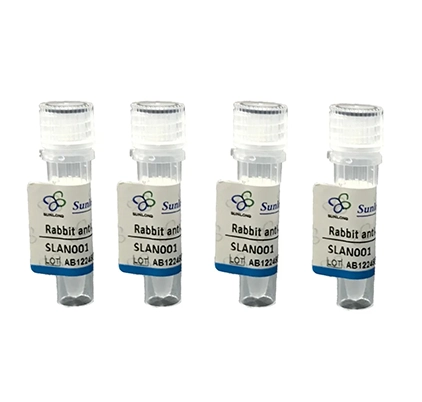
Rabbit Anti-GLK/FITC Conjugated antibody
Glucokinase; ATP D hexose 6 phosphotransferase; GCK; GK; GLK; Glucokinase isoform 1; Hexokinase 4; Hexokinase D; Hexokinase D pancreatic isozyme; Hexokinase type IV; Hexokinase4; HexokinaseD; HHF 3; HHF3; HK 4; HK IV; HK4; HXKP; Maturity onset diabetes of
All categories
View History [Clear]
Details
Product Name Anti-GLK/FITC Chinese Name FITC标记的葡萄糖激酶抗体 Alias Glucokinase; ATP D hexose 6 phosphotransferase; GCK; GK; GLK; Glucokinase isoform 1; Hexokinase 4; Hexokinase D; Hexokinase D pancreatic isozyme; Hexokinase type IV; Hexokinase4; HexokinaseD; HHF 3; HHF3; HK 4; HK IV; HK4; HXKP; Maturity onset diabetes of the young 2; MODY 2; MODY2; GLUKA; RNGK2; HXK4_HUMAN. Research Area immunology Kinases and Phosphatases Immunogen Species Rabbit Clonality Polyclonal React Species Human,Rat(predicted:Mouse,Chicken,Dog,Pig,Horse,Rabbit) Applications Flow-Cyt=3ug/Test, ICC/IF=1:100
not yet tested in other applications.
optimal dilutions/concentrations should be determined by the end user.Molecular weight 51kDa Form Lyophilized or Liquid Concentration 1mg/ml immunogen KLH conjugated synthetic peptide derived from human GCK C-terminus Lsotype IgG Purification affinity purified by Protein A Storage Buffer 1M TBS(pH7.4) with 1% BSA, 3% Proclin300 and 50% Glycerol. Storage Store at -20 °C for one year. Avoid repeated freeze/thaw cycles. The lyophilized antibody is stable at room temperature for at least one month and for greater than a year when kept at -20°C. When reconstituted in sterile pH 7.4 1M PBS or diluent of antibody the antibody is stable for at least two weeks at 2-4 °C. Product Detail background:
Hexokinases phosphorylate glucose to produce glucose 6 phosphate, thus committing glucose to the glycolytic pathway. Alternative splicing of this gene results in three tissue specific forms of glucokinase, one found in pancreatic islet beta cells and two found in liver. The protein localizes to the outer membrane of mitochondria. In contrast to other forms of hexokinase, this enzyme is not inhibited by its product glucose 6 phosphate but remains active while glucose is abundant. Mutations in this gene have been associated with non insulin dependent diabetes mellitus, also called maturity onset diabetes of the young, type 2; mutations have also been associated with persistent hyperinsulinemic hypoglycemia of infancy (PHHI).
Function:
Catalyzes the initial step in utilization of glucose by the beta-cell and liver at physiological glucose concentration. Glucokinase has a high Km for glucose, and so it is effective only when glucose is abundant. The role of GCK is to provide G6P for the synthesis of glycogen. Pancreatic glucokinase plays an important role in modulating insulin secretion. Hepatic glucokinase helps to facilitate the uptake and conversion of glucose by acting as an insulin-sensitive determinant of hepatic glucose usage.
Subunit:
Monomer.
Tissue Specificity:
Isoform 1 is expressed in pancreas. Isoform 2 and isoform 3 is expressed in liver.
DISEASE:
Defects in GCK are the cause of maturity-onset diabetes of the young type 2 (MODY2) [MIM:125851]; also shortened MODY-2. MODY is a form of diabetes that is characterized by an autosomal dominant mode of inheritance, onset in childhood or early adulthood (usually before 25 years of age), a primary defect in insulin secretion and frequent insulin-independence at the beginning of the disease. Defects in GCK are the cause of familial hyperinsulinemic hypoglycemia type 3 (HHF3) [MIM:602485]; also known as persistent hyperinsulinemic hypoglycemia of infancy (PHHI) or congenital hyperinsulinism. HHF is the most common cause of persistent hypoglycemia in infancy. Unless early and aggressive intervention is undertaken, brain damage from recurrent episodes of hypoglycemia may occur.
Similarity:
Belongs to the hexokinase family.
Database links:Entrez Gene: 2645 Human
Entrez Gene: 103988 Mouse
Omim: 138079 Human
SwissProt: P35557 Human
SwissProt: P52792 Mouse
Unigene: 1270 Human
Unigene: 220358 Mouse
Unigene: 10447 Rat
Important Note:
This product as supplied is intended for research use only, not for use in human, therapeutic or diagnostic applications.Ordering & shipping
- Minimum order: 1 unit
- Lead time: varies with order quantity and specifications. Please consult your local distributor or our sales team for confirmation
- Payment: T/T 100% in advance; PayPal; Alibaba Trade Assurance
- Shipping: FedEx / DHL / UPS express; cold-chain packing available on request
- Price: USD, per unit (100ul)
Partial purchase records(bought amounts latest2)
| Username | Quantity | bought time |
| Di*** | 1 | 2024-04-05 |
| Qu*** | 1 | 2023-06-29 |
User Comment(Total0User Comment Num)
- No comment


 +86 571 56623320

 SUNLONG BIOTECH


