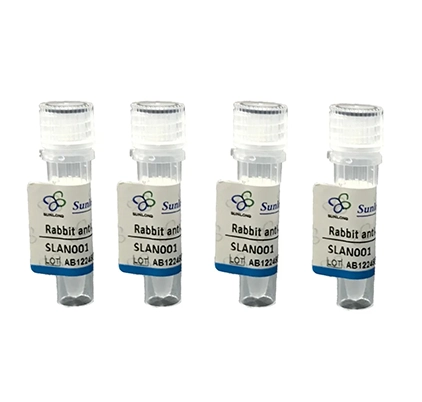
Rabbit Anti-Proteasome 20S alpha + beta/HRP Conjugated antibody
Macropain; Multicatalytic endopeptidase complex subunit; Proteasome 20S alpha+beta; Prosome subunit; Proteasome subunit alpha type 1; Proteasome subunit alpha type 5; Proteasome subunit alpha type 7; Proteasome subunit; Proteasome subunit beta type 1; Pro
All categories
View History [Clear]
Details
Product Name Anti-Proteasome 20S alpha + beta/HRP Chinese Name 辣根过氧化物酶标记的蛋白酶体PSMα+β抗体 Alias Macropain; Multicatalytic endopeptidase complex subunit; Proteasome 20S alpha+beta; Prosome subunit; Proteasome subunit alpha type 1; Proteasome subunit alpha type 5; Proteasome subunit alpha type 7; Proteasome subunit; Proteasome subunit beta type 1; Proteasome subunit beta type 5; Proteasome subunit beta type 6; Proteasome subunit beta type 7; PSMA1; PSMA5; PSMA7; PSMB1; PSMB5; PSMB6; PSMB7; ZETA; PSA1_HUMAN. Research Area Cell biology immunology Cyclin Cell differentiation Immunogen Species Rabbit Clonality Polyclonal React Species Human,Mouse,Rat Applications IHC-P=1:100-500,IHC-F=1:100-500
not yet tested in other applications.
optimal dilutions/concentrations should be determined by the end user.Molecular weight 25-30kDa Form Lyophilized or Liquid Concentration 1mg/ml immunogen KLH conjugated synthetic peptide derived from hu Proteasome 20S alpha + beta Lsotype IgG Purification affinity purified by Protein A Storage Buffer 1M TBS(pH7.4) with 1% BSA, 3% Proclin300 and 50% Glycerol. Storage Store at -20 for one year. Avoid repeated freeze/thaw cycles. The lyophilized antibody is stable at room temperature for at least one month and for greater than a year when kept at -20°C. When reconstituted in sterile pH 7.4 1M PBS or diluent of antibody the antibody is stable for at least two weeks at 2-4°C. Product Detail background:
The proteasome is widely recognised as the central enzyme of non lysosomal protein degradation. It is responsible for intracellular protein turnover and it is also critically involved in many regulatory processes and, in higher eukaryotes, in antigen processing. The 26S proteasome is the key enzyme of the ubiquitin/ATP dependent pathway of protein degradation. The catalytic core of this unusually large (2000 kDa, 450?in length) complex is formed by the 20S proteasome, a barrel shaped structure shown by electron microscopy to comprise of four rings each containing seven subunits. Based on sequence similarity, all fourteen 20S proteasomal subunit sequences may be classified into two groups, alpha and beta, each group having distinct structural and functional roles. The alpha subunits comprise the outer rings and the beta subunits the inner rings of the 20S proteasome. Observations of the eukaryotic proteasome and analysis of subunit sequences indicate that each ring contains seven different subunits (alpha7 beta7 beta7 alpha7) with a member of each sub family represented in each particle. Each subunit is located in a unique position within the alpha or beta rings. 20S Proteasomes degrade only unfolded proteins in an energy independent manner, whereas 26S proteasomes degrade native and ubiquitinylated proteins in an ATP dependent manner. The native protein substrates are recognised by subunits, some with ATP binding sites, of the outer 19S caps of the 26S proteasome.
Function:
The proteasome is a multicatalytic proteinase complex with a highly ordered ring-shaped 20S core structure. The core structure is composed of 4 rings of 28 non-identical subunits; 2 rings are composed of 7 alpha subunits and 2 rings are composed of 7 beta subunits. Proteasomes are distributed throughout eukaryotic cells at a high concentration and cleave peptides in an ATP/ubiquitin-dependent process in a non-lysosomal pathway. An essential function of a modified proteasome, the immunoproteasome, is the processing of class I MHC peptides. This gene encodes a member of the peptidase T1A family, that is a 20S core alpha subunit. Alternative splicing results in multiple transcript variants encoding distinct isoforms.[provided by RefSeq, Jan 2009].
Subcellular Location:
Cytoplasmic and Nuclear.
Important Note:
This product as supplied is intended for research use only, not for use in human, therapeutic or diagnostic applications.Ordering & shipping
- Minimum order: 1 unit
- Lead time: varies with order quantity and specifications. Please consult your local distributor or our sales team for confirmation
- Payment: T/T 100% in advance; PayPal; Alibaba Trade Assurance
- Shipping: FedEx / DHL / UPS express; cold-chain packing available on request
- Price: USD, per unit (100ul)
Partial purchase records(bought amounts latest3)
| Username | Quantity | bought time |
| Re*** | 2 | 2024-03-04 |
| Na*** | 1 | 2023-12-24 |
| Ga*** | 1 | 2023-11-13 |
User Comment(Total0User Comment Num)
- No comment


 +86 571 56623320

 SUNLONG BIOTECH


