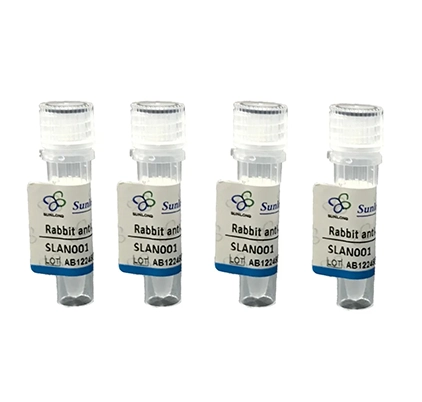
Rabbit Anti-BMP2 antibody
Bone morphogenetic protein 2; BMP 2; BMP 2A; BMP2A; BMP-2; BMP2_HUMAN.
All categories
View History [Clear]
Details
Product Name BMP2 Chinese Name 骨形态发生蛋白2抗体 Alias Bone morphogenetic protein 2; BMP 2; BMP 2A; BMP2A; BMP-2; BMP2_HUMAN. literatures Research Area Cell biology immunology Developmental biology Neurobiology Growth factors and hormones Immunogen Species Rabbit Clonality Polyclonal React Species Mouse, Rat (predicted: Human, Rabbit, Sheep, Cow, Chicken, Dog, Horse) Applications WB (1:500-2000)
Not yet tested in other applications.
Optimal working dilutions must be determined by the end user.Theoretical molecular weight 13/44kDa Cellular localization Secretory protein Form Liquid Concentration 1mg/ml immunogen KLH conjugated synthetic peptide derived from human BMP2: 283-365/396 Lsotype IgG Purification affinity purified by Protein A Buffer Solution 1M TBS(pH7.4) with 1% BSA, 3% Proclin300 and 50% Glycerol. Storage Shipped at 4℃. Store at -20 °C for one year. Avoid repeated freeze/thaw cycles. Attention This product as supplied is intended for research use only, not for use in human, therapeutic or diagnostic applications. PubMed PubMed Product Detail BMP2 belongs to the transforming growth factor-beta (TGFB) superfamily of secreted growth factors. It is a disulfide-linked homodimer and induces bone and cartilage formation. In addition to its osteogenic activity, BMP2 plays an important role in cardiac morphogenesis and is expressed in a variety of tissues including lung, spleen, brain, liver, prostate ovary and small intestine. The functional form of BMP2 is a 26 kDa protein composed of two identical 114 amino acid polypeptide chains linked by a single disulfide bond. BMPs control fundamental events in early embryonic development, organogenesis and adult tissue homeostasis.
Function:
Induces cartilage and bone formation.
Subunit:
Homodimer; disulfide-linked. Interacts with SOSTDC1. Interacts with GREM2, RGMA, RGMB and RGMC. Interacts with ASPN.
Subcellular Location:
Secreted.
Tissue Specificity:
Particularly abundant in lung, spleen and colon and in low but significant levels in heart, brain, placenta, liver, skeletal muscle, kidney, pancreas, prostate, ovary and small intestine.
Similarity:
Belongs to the TGF-beta family.
SWISS:
P12643
Gene ID:
650
Database links:Entrez Gene: 650 Human
Entrez Gene: 12156 Mouse
Omim: 112261 Human
SwissProt: P12643 Human
SwissProt: P21274 Mouse
Unigene: 73853 Human
Unigene: 103205 Mouse
Unigene: 90931 Rat
Neural stem cell marker
BMP-2 mainly recruits and induces differentiation of undifferentiated mesenchymal cells and cells of the bone lineage. In early bone formation, BMP-2 not only recruits undifferentiated mesenchymal cells to bone-forming centres and induces their differentiation into bone lineage cells, but can also induce reversal of fibroblasts, myoblasts and bone marrow stromal cells into bone lineage cells. The main process is: increasing or inhibiting the secretion of certain specific proteins in these cells, causing fibroblast differentiation into osteoblasts and rapid differentiation of myoblasts into hypertrophic chondrocytes, and promoting matrix calcification.
For osteoblasts, BMP-2 maintains their specific cell phenotype, induces an increase in osteoblast markers and promotes extracellular matrix calcification. In the late stage of bone formation, BMP-2 also acts as an osteoclast differentiation factor, directly or indirectly stimulating osteoclast differentiation together with other supporting osteoclast differentiation factors, and participates in bone remodelling.Product Picture
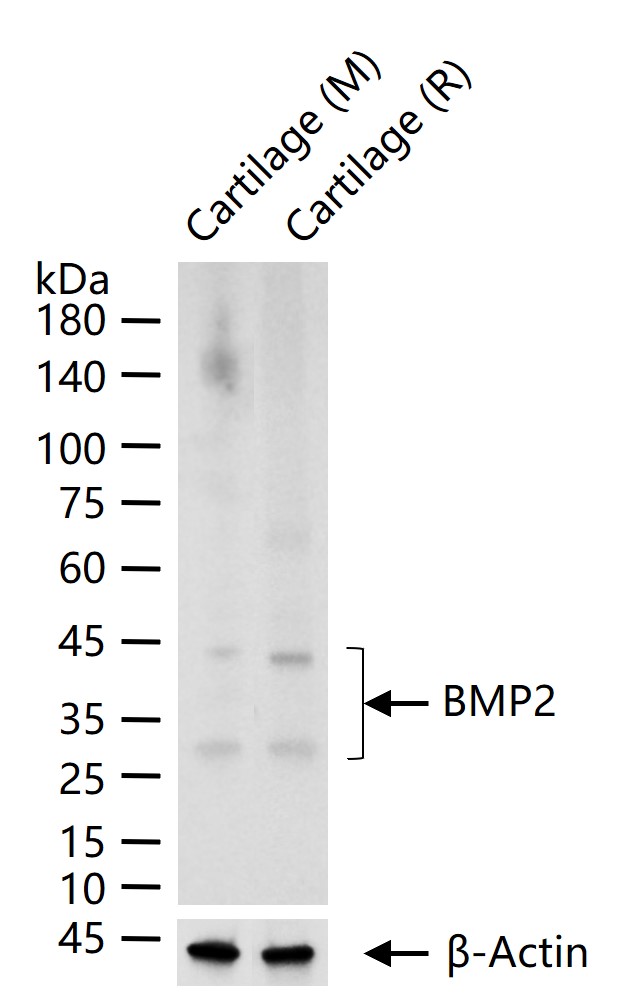
Figure 1. 25 ug total protein per lane of various lysates (see on figure) probed with BMP2 polyclonal antibody, unconjugated (SL1012R) at 1:1000 dilution and 4°C overnight incubation. Followed by conjugated secondary antibody incubation at r.t. for 60 min
Partial purchase records(bought amounts latest2)
| Username | Quantity | bought time |
| Um*** | 1 | 2026-05-19 |
| Sa*** | 1 | 2026-03-13 |
User Comment(Total0User Comment Num)
- No comment


 +86 571 56623320

 SUNLONG BIOTECH


