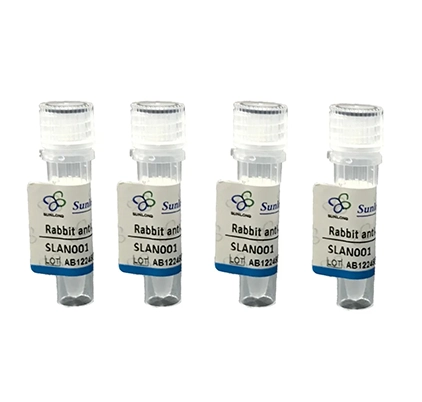
Rabbit Anti-BBS7 antibody
Bardet-Biedl syndrome 7; Bardet-Biedl syndrome 7 protein; BBS2-like 1; BBS7_HUMAN.
All categories
View History [Clear]
Details
Product Name BBS7 Chinese Name 巴尔得-别德尔综合征相关蛋白7抗体 Alias Bardet-Biedl syndrome 7; Bardet-Biedl syndrome 7 protein; BBS2-like 1; BBS7_HUMAN. Research Area Tumour Cell biology Neurobiology Endocrinopathy Immunogen Species Rabbit Clonality Polyclonal React Species (predicted: Human, Mouse, Rat, Chicken, Dog, Pig, Cow, Horse, Rabbit, Sheep, ) Applications WB=1:500-2000,IHC-P=1:100-500,IHC-F=1:100-500,ICC/IF=1:100-500,IF=1:100-500,ELISA=1:5000-10000 (Paraffin sections need antigen repair)
not yet tested in other applications.
optimal dilutions/concentrations should be determined by the end user.Theoretical molecular weight 80kDa Cellular localization cytoplasmic The cell membrane Form Liquid Concentration 1mg/ml immunogen KLH conjugated synthetic peptide derived from human BBS7: 551-620/715 Lsotype IgG Purification affinity purified by Protein A Buffer Solution 1M TBS(pH7.4) with 1% BSA, 3% Proclin300 and 50% Glycerol. Storage Shipped at 4℃. Store at -20 °C for one year. Avoid repeated freeze/thaw cycles. Attention This product as supplied is intended for research use only, not for use in human, therapeutic or diagnostic applications. PubMed PubMed Product Detail Bardet-Biedl syndrome (BBS) is a pleiotropic genetic disorder characterized by obesity, photoreceptor degeneration, polydactyly, hypogenitalism, renal abnormalities, and developmental delay. BBS patients also have an increased risk of developing diabetes, hypertension, and congenital heart defects. BBS is a heterogeneous disorder mapping to eight genetic loci and encoding eight proteins, BBS1-BBS8. Five BBS proteins encode basal body or cilia proteins, suggesting that BBS is a ciliary dysfunction disorder. BBS2 contains two overlapping genes: BBS2L1 and BBS2L2. BBSL1 was re-named BBS7, whereas BBS2L2 independently funcitons as BBS1. BBS7 contains 672 amino acids and is expressed at low to moderate levels in most human tissues.
Function:
BBS7 is a widely expressed protein with similarity to BBS2. Defects in BBS7 are a cause of Bardet-Biedl syndrome type 7 (BBS7) which is a genetically heterogeneous disorder characterized by usually severe pigmentary retinopathy, early onset obesity, polydactyly, hypogenitalism, renal malformation and mental retardation. The encoded protein may play a role in eye, limb, cardiac and reproductive system development. Two transcript variants encoding distinct isoforms have been identified for this gene.
Subunit:
Part of BBSome complex, that contains BBS1, BBS2, BBS4, BBS5, BBS7, BBS8, BBS9 and BBIP10. The BBSome complex binds to PCM1 and tubulin. Interacts with BBS2 (via C-terminus). Interacts with CCDC28B.
Subcellular Location:
Cell projection, cilium membrane. Cytoplasm
Tissue Specificity:
soform 2 is ubiquitously expressed. Isoform 1 is expressed in retina, lung, liver, testis, ovary, prostate, small intestine, liver, brain, heart and pancreas.
DISEASE:
Note=Ciliary dysfunction leads to a broad spectrum of disorders, collectively termed ciliopathies. Overlapping clinical features include retinal degeneration, renal cystic disease, skeletal abnormalities, fibrosis of various organ, and a complex range of anatomical and functional defects of the central and peripheral nervous system. The ciliopathy range of diseases includes Meckel-Gruber syndrome, Bardet-Biedl syndrome, Joubert syndrome, nephronophtisis, Senior-Loken syndrome, and Jeune asphyxiating thoracic dystrophy among others. Single-locus allelism is insufficient to explain the variable penetrance and expressivity of such disorders, leading to the suggestion that variations across multiple sites of the ciliary proteome, including BBS7, influence the clinical outcome.
Defects in BBS7 are a cause of Bardet-Biedl syndrome type 7 (BBS7) [MIM:209900]. Bardet-Biedl syndrome (BBS) is a genetically heterogeneous disorder characterized by usually severe pigmentary retinopathy, early onset obesity, polydactyly, hypogenitalism, renal malformation and mental retardation. Secondary features include diabetes mellitus, hypertension and congenital heart disease. A relatively high incidence of BBS is found in the mixed Arab populations of Kuwait and in Bedouin tribes throughout the Middle East, most likely due to the high rate of consaguinity in these populations and a founder effect. Inheritance is autosomal recessive, but three mutated alleles (two at one locus, and a third at a second locus) may be required for disease manifestation in some cases (triallelic inheritance).
SWISS:
Q8IWZ6
Gene ID:
55212
Database links:Entrez Gene: 55212 Human
Entrez Gene: 71492 Mouse
Omim: 607590 Human
SwissProt: Q8IWZ6 Human
SwissProt: Q8K2G4 Mouse
Unigene: 591694 Human
Unigene: 286187 Mouse
Unigene: 28442 Rat
BBS proteins are one of the types associated with research on early childhood obesity syndrome. Bardet-Biedl syndrome (BBS) is characterized by varying degrees of obesity, intellectual delay, pigmentary retinopathy, polydactyly, and renal abnormalities.Ordering & shipping
- Minimum order: 1 unit
- Lead time: varies with order quantity and specifications. Please consult your local distributor or our sales team for confirmation
- Payment: T/T 100% in advance; PayPal; Alibaba Trade Assurance
- Shipping: FedEx / DHL / UPS express; cold-chain packing available on request
- Price: USD, per unit (50ul / 100ul)
Partial purchase records(bought amounts latest3)
| Username | Quantity | bought time |
| Sa*** | 1 | 2026-04-21 |
| Vi*** | 1 | 2026-02-21 |
| Vi*** | 1 | 2026-01-30 |
User Comment(Total0User Comment Num)
- No comment


 +86 571 56623320

 SUNLONG BIOTECH


