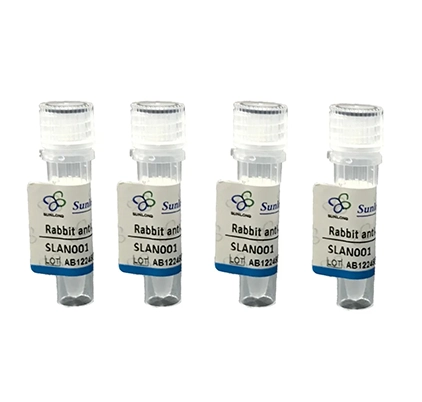
Rabbit Anti-Cytokeratin 2e antibody
K 2e; Cytokeratin-2e; Epithelial keratin-2e; K2e; Keratin type II cytoskeletal 2 epidermal; Keratin-2 epidermis; KRT2; K22E_HUMAN; KRT2A; KRT2E; Type-II keratin Kb2.
All categories
View History [Clear]
Details
Product Name Cytokeratin 2e Chinese Name 细胞角蛋白2e抗体 Alias K 2e; Cytokeratin-2e; Epithelial keratin-2e; K2e; Keratin type II cytoskeletal 2 epidermal; Keratin-2 epidermis; KRT2; K22E_HUMAN; KRT2A; KRT2E; Type-II keratin Kb2. Research Area Cell biology Signal transduction Immunogen Species Rabbit Clonality Polyclonal React Species Human, Applications WB=1:500-2000,IHC-P=1:100-500,IHC-F=1:100-500,IF=1:100-500 (Paraffin sections need antigen repair)
not yet tested in other applications.
optimal dilutions/concentrations should be determined by the end user.Theoretical molecular weight 70kDa Cellular localization cytoplasmic Form Liquid Concentration 1mg/ml immunogen KLH conjugated synthetic peptide derived from human Cytokeratin 2e: 251-350/639 Lsotype IgG Purification affinity purified by Protein A Buffer Solution 1M TBS(pH7.4) with 1% BSA, 3% Proclin300 and 50% Glycerol. Storage Shipped at 4℃. Store at -20 °C for one year. Avoid repeated freeze/thaw cycles. Attention This product as supplied is intended for research use only, not for use in human, therapeutic or diagnostic applications. PubMed PubMed Product Detail The protein encoded by this gene is a member of the keratin gene family. The type II cytokeratins consist of basic or neutral proteins which are arranged in pairs of heterotypic keratin chains coexpressed during differentiation of simple and stratified epithelial tissues. This type II cytokeratin is expressed largely in the upper spinous layer of epidermal keratinocytes and mutations in this gene have been associated with bullous congenital ichthyosiform erythroderma. The type II cytokeratins are clustered in a region of chromosome 12q12-q13. [provided by RefSeq, Jul 2008]
Function:
Keratins are the major gene product of keratinocytes and form the intermediate filament cytoskeletal network in these cells. In cells of the upper spinous layer, KRT2E and KRT9 are expressed. Although the expression of KRT9 is limited to palmoplantar epidermis, KRT2E is expressed not only in this tissue but also in other regions, notably the epidermis covering the knee, thigh, and groin. It is not known whether these keratins simply replace their respective type I or type II counterpart in the preexisting KRT1/KRT10 network or dimerize with another, as yet undiscovered keratin partner.
Subunit:
Heterotetramer of two type I and two type II keratins. Associates with KRT10.
Subcellular Location:
Cytoplasmic.
Tissue Specificity:
Expressed in the upper spinous and granular suprabasal layers of normal adult epidermal tissues from most body sites including thigh, breast nipple, foot sole, penile shaft and axilla. Not present in foreskin, squamous metaplasias and carcinomas. Expression in hypertrophic and keloid scars begins in the deepest suprabasal layer. Weakly expressed in normal gingival and tongue, however expression is induced in benign keratoses of lingual mucosa and in mild-to-moderate oral dysplasia with orthokeratinization.
DISEASE:
Ichthyosis bullosa of Siemens (IBS) [MIM:146800]: A rare autosomal dominant skin disorder displaying a type of epidermolytic hyperkeratosis characterized by generalized erythema and extensive blistering from birth. Large, dark gray hyperkeratoses are observed in later weeks. The skin of IBS patients is unusually fragile and has a tendency to shed the outer layers of the epidermis, producing localized denuded areas (molting effect). IBS usually improves with age so that in most middle-aged patients the hyperkeratosis and keratotic lichenification is limited to the flexural folds of the major joints. Note=The disease is caused by mutations affecting the gene represented in this entry.
Similarity:
Belongs to the intermediate filament family.
SWISS:
P35908
Gene ID:
3849
Database links:Entrez Gene: 3849 Human
Omim: 600194 Human
SwissProt: P35908 Human
Unigene: 707 Human
Product Picture 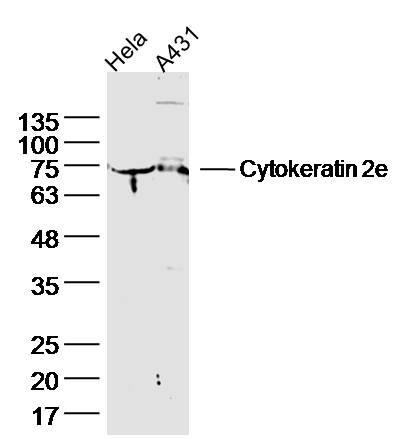 Sample:
Hela (Human) Cell Lysate at 40 ug
A431 (Human) Cell Lysate at 40 ug
Primary: Anti- Cytokeratin 2e (SL14184R)at 1/300 dilution
Secondary: IRDye800CW Goat Anti-RabbitIgG at 1/20000 dilution
Predicted band size: 65kD
Observed band size: 70kD
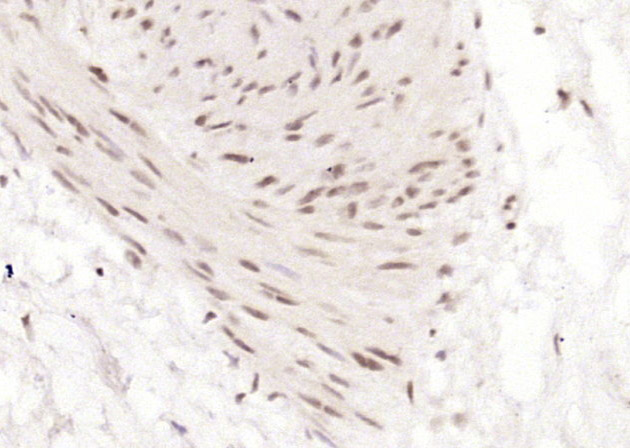 Paraformaldehyde-fixed, paraffin embedded (human cervical); Antigen retrieval by boiling in sodium citrate buffer (pH6.0) for 15min; Block endogenous peroxidase by 3% hydrogen peroxide for 20 minutes; Blocking buffer (normal goat serum) at 37°C for 30min; Antibody incubation with (Cytokeratin 2e) Polyclonal Antibody, Unconjugated (SL14184R) at 1:200 overnight at 4°C, followed by operating according to SP Kit(Rabbit) (sp-0023) instructionsand DAB staining.
Ordering & shipping
- Minimum order: 1 unit
- Lead time: varies with order quantity and specifications. Please consult your local distributor or our sales team for confirmation
- Payment: T/T 100% in advance; PayPal; Alibaba Trade Assurance
- Shipping: FedEx / DHL / UPS express; cold-chain packing available on request
- Price: USD, per unit (50ul / 100ul)
Partial purchase records(bought amounts latest6)
| Username | Quantity | bought time |
| Ow*** | 1 | 2026-08-15 |
| Pa*** | 1 | 2026-07-16 |
| Um*** | 1 | 2026-05-26 |
| Xa*** | 1 | 2026-05-13 |
| Qu*** | 1 | 2026-04-06 |
User Comment(Total0User Comment Num)
- No comment


 +86 571 56623320

 SUNLONG BIOTECH


