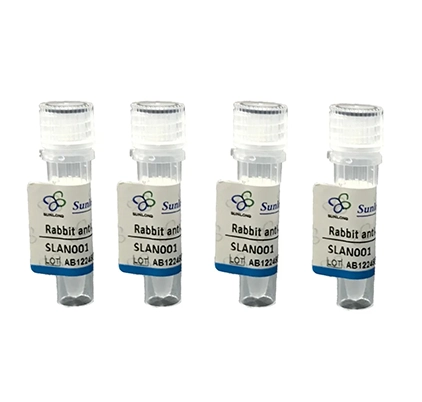
Rabbit Anti-DOLK antibody
CDG1M; DK; DK1; Dolichol kinase; KIAA1094; DOLK_HUMAN; SEC59; SEC59, YEAST, HOMOLOG OF; TMEM15; Transmembrane protein 15.
All categories
View History [Clear]
Details
Product Name DOLK Chinese Name TMEM15/Transmembrane protein15抗体 Alias CDG1M; DK; DK1; Dolichol kinase; KIAA1094; DOLK_HUMAN; SEC59; SEC59, YEAST, HOMOLOG OF; TMEM15; Transmembrane protein 15. Research Area Cell biology Transmembrane protein The cell membraneprotein Immunogen Species Rabbit Clonality Polyclonal React Species Mouse(predicted:Human,Rat,Chicken,Pig,Cow,Horse,Sheep) Applications WB=1:500-2000
not yet tested in other applications.
optimal dilutions/concentrations should be determined by the end user.Theoretical molecular weight 59kDa Cellular localization The cell membrane Form Liquid Concentration 1mg/ml immunogen KLH conjugated synthetic peptide derived from human DOLK: 401-500/538 Lsotype IgG Purification affinity purified by Protein A Buffer Solution 1M TBS(pH7.4) with 1% BSA, 3% Proclin300 and 50% Glycerol. Storage Shipped at 4℃. Store at -20 °C for one year. Avoid repeated freeze/thaw cycles. Attention This product as supplied is intended for research use only, not for use in human, therapeutic or diagnostic applications. PubMed PubMed Product Detail The protein encoded by this gene catalyzes the CTP-mediated phosphorylation of dolichol, and is involved in the synthesis of Dol-P-Man, which is an essential glycosyl carrier lipid for C- and O-mannosylation, N- and O-linked glycosylation of proteins, and for the biosynthesis of glycosyl phosphatidylinositol anchors in endoplasmic reticulum. Mutations in this gene are associated with dolichol kinase deficiency.[provided by RefSeq, Apr 2010]
Function:
DOLK belongs to the polyprenol kinase family. Defects in DOLK are the cause of congenital disorder of glycosylation type 1M (CDG1M), also known as dolichol kinase deficiency.
Subcellular Location:
Endoplasmic reticulum integral membrane protein
Tissue Specificity:
Ubiquitous.
DISEASE:
Congenital disorder of glycosylation 1M (CDG1M) [MIM:610768]: A multisystem disorder caused by a defect in glycoprotein biosynthesis and characterized by under-glycosylated serum glycoproteins. Congenital disorders of glycosylation result in a wide variety of clinical features, such as defects in the nervous system development, psychomotor retardation, dysmorphic features, hypotonia, coagulation disorders, and immunodeficiency. The broad spectrum of features reflects the critical role of N-glycoproteins during embryonic development, differentiation, and maintenance of cell functions. CDG1M is a very severe disease with death occurring in early life. Note=The disease is caused by mutations affecting the gene represented in this entry.
Similarity:
Belongs to the polyprenol kinase family.
SWISS:
Q9UPQ8
Gene ID:
22845
Database links:Entrez Gene: 22845 Human
Omim: 610746 Human
SwissProt: Q9UPQ8 Human
Product Picture 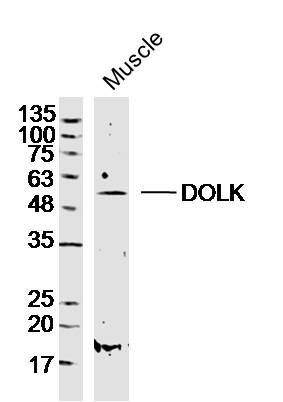 Sample:Muscle (Mouse)Lysate at 40 ug
Primary: Anti-DOLK(SL14406R)at 1/300 dilution
Secondary: IRDye800CW Goat Anti-RabbitIgG at 1/20000 dilution
Predicted band size: 59kD
Observed band size: 59kD
Ordering & shipping
- Minimum order: 1 unit
- Lead time: varies with order quantity and specifications. Please consult your local distributor or our sales team for confirmation
- Payment: T/T 100% in advance; PayPal; Alibaba Trade Assurance
- Shipping: FedEx / DHL / UPS express; cold-chain packing available on request
- Price: USD, per unit (50ul / 100ul)
Partial purchase records(bought amounts latest3)
| Username | Quantity | bought time |
| Zo*** | 1 | 2026-07-17 |
| Za*** | 1 | 2026-05-31 |
| Na*** | 1 | 2026-03-12 |
User Comment(Total0User Comment Num)
- No comment


 +86 571 56623320

 SUNLONG BIOTECH


