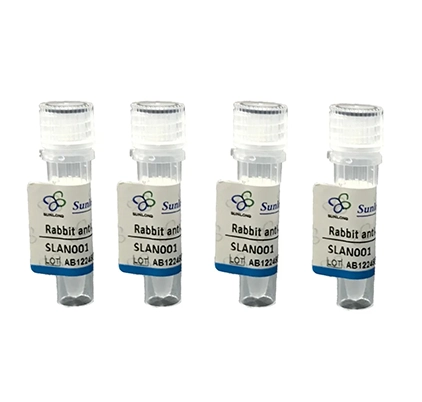
Rabbit Anti-CXCL10/IP10 antibody
10 kDa interferon gamma induced protein; C7; Chemokine (C X C motif) ligand 10; Chemokine CXC motif ligand 10; Crg 2; CRG2; CXCL 10; CXCL10; Gamma IP10; gIP 10; GIP10; IFI 10; IFI10; INP 10; INP10; Interferon activated gene 10; Interferon gamma induced ce
All categories
View History [Clear]
Details
Product Name CXCL10/IP10 Chinese Name CXCL10Chemokine10/Interferon诱导蛋白10抗体 Alias 10 kDa interferon gamma induced protein; C7; Chemokine (C X C motif) ligand 10; Chemokine CXC motif ligand 10; Crg 2; CRG2; CXCL 10; CXCL10; Gamma IP10; gIP 10; GIP10; IFI 10; IFI10; INP 10; INP10; Interferon activated gene 10; Interferon gamma induced cell line; Interferon inducible cytokine IP 10; MOB1; SCYB 10; SCYB10; Small inducible cytokine B10; Small inducible cytokine B10 precursor; Small inducible cytokine subfamily B (Cys X Cys) member 10; Gamma-IP-10. literatures Research Area Tumour Cell biology immunology transcriptional regulatory factor Immunogen Species Rabbit Clonality Polyclonal React Species Human,Mouse,Rat Applications IHC-P=1:100-500,IHC-F=1:100-500,IF=1:100-500,Flow-Cyt=1ug/Test (Paraffin sections need antigen repair)
not yet tested in other applications.
optimal dilutions/concentrations should be determined by the end user.Theoretical molecular weight 10kDa Cellular localization Secretory protein Form Liquid Concentration 1mg/ml immunogen KLH conjugated synthetic peptide derived from mouse CXCL10: 35-98/98 Lsotype IgG Purification affinity purified by Protein A Buffer Solution 1M TBS(pH7.4) with 1% BSA, 3% Proclin300 and 50% Glycerol. Storage Shipped at 4℃. Store at -20 °C for one year. Avoid repeated freeze/thaw cycles. Attention This product as supplied is intended for research use only, not for use in human, therapeutic or diagnostic applications. PubMed PubMed Product Detail This antimicrobial gene encodes a chemokine of the CXC subfamily and ligand for the receptor CXCR3. Binding of this protein to CXCR3 results in pleiotropic effects, including stimulation of monocytes, natural killer and T-cell migration, and modulation of adhesion molecule expression. This gene may also be a key regulator of the 'cytokine storm' immune response to SARS-CoV-2 infection. [provided by RefSeq, Sep 2020]
Function:
Chemotactic for monocytes and T-lymphocytes. Binds to CXCR3.
Subcellular Location:
Secreted.
Post-translational modifications:
CXCL10(1-73) is produced by proteolytic cleavage after secretion from keratinocytes.
Similarity:
Belongs to the intercrine alpha (chemokine CxC) family.
SWISS:
P17515
Gene ID:
15945
Database links:
Entrez Gene: 3627 Human
Entrez Gene: 15945 Mouse
Omim: 147310 Human
SwissProt: P02778 Human
SwissProt: P17515 Mouse
Unigene: 632586 Human
Unigene: 877 Mouse
Unigene: 10584 Rat
CancelWB; 2017.4.20; Ji;Product Picture 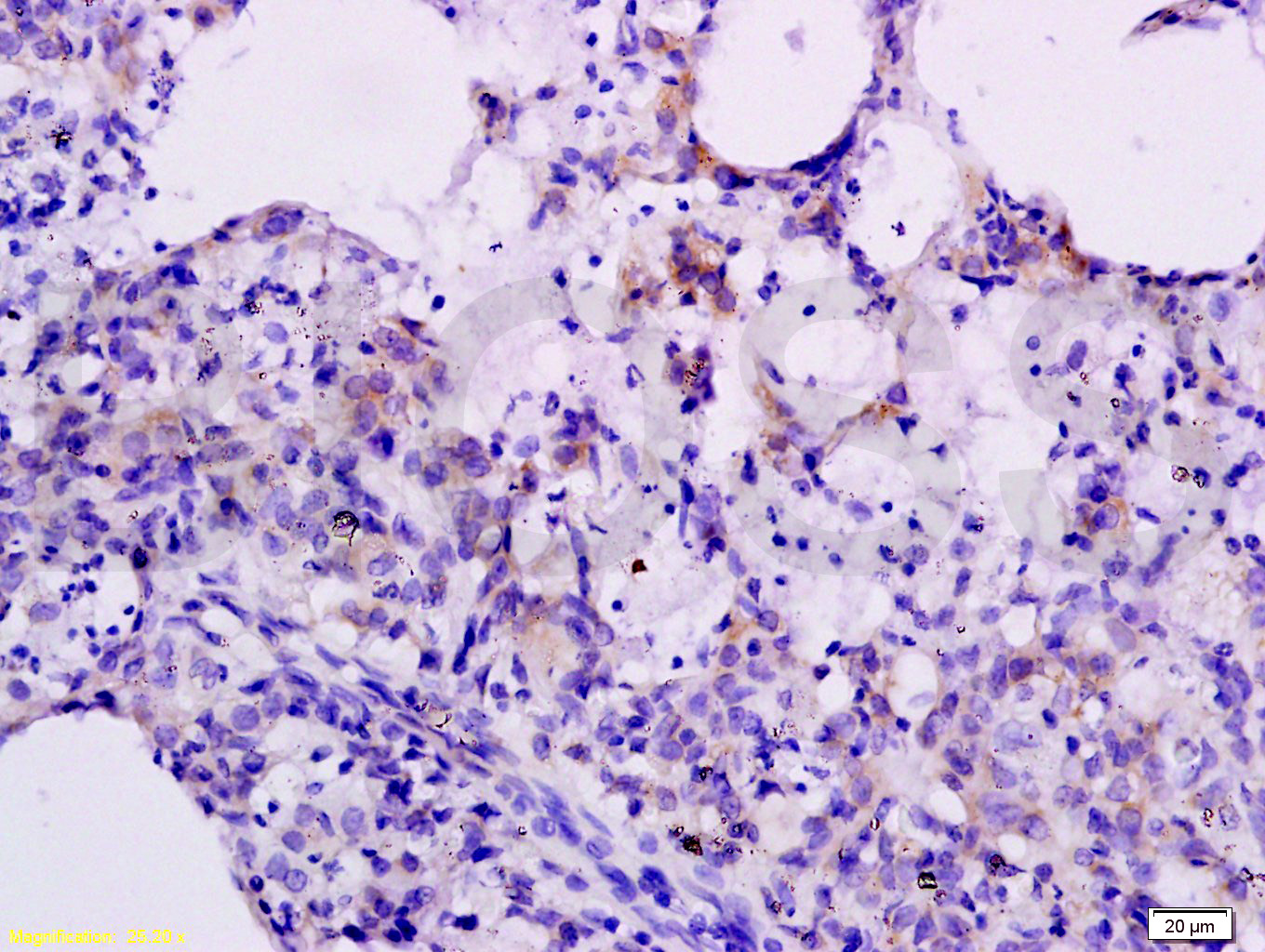 Tissue/cell: rat lung tissue; 4% Paraformaldehyde-fixed and paraffin-embedded;
Antigen retrieval: citrate buffer ( 1M, pH 6.0 ), Boiling bathing for 15min; Block endogenous peroxidase by 3% Hydrogen peroxide for 30min; Blocking buffer (normal goat serum,C-0005) at 37℃ for 20 min;
Incubation: Anti-CXCL10 Polyclonal Antibody, Unconjugated(SL1502R) 1:200, overnight at 4°C, followed by conjugation to the secondary antibody(SP-0023) and DAB(C-0010) staining
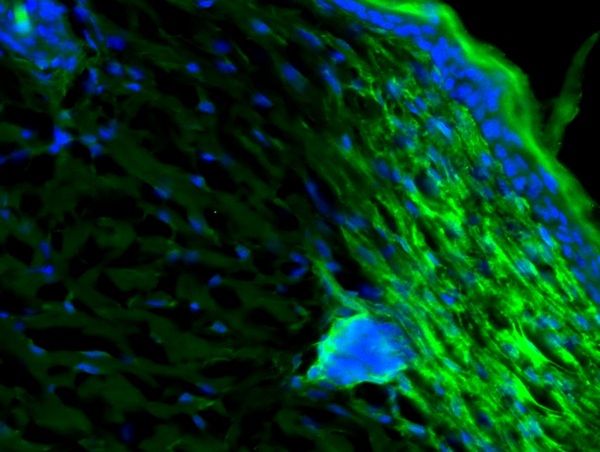 C57BL/6 mice skin were fixed in pre-chilled MeOH and incubated at -20℃ for 10 minutes. They were washed in PBS at RT 3 times for 5 minutes each. The sections were blocked for 60 minutes at RT with PBS containing 5% BSA. The block was removed, anti-CXCL10 antibody (SL1502R) diluted 1:50 was added, then incubated overnight at 4℃.Then washed with PBS (05% Tween20) for 15 minutes each followed by 2 washes of PBS for 5 minutes each. The secondary antibody, anti-rabbit A488 was diluted 1:500, added to the sections and incubated for 1 hour at RT. Then washed for 10 minutes in PBS 4 times
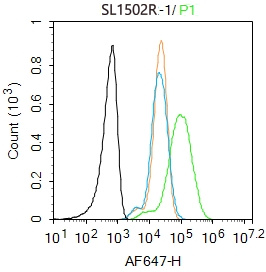 Blank control: Raw264.7.
Primary Antibody (green line): Rabbit Anti-CXCL10/IP10 antibody (SL1502R)
Dilution: 1μg /10^6 cells;
Isotype Control Antibody (orange line): Rabbit IgG .
Secondary Antibody : Goat anti-rabbit IgG-AF647
Dilution: 1μg /test.
Protocol
The cells were fixed with 4% PFA (10min at room temperature)and then permeabilized with 0.1% PBST for 20 min at room temperature.The cells were then incubated in 5%BSA to block non-specific protein-protein interactions for 30 min at room temperature .Cells stained with Primary Antibody for 30 min at room temperature. The secondary antibody used for 40 min at room temperature. Acquisition of 20,000 events was performed.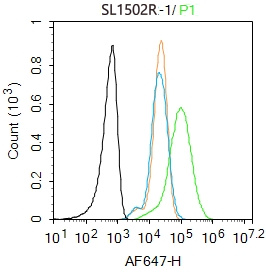 Blank control: Raw264.7.
Primary Antibody (green line): Rabbit Anti-CXCL10/IP10 antibody (SL1502R)
Dilution: 1μg /10^6 cells;
Isotype Control Antibody (orange line): Rabbit IgG .
Secondary Antibody : Goat anti-rabbit IgG-AF647
Dilution: 1μg /test.
Protocol
The cells were fixed with 4% PFA (10min at room temperature)and then permeabilized with 0.1% PBST for 20 min at room temperature.The cells were then incubated in 5%BSA to block non-specific protein-protein interactions for 30 min at room temperature .Cells stained with Primary Antibody for 30 min at room temperature. The secondary antibody used for 40 min at room temperature. Acquisition of 20,000 events was performed.Ordering & shipping
- Minimum order: 1 unit
- Lead time: varies with order quantity and specifications. Please consult your local distributor or our sales team for confirmation
- Payment: T/T 100% in advance; PayPal; Alibaba Trade Assurance
- Shipping: FedEx / DHL / UPS express; cold-chain packing available on request
- Price: USD, per unit (50ul / 100ul)
Partial purchase records(bought amounts latest4)
| Username | Quantity | bought time |
| Bo*** | 1 | 2026-07-11 |
| Zo*** | 1 | 2026-06-01 |
| Ra*** | 1 | 2026-04-07 |
| Mi*** | 1 | 2026-01-05 |
User Comment(Total0User Comment Num)
- No comment


 +86 571 56623320

 SUNLONG BIOTECH


