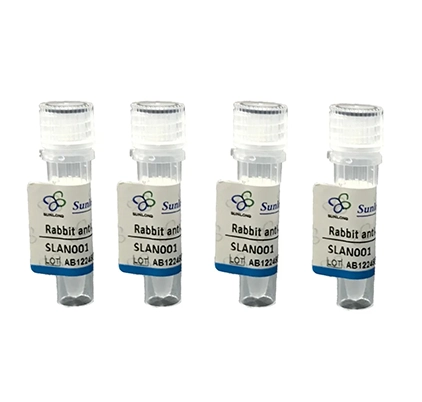
Rabbit Anti-C20orf186 antibody
C20orf186; dJ726C3.5; Ligand-binding protein RY2G5; Long palate, lung and nasal epithelium carcinoma-associated protein 4; LPLC4_HUMAN; Lplunc4.
All categories
View History [Clear]
Details
Product Name C20orf186 Chinese Name 20号染色体开放阅读框186抗体 Alias C20orf186; dJ726C3.5; Ligand-binding protein RY2G5; Long palate, lung and nasal epithelium carcinoma-associated protein 4; LPLC4_HUMAN; Lplunc4. Research Area Cell biology immunology Immunogen Species Rabbit Clonality Polyclonal React Species Mouse(predicted:Human,Rat,Dog,Horse) Applications WB=1:500-2000 (Paraffin sections need antigen repair)
not yet tested in other applications.
optimal dilutions/concentrations should be determined by the end user.Theoretical molecular weight 63kDa Cellular localization cytoplasmic Secretory protein Form Liquid Concentration 1mg/ml immunogen KLH conjugated synthetic peptide derived from human C20orf186: 501-600/614 Lsotype IgG Purification affinity purified by Protein A Buffer Solution 1M TBS(pH7.4) with 1% BSA, 3% Proclin300 and 50% Glycerol. Storage Shipped at 4℃. Store at -20 °C for one year. Avoid repeated freeze/thaw cycles. Attention This product as supplied is intended for research use only, not for use in human, therapeutic or diagnostic applications. PubMed PubMed Product Detail LPLUNC4 is a 614 amino acid secreted protein that belongs to the BPI/LBP/PLUNC superfamily. Expressed in nasal tissue, LPLUNC4 has the capacity to recognize and bind specific classes of odorants serving as a primary defense mechanism in the mucosa. LPLUNC4 is encoded by a gene which maps to a BPI/LBP/PLUNC gene cluster on human chromosome 20. Comprising approximately 2% of the human genome, chromosome 20 contains nearly 63 million bases that encode over 600 genes, some of which are associated with Creutzfeldt-Jakob disease, amyotrophic lateral sclerosis, spinal muscular atrophy, ring chromosome 20 epilepsy syndrome and Alagille syndrome
Function:
May have the capacity to recognize and bind specific classes of odorants. May act as a carrier molecule, transporting odorants across the mucus layer to access receptor sites. May serve as a primary defense mechanism by recognizing and removing potentially harmful odorants or pathogenic microorganisms from the mucosa or clearing excess odorant from mucus to enable new odorant stimuli to be received (By similarity).
Subcellular Location:
Secreted (By similarity). Cytoplasm.
Tissue Specificity:
Expressed in nasal tissue.
Similarity:
Belongs to the BPI/LBP/Plunc superfamily. BPI/LBP family.
SWISS:
P59827
Gene ID:
149954
Database links:Entrez Gene: 149954 Human
SwissProt: P59827 Human
Unigene: 38961 Human
Unigene: 117356 Rat
Product Picture 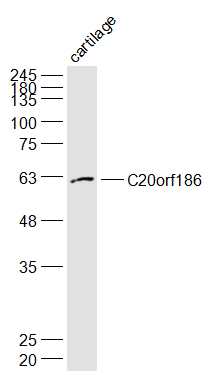 Sample:
Cartilage (Mouse) Lysate at 40 ug
Primary: Anti-C20orf186 (SL15102R) at 1/1000 dilution
Secondary: IRDye800CW Goat Anti-Rabbit IgG at 1/20000 dilution
Predicted band size: 63 kD
Observed band size: 62 kD
Ordering & shipping
- Minimum order: 1 unit
- Lead time: varies with order quantity and specifications. Please consult your local distributor or our sales team for confirmation
- Payment: T/T 100% in advance; PayPal; Alibaba Trade Assurance
- Shipping: FedEx / DHL / UPS express; cold-chain packing available on request
- Price: USD, per unit (50ul / 100ul)
Partial purchase records(bought amounts latest6)
| Username | Quantity | bought time |
| Xa*** | 1 | 2026-08-19 |
| Pa*** | 1 | 2026-07-24 |
| Ra*** | 1 | 2026-07-12 |
| Ga*** | 1 | 2026-05-04 |
| Le*** | 1 | 2026-02-27 |
User Comment(Total0User Comment Num)
- No comment


 +86 571 56623320

 SUNLONG BIOTECH


