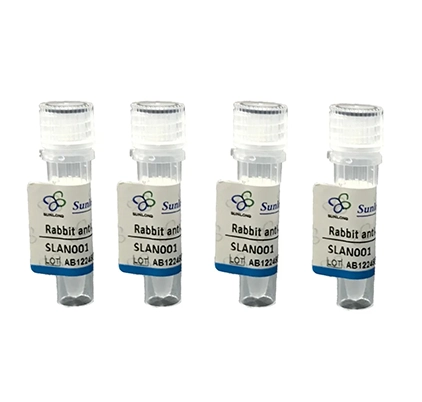
Rabbit Anti-CK20 antibody
Cytokeratin 20; CK 20; CK20; Cytokeratin20; K20; Keratin 20; Keratin type I cytoskeletal 20; Keratin20; KRT 20; KRT 21; KRT20; KRT21; MGC35423; Protein IT; K1C20_HUMAN.
All categories
View History [Clear]
Details
Product Name CK20 Chinese Name 细胞角蛋白20抗体 Alias Cytokeratin 20; CK 20; CK20; Cytokeratin20; K20; Keratin 20; Keratin type I cytoskeletal 20; Keratin20; KRT 20; KRT 21; KRT20; KRT21; MGC35423; Protein IT; K1C20_HUMAN. literatures Research Area Tumour immunology Immunogen Species Rabbit Clonality Polyclonal React Species Mouse(predicted:Human,Rat) Applications WB=1:500-2000 (Paraffin sections need antigen repair)
not yet tested in other applications.
optimal dilutions/concentrations should be determined by the end user.Theoretical molecular weight 48kDa Cellular localization cytoplasmic Form Liquid Concentration 1mg/ml immunogen KLH conjugated synthetic peptide derived from human CK20: 151-250/424 Lsotype IgG Purification affinity purified by Protein A Buffer Solution 1M TBS(pH7.4) with 1% BSA, 3% Proclin300 and 50% Glycerol. Storage Shipped at 4℃. Store at -20 °C for one year. Avoid repeated freeze/thaw cycles. Attention This product as supplied is intended for research use only, not for use in human, therapeutic or diagnostic applications. PubMed PubMed Product Detail Cytokeratin 20 is a type I keratin which is primarily expressed in gastric and intestinal epithelium, urothelium, and Merkel-cells. The keratins are intermediate filament proteins responsible for the structural integrity of epithelial cells and are subdivided into cytokeratins and hair keratins. The type I cytokeratins consist of acidic proteins which are arranged in pairs of heterotypic keratin chains. Their genes are clustered in a region of chromosome 17q12-q21. Cytokeratin 20 is a major cellular protein of mature enterocytes and goblet cells and is specifically expressed in the gastric and intestinal mucosa. It is also expressed in adenocarcinomas of the colon, stomach, pancreas and the bile system and is present in mucinous ovarian tumors, transitional-cell and Merkel-cell carcinomas. Notably, the squamous cell carcinomas and adenocarcinomas of the breast, lung, and endometrium, non-mucinous tumors of the ovary, and small cell carcinomas lack cytokeratin 20.
Function:
Plays a significant role in maintaining keratin filament organization in intestinal epithelia. When phosphorylated, plays a role in the secretion of mucin in the small intestine (By similarity).
Subunit:
Heterotetramer of two type I and two type II keratins. Associates with KRT8.
Subcellular Location:
Cytoplasm.
Tissue Specificity:
Expressed predominantly in the intestinal epithelium. Expressed in luminal cells of colonic mucosa. Also expressed in the Merkel cells of keratinized oral mucosa; specifically at the tips of some rete ridges of the gingival mucosa, in the basal layer of the palatal mucosa and in the taste buds of lingual mucosa.
Post-translational modifications:
Hyperphosphorylation at Ser-13 occurs during the early stages of apoptosis but becomes less prominent during the later stages. Phosphorylation at Ser-13 also increases in response to stress brought on by cell injury (By similarity).
Proteolytically cleaved by caspases during apoptosis. Cleavage occurs at Asp-228.
Similarity:
Belongs to the intermediate filament family.
SWISS:
P35900
Gene ID:
54474
Database links:Entrez Gene: 54474 Human
Entrez Gene: 66809 Mouse
Omim: 608218 Human
SwissProt: P35900 Human
SwissProt: Q9D312 Mouse
Unigene: 84905 Human
Unigene: 28042 Mouse
Unigene: 9887 Rat
Structural Proteins
CK-20 cytokeratin-20 is mainly used in Tumour research. In recent years, it is mostly used for the identification of malignant Tumours of the digestive system, mainly in the cytoplasm.Product Picture 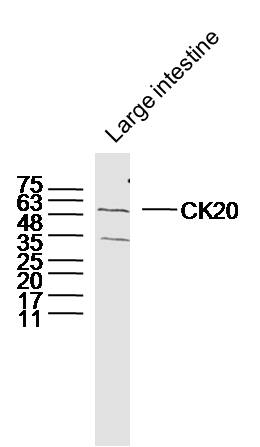 Sample:
Large intestine (Mouse) Lysate at 40 ug
Primary: Anti-CK20 (SL1588R) at 1/300 dilution
Secondary: IRDye800CW Goat Anti-Rabbit IgG at 1/20000 dilution
Predicted band size: 48 kD
Observed band size: 48 kD
Ordering & shipping
- Minimum order: 1 unit
- Lead time: varies with order quantity and specifications. Please consult your local distributor or our sales team for confirmation
- Payment: T/T 100% in advance; PayPal; Alibaba Trade Assurance
- Shipping: FedEx / DHL / UPS express; cold-chain packing available on request
- Price: USD, per unit (50ul / 100ul)
Partial purchase records(bought amounts latest3)
| Username | Quantity | bought time |
| Le*** | 1 | 2026-07-09 |
| Wi*** | 1 | 2026-04-10 |
| Ja*** | 1 | 2026-02-17 |
User Comment(Total0User Comment Num)
- No comment


 +86 571 56623320

 SUNLONG BIOTECH


