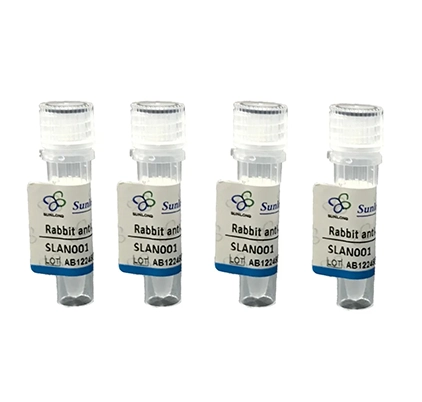
Rabbit Anti-CTNNA1 antibody
alpha 1 Catenin; Alpha-Catenin; alpha catenin; alpha E catenin; alphaE catenin; Cadherin associated protein 102kDa; Cadherin associated protein; CAP 102; CAP102; Catenin (cadherin associated protein) alpha 1 102kDa; Catenin alpha 1; CTNNA 1; CTNNA1; Alpha
All categories
View History [Clear]
Details
Product Name CTNNA1 Chinese Name α-连环蛋白抗体 Alias alpha 1 Catenin; Alpha-Catenin; alpha catenin; alpha E catenin; alphaE catenin; Cadherin associated protein 102kDa; Cadherin associated protein; CAP 102; CAP102; Catenin (cadherin associated protein) alpha 1 102kDa; Catenin alpha 1; CTNNA 1; CTNNA1; Alpha-cats; FLJ36832; NY REN 13 antigen; CTNA1_HUMAN. Catenin α; Catenin-α; Catenin-α1; Catenin α1; α Catenin; Cadherin-related protein; Research Area Cardiovascular Neurobiology Signal transduction Stem cells Cell adhesion molecule Cytoskeleton Immunogen Species Rabbit Clonality Polyclonal React Species Rat(predicted:Human,Mouse,Chicken,Dog,Pig,Horse,Rabbit) Applications IHC-P=1:100-500,IHC-F=1:100-500,IF=1:100-500 (Paraffin sections need antigen repair)
not yet tested in other applications.
optimal dilutions/concentrations should be determined by the end user.Theoretical molecular weight 102kDa Cellular localization cytoplasmic The cell membrane Form Liquid Concentration 1mg/ml immunogen KLH conjugated synthetic peptide derived from human Catenin: 801-906/906 Lsotype IgG Purification affinity purified by Protein A Buffer Solution 1M TBS(pH7.4) with 1% BSA, 3% Proclin300 and 50% Glycerol. Storage Shipped at 4℃. Store at -20 °C for one year. Avoid repeated freeze/thaw cycles. Attention This product as supplied is intended for research use only, not for use in human, therapeutic or diagnostic applications. PubMed PubMed Product Detail The distinct peripheral cytosolic proteins, alpha, beta and gamma-catenin (102, 94 and 86 kDa) found in many tissues bind to the conserved cytoplasmic tail domain of the cell-adhesion cadherins. Catenins link E-cadherin to other integral membrane or cytoplasmic proteins and are modulated by Wnt-1 proto-oncogene. They are good candidates for mediating transduction of cell-cell contact positional signals to the cell interior. Absence of alpha-catenin is found in certain tumor cell lines and reduced levels in certain human carcinomas. Beta-catenin binds directly to the cytoplasmic tail of E-cadherin. It binds to the N-terminus of alpha-catenin and interacts with the protein product of the tumor suppressor gene APC. This interaction involves a 15-aa repeat in the APC. Beta-catenin cell levels seem to be controlled by APC. The central core region of beta-catenin is involved in mediation of cadherin-catenin complex interaction with EGFR.
Function:
Associates with the cytoplasmic domain of a variety of cadherins. The association of catenins to cadherins produces a complex which is linked to the actin filament network, and which seems to be of primary importance for cadherins cell-adhesion properties. Can associate with both E- and N-cadherins. Originally believed to be a stable component of E-cadherin/catenin adhesion complexes and to mediate the linkage of cadherins to the actin cytoskeleton at adherens junctions. In contrast, cortical actin was found to be much more dynamic than E-cadherin/catenin complexes and CTNNA1 was shown not to bind to F-actin when assembled in the complex suggesting a different linkage between actin and adherens junctions components. The homodimeric form may regulate actin filament assembly and inhibit actin branching by competing with the Arp2/3 complex for binding to actin filaments. May play a crucial role in cell differentiation.
Subunit:
Monomer and homodimer; the monomer preferentially binds to CTNNB1 and the homodimer to actin. Binds MLLT4 and F-actin. Possible component of an E-cadherin/ catenin adhesion complex together with E-cadherin/CDH1 and beta-catenin/CTNNB1 or gamma-catenin/JUP; the complex is located to adherens junctions. The stable association of CTNNA1 is controversial as CTNNA1 was shown not to bind to F-actin when assembled in the complex. Alternatively, the CTNNA1-containing complex may be linked to F-actin by other proteins such as LIMA1. Interacts with ARHGAP21 and with AJUBA. Interacts with LIMA1.
Subcellular Location:
Cytoplasm, cytoskeleton. Cell junction, adherens junction. Cell membrane; Peripheral membrane protein; Cytoplasmic side. Cell junction. Note=Found at cell-cell boundaries and probably at cell-matrix boundaries.
Tissue Specificity:
Expressed ubiquitously in normal tissues.
Post-translational modifications:
Sumoylated.
Similarity:
Belongs to the vinculin/alpha-catenin family.
SWISS:
P35221
Gene ID:
1495
Database links:Entrez Gene: 1495 Human
Entrez Gene: 12385 Mouse
Omim: 116805 Human
SwissProt: P35221 Human
SwissProt: P26231 Mouse
Cell Adhesion Protein
α-cateninis a multifunctional protein,can linkE-\N-\P-Cadherin,具有involved in cells粘附和介导Signal transduction的双重功能,并与Tumour的发生发展及浸润It can induce insulin-secreting β cells。
在正常个体中,βα-cateninforms a complex with cadherin,mediates homotypic cell adhesion,maintains cell stability;Simultaneously,α-cateninas aWnt/α-cateninsignaling pathway的关键成员在介导Signal transduction过程中regulating cells的增殖和凋亡。
在恶性Tumour中,αThe expression of catenin shows obvious heterogeneity,promotes abnormal cell proliferation,can also reduce adhesion between cells,enhances invasiveness。Product Picture 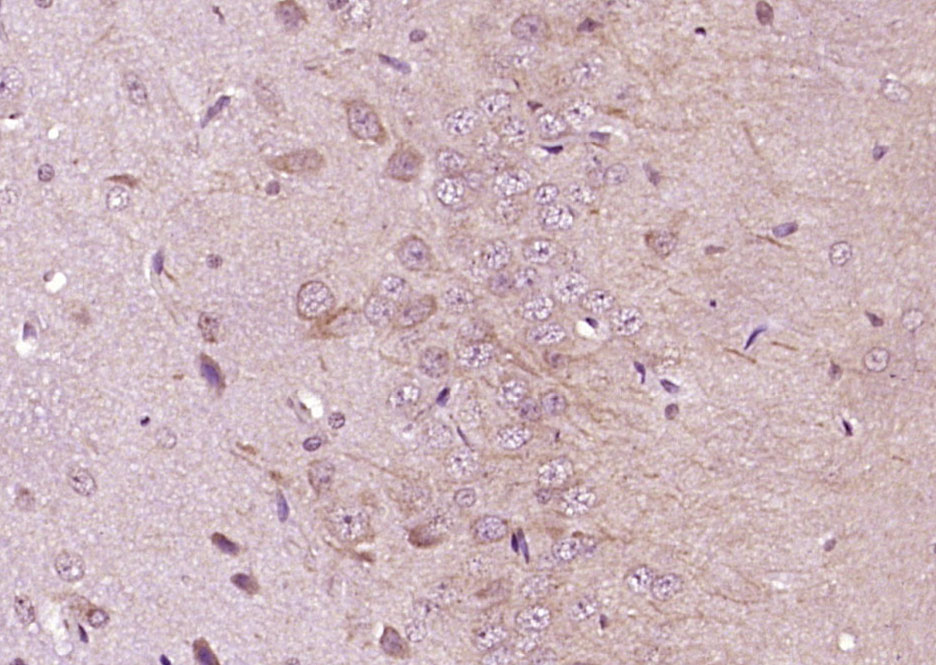 Paraformaldehyde-fixed, paraffin embedded (rat brain tissue); Antigen retrieval by boiling in sodium citrate buffer (pH6.0) for 15min; Block endogenous peroxidase by 3% hydrogen peroxide for 20 minutes; Blocking buffer (normal goat serum) at 37°C for 30min; Antibody incubation with (CTNNA1) Polyclonal Antibody, Unconjugated (SL1594R) at 1:400 overnight at 4°C, followed by operating according to SP Kit(Rabbit) (sp-0023) instructionsand DAB staining.
Ordering & shipping
- Minimum order: 1 unit
- Lead time: varies with order quantity and specifications. Please consult your local distributor or our sales team for confirmation
- Payment: T/T 100% in advance; PayPal; Alibaba Trade Assurance
- Shipping: FedEx / DHL / UPS express; cold-chain packing available on request
- Price: USD, per unit (50ul / 100ul)
Partial purchase records(bought amounts latest5)
| Username | Quantity | bought time |
| Ra*** | 1 | 2026-06-24 |
| Za*** | 1 | 2026-06-22 |
| Be*** | 1 | 2026-04-04 |
| So*** | 1 | 2026-03-17 |
| Ad*** | 1 | 2026-03-09 |
User Comment(Total0User Comment Num)
- No comment


 +86 571 56623320

 SUNLONG BIOTECH


