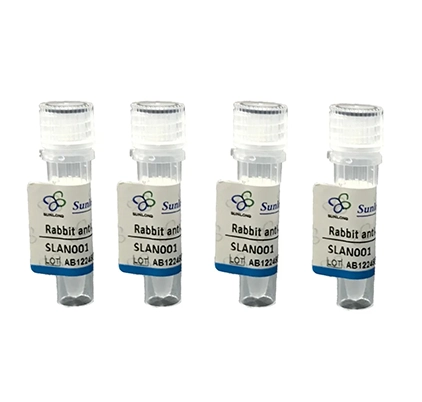
Rabbit Anti-AAGAB antibody
FLJ11506; AAGAB_HUMAN; Alpha and gamma adaptin binding protein p34; Alpha- and gamma-adaptin-binding protein p34; LOC79719;
All categories
View History [Clear]
Details
Product Name AAGAB Chinese Name AAGAB蛋白抗体 Alias FLJ11506; AAGAB_HUMAN; Alpha and gamma adaptin binding protein p34; Alpha- and gamma-adaptin-binding protein p34; LOC79719; Research Area Cell biology Signal transduction Transporter Immunogen Species Rabbit Clonality Polyclonal React Species Rat(predicted:Human,Mouse,Dog,Cow,Horse,Rabbit,Sheep) Applications IHC-P=1:100-500,IHC-F=1:100-500,IF=1:100-500 (Paraffin sections need antigen repair)
not yet tested in other applications.
optimal dilutions/concentrations should be determined by the end user.Theoretical molecular weight 35kDa Cellular localization cytoplasmic Form Liquid Concentration 1mg/ml immunogen KLH conjugated synthetic peptide derived from human AAGAB: 221-315/315 Lsotype IgG Purification affinity purified by Protein A Buffer Solution 1M TBS(pH7.4) with 1% BSA, 3% Proclin300 and 50% Glycerol. Storage Shipped at 4℃. Store at -20 °C for one year. Avoid repeated freeze/thaw cycles. Attention This product as supplied is intended for research use only, not for use in human, therapeutic or diagnostic applications. PubMed PubMed Product Detail Encoding more than 700 genes, chromosome 15 is made up of approximately 106 million base pairs and is about 3% of the human genome. Angelman and Prader-Willi syndromes are associated with loss of function or deletion of genes in the 15q11-q13 region. In the case of Angelman syndrome, this loss is due to inactivity of the maternal 15q11-q13 encoded UBE3A gene in the brain by either chromosomal deletion or mutation. In cases of Prader-Willi syndrome, there is a partial or complete deletion of this region from the paternal copy of chromosome 15. Tay-Sachs disease is a lethal disorder associated with mutations of the HEXA gene, which is encoded by chromosome 15. Marfan syndrome is associated with chromosome 15 through the FBN1 gene. The FLJ11506 gene product has been provisionally designated FLJ11506 pending further characterization.
Function:
May play a role in membrane traffic.
Subunit:
Associated with AP-1 and AP-2 complexes.
Subcellular Location:
Cytoplasm, cytosol.
Tissue Specificity:
Widely expressed, including in skin and keratinocytes, with highest levels in adrenal gland, rectum and thymus.
DISEASE:
Keratoderma, palmoplantar, punctate 1A (PPKP1A) [MIM:148600]: An autosomal dominant dermatological disorder characterized by multiple hyperkeratotic, centrally indented, papules that develop in early adolescence, or later, and are irregularly distributed on the palms and soles (other palmoplantar keratoses have mostly diffuse hyperkeratinization). In mechanically irritated areas, confluent plaques can be found. Interfamilial and intrafamilial severity shows broad variation. In some cases, PPKP1 is associated with the development of early- and late-onset malignancies, including squamous cell carcinoma. Note=The disease is caused by mutations affecting the gene represented in this entry.
SWISS:
Q6PD74
Gene ID:
79719
Database links:Entrez Gene: 79719 Human
Omim: 614888 Human
SwissProt: Q6PD74 Human
Unigene: 254642 Human
Unigene: 163023 Rat
Product Picture 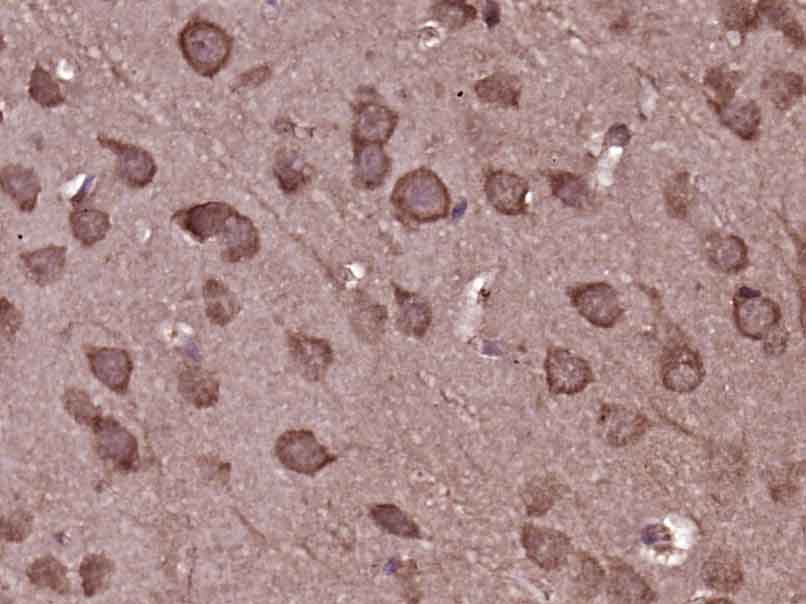 Paraformaldehyde-fixed, paraffin embedded (Rat brain); Antigen retrieval by boiling in sodium citrate buffer (pH6.0) for 15min; Block endogenous peroxidase by 3% hydrogen peroxide for 20 minutes; Blocking buffer (normal goat serum) at 37°C for 30min; Antibody incubation with (AAGAB) Polyclonal Antibody, Unconjugated (SL16102R) at 1:400 overnight at 4°C, followed by operating according to SP Kit(Rabbit) (sp-0023) instructionsand DAB staining.
Ordering & shipping
- Minimum order: 1 unit
- Lead time: varies with order quantity and specifications. Please consult your local distributor or our sales team for confirmation
- Payment: T/T 100% in advance; PayPal; Alibaba Trade Assurance
- Shipping: FedEx / DHL / UPS express; cold-chain packing available on request
- Price: USD, per unit (50ul / 100ul)
Partial purchase records(bought amounts latest6)
| Username | Quantity | bought time |
| Os*** | 1 | 2026-06-14 |
| He*** | 1 | 2026-05-20 |
| Ka*** | 1 | 2026-04-19 |
| Ma*** | 1 | 2026-03-09 |
| Sa*** | 1 | 2026-02-03 |
User Comment(Total0User Comment Num)
- No comment


 +86 571 56623320

 SUNLONG BIOTECH


