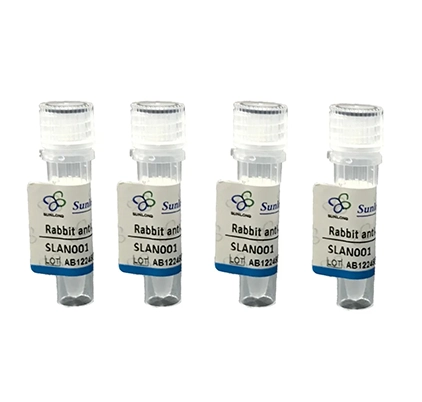
Rabbit Anti-Brucella antibody
Brucella bacterial; 布鲁氏菌; 布鲁氏杆菌; 布鲁氏杆菌病; 布鲁氏病; 布鲁氏病菌; 布氏杆菌菌体蛋白; 布病;
All categories
View History [Clear]
Details
Product Name Brucella Chinese Name 布氏杆菌抗体 Alias Brucella bacterial; Brucella; Brucella bacillus; brucellosis; Brucella disease; Brucella bacteria; Brucella bacterial protein; brucellosis; literatures Research Area Microbiology Immunogen Species Rabbit Clonality Polyclonal React Species Brucella Applications ELISA (1:1000-5000)
Not yet tested in other applications.
Optimal working dilutions must be determined by the end user.Theoretical molecular weight N/AkDa Form Liquid Concentration 1mg/ml immunogen whole cell protein of Brucella Lsotype IgG Purification affinity purified by Protein A Buffer Solution (predicted:Brucella)1M TBS(pH7.4) with 1% BSA, (predicted:Brucella)3% Proclin300 and 50% Glycerol. Storage Shipped at 4℃. Store at -20 °C for one year. Avoid repeated freeze/thaw cycles. Attention This product as supplied is intended for research use only, not for use in human, therapeutic or diagnostic applications. PubMed PubMed Product Detail Brucella species are small, Gram-negative, facultative coccobacilli, most lacking a capsule, endospores, or native plasmids. They are intracellular within the host organism, and show environmental persistence outside the host. They survive extremes in temperature, pH, and humidity, and in frozen and aborted materials. They infect many species, but with some specificity.
SWISS:
N/A
Gene ID:
N/A
The genus Brucella (Brucella) is a group of Gram-negative short bacilli, to which cattle, sheep, pigs, and other animals are most susceptible, causing infectious abortion in female livestock. Humans can be infected by contact with infected animals or by consuming diseased animals and their dairy products. Brucellosis is widely distributed worldwide. It was once epidemic in some regions of China but is now basically controlled. Brucella is also listed by imperialists as one of the incapacitating biological warfare agents. The genus Brucella is divided into 6 species—Brucella melitensis, Brucella abortus, Brucella suis, Brucella neotomae, Brucella ovis, and Brucella canis—and 20 biotypes. In China, the main epidemic species are Br. melitensis, Br. bovis, and Br. suis, among which Br. melitensis brucellosis is the most common.
Brucella first infects domestic animals. The clinical manifestations in livestock are not obvious. However, pregnant female animals are highly prone to abortion or stillbirth; the amniotic fluid, placenta, and secretions discharged contain large amounts of Brucella and are especially infectious. The fur, urine, feces, and milk of infected animals all contain this bacterium. Shedding of the bacteria can last for more than three months.
Humans can be infected through contact with livestock, consumption of contaminated milk and meat, inhalation of bacteria-containing dust, or entry of bacteria into the conjunctiva of the eye. The age of onset is mostly over 30 years.
After the bacterium enters the human body through damaged skin and mucous membranes or the digestive and respiratory tracts, it is first phagocytosed by phagocytes and enters the lymph nodes, where it can sometimes survive and proliferate to form an infectious focus. After about 2-3 weeks, it can enter the bloodstream and cause bacteremia. Subsequently, it grows in the reticuloendothelial system such as the liver, spleen, and bone marrow to form new infectious foci, and can repeatedly break out of cells into the bloodstream, causing bacteremia and acute clinical symptoms again, manifesting as a febrile period averaging 2-3 weeks, with fever recurring at intervals of about 3 days to two weeks, producing an undulant fever pattern, hence the name undulant fever.
Brucella contains endotoxin, and the bacterium itself can cause human allergy, resulting in various allergic lesions. Osteoarticular lesions mostly occur at about six months, and in a few cases earlier. Brucella osteomyelitis is the local manifestation of hematogenous Brucella infection in the bones and joints. Any bone can be involved, but spondylitis is the most common. Joint lesions often involve large joints, with hip arthritis being the most common. Chronic patients may have other multiple joint lesions. However, most occur in the lumbar spine, and a few in the thoracic spine, thoracolumbar segment, sacrum, or sacroiliac joint. Male patients may have testicular enlargement and testicular inflammation.Product Picture 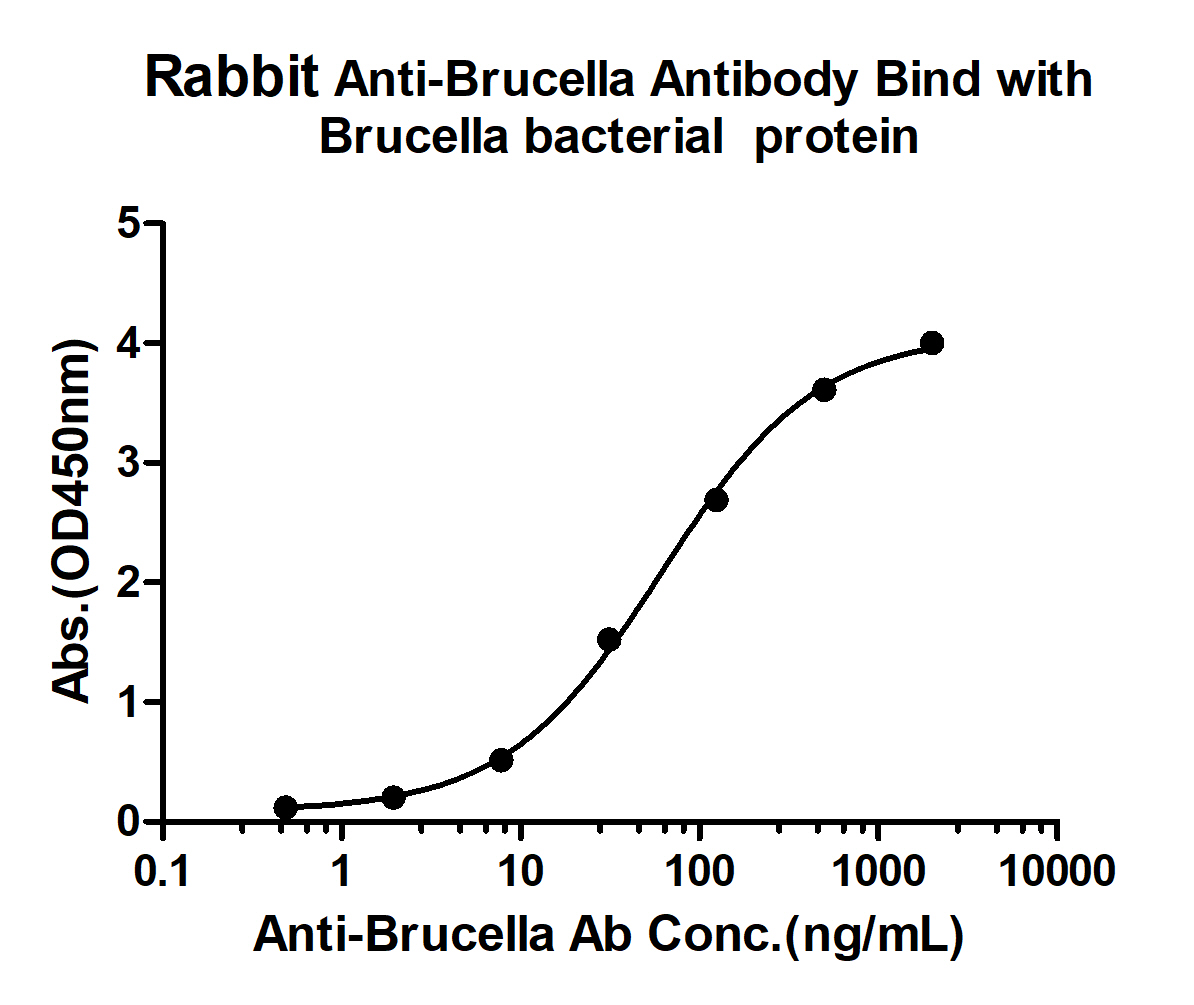 Measured by its binding ability in a indirect ELISA. Immobilized Brucella bacterial protein (Cat. SL2229P) at 2 μg/mL (100 μL/well) can bind Rabbit Anti-Brucella Antibody, the EC50 is 61.32 ng/mL.
Ordering & shipping
- Minimum order: 1 unit
- Lead time: varies with order quantity and specifications. Please consult your local distributor or our sales team for confirmation
- Payment: T/T 100% in advance; PayPal; Alibaba Trade Assurance
- Shipping: FedEx / DHL / UPS express; cold-chain packing available on request
- Price: USD, per unit (50ul / 100ul)
Partial purchase records(bought amounts latest3)
| Username | Quantity | bought time |
| Wi*** | 1 | 2026-07-25 |
| Al*** | 1 | 2026-06-01 |
| Ol*** | 1 | 2026-04-02 |
User Comment(Total0User Comment Num)
- No comment


 +86 571 56623320

 SUNLONG BIOTECH


