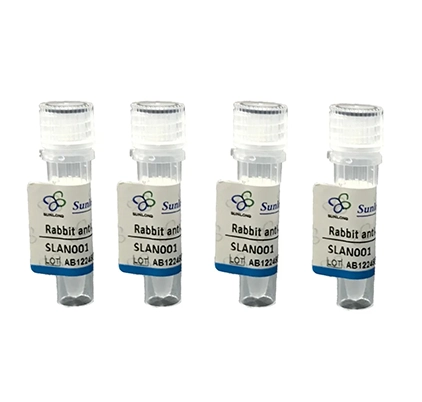
Rabbit Anti-Cytomegalovirus Glycoprotein B antibody
CMV; CMV glycoprotein B; CMV glycoprotein GP55; Cytomegalovirus glycoprotein GP55; gB; Glycoprotein B; Glycoprotein GP55; HCMV; HCMV glycoprotein B; HCMV glycoprotein GP55; HHV 5; HHV 5 glycoprotein B; HHV 5 glycoprotein GP55; HHV5 glycoprotein B; HHV5 gl
All categories
View History [Clear]
Details
Product Name Cytomegalovirus Glycoprotein B Chinese Name 人巨细胞病毒抗体 Alias CMV; CMV glycoprotein B; CMV glycoprotein GP55; Cytomegalovirus glycoprotein GP55; gB; Glycoprotein B; Glycoprotein GP55; HCMV; HCMV glycoprotein B; HCMV glycoprotein GP55; HHV 5; HHV 5 glycoprotein B; HHV 5 glycoprotein GP55; HHV5 glycoprotein B; HHV5 glycoprotein GP55; Human herpesvirus 5 glycoprotein B; Human herpesvirus 5 glycoprotein GP55; UL55. Research Area Bacteria and viruses glycoprotein Immunogen Species Rabbit Clonality Polyclonal React Species (predicted: HCMV) Applications ELISA (1;2000-5000)
Not yet tested in other applications.
Optimal working dilutions must be determined by the end user.Theoretical molecular weight 74 kDa Form Liquid Concentration 1mg/ml immunogen recombinate HCMV protein Lsotype IgG Purification affinity purified by Protein A Buffer Solution HCMV1M TBS(pH7.4) with 1% BSA, HCMV3% Proclin300 and 50% Glycerol. Storage Shipped at 4℃. Store at -20 °C for one year. Avoid repeated freeze/thaw cycles. Attention This product as supplied is intended for research use only, not for use in human, therapeutic or diagnostic applications. PubMed PubMed Product Detail Human cytomegalovirus (HCMV) glycoprotein B (gB) is an abundant virion envelope protein that has been shown to be essential for the infectivity of HCMV. HCMV gB is also one of the most immunogenic virus-encoded proteins, and a significant fraction of virus neutralizing antibodies are directed at gB.
Subcellular Location:
Virus envelope.
SWISS:
N/A
Gene ID:
3077424
Database links:
Entrez Gene: 3077424 Human herpesvirus 5
CMV, also known as salivary virus, belongs to the herpesvirus subfamily and is the largest virus in the human herpesvirus group. It is composed of linear double-stranded DNA with a molecular weight of approximately 150X106. Its largest form is composed of 162 capsomeres forming an icosahedron. It has a typical herpesvirus structure. Its morphology is very similar to that of herpes simplex virus and varicella-zoster virus and is difficult to distinguish. CMV can only proliferate in tissue culture of human fibroblasts and cannot grow in other animal cells; its proliferation is very slow, with a replication cycle of 36-48 hours, much longer than the 8-hour replication cycle of herpes simplex virus. Primary isolation requires more than one month before characteristic cells appear; the cells become round, swollen, and enlarged in both cell and nucleus, with a ring of "halo" around the nucleus and large eosinophilic inclusion bodies. The target cells in vivo are mainly epithelial cells. There is extensive cross-reactivity among human CMV strains.
CMV survives for at most 2 hours in 20% ether. It can be fully inactivated at pH<5, or by incubation at 56°C for 30 minutes, or by ultraviolet irradiation for 5 minutes. The infectivity of CMV is unstable to freeze-thaw or storage at -20°C or -50°C, and 10% household bleaching powder can significantly reduce its infectivity.
CMV infection is characterized by the appearance of typical giant cells with cytoplasmic and intranuclear inclusion bodies, hence it is also called cytomegalovirus. It can form enlarged cells in human tissues, causing cytomegalic inclusion disease.
Cytomegalovirus infection can cause teratogenicity
Human cytomegalovirus is a double-stranded DNA virus and is one of the largest animal viruses. Humans are the only host that human cytomegalovirus can infect. Compared with other viruses, because the virulence of human cytomegalovirus is relatively weak, after invading the body it generally does not cause severe damage to organs and tissues; however, if the viral genes integrate into the relevant genes of the fertilized egg cell, they can prevent or affect the replication and expression of the latter, ultimately leading to irreversible morphological and structural abnormalities.
Cytomegalovirus mainly causes fetal malformation when infection occurs within the first 3 months of early pregnancy; the brain is the organ most susceptible to cytomegalovirus invasion, and both neuronal cells and glial cells in fetal brain tissue can be affected. Intracranial calcification, encephalomalacia, and hydrocephalus are the most common clinical manifestations of human cytomegalovirus infection, and their sequelae are most severe in the nervous system. The most common is intellectual disability; others include gross motor abnormalities, psychomotor abnormalities, sensorineural deafness, and chorioretinitis. Although there is a clearly high risk in hearing and neurological aspects, and sequelae may occur, only 5% of infected infants will show signs of cytomegalovirus infection in the neonatal period. And 90% of fetuses with congenital infection have no clinical symptoms at birth. Therefore, strengthening monitoring and early diagnosis are important measures to prevent teratogenicity caused by cytomegalovirus infection. Pregnant women with primary cytomegalovirus infection during pregnancy have a fetal infection rate of 30%, and 40% of infected pregnant women can transmit the infection to the fetus at delivery. During pregnancy, there is still no specific therapy for cytomegalovirus infection, so the key lies in prevention. For women in early pregnancy, not only can their antibodies be monitored, but their antigens can also be monitored by special methods; if active replication of cytomegalovirus is found in the pregnant woman's body, decisive measures should be taken to terminate the pregnancy to avoid the birth of a malformed child. In addition, it is necessary to improve people's educational level, pay attention to hygiene, eliminate all opportunities for viral infection, and pay attention to maintaining and enhancing the body's immune function; in this way, it is possible to prevent or reduce cytomegalovirus infection in women of childbearing age.
Cytomegalic inclusion disease causes extensive damage to children's brain tissue - intellectual disability
Cytomegalic inclusion disease is a disease caused by cytomegalovirus infection that results in damage to multiple organs throughout the body and the appearance of clinical symptoms. If clinical symptoms are present at birth, it is intrauterine infection (congenital infection); onset several days or weeks after birth is mostly postnatal infection. Cytomegalovirus infection is very widespread and is one of the important pathogens of congenital viral infection. Cytomegalovirus infection can cause extensive damage to fetal brain tissue and is the most important cause of intellectual disability in children.
Cytomegalovirus infection is widespread, and most people can acquire the infection at different times during their lives. People living in crowded conditions, with poor economic conditions, and poor hygiene are susceptible to infection. Women have a higher infection rate than men of the same age. Up to 28% of women in late pregnancy shed cytomegalovirus from the cervix, which is an important cause of congenital cytomegalovirus infection. About 13%–27% of breastfeeding women shed the virus in breast milk, and the shedding duration is long, making postnatal infection likely.
After cytomegalovirus infection, clinical manifestations have multiple types. In congenital infection, low birth weight, irregular respiration, severe jaundice, hepatosplenomegaly, convulsions, visual impairment, muscle paralysis, and intellectual disability are present from birth. In postnatal infection, symptoms are generally mild and mostly manifest as hepatitis.
Therefore, women of childbearing age should undergo a physical examination before pregnancy. If cytomegalovirus infection is found, antiviral therapy should be given so that cytomegalovirus antibodies in the blood become negative, and conception should be permitted only after cytomegalovirus testing of cervical secretions is negative.Ordering & shipping
- Minimum order: 1 unit
- Lead time: varies with order quantity and specifications. Please consult your local distributor or our sales team for confirmation
- Payment: T/T 100% in advance; PayPal; Alibaba Trade Assurance
- Shipping: FedEx / DHL / UPS express; cold-chain packing available on request
- Price: USD, per unit (50ul / 100ul)
Partial purchase records(bought amounts latest6)
| Username | Quantity | bought time |
| Ma*** | 1 | 2026-09-06 |
| Sa*** | 1 | 2026-07-26 |
| Br*** | 1 | 2026-07-04 |
| Qu*** | 1 | 2026-03-14 |
| Za*** | 1 | 2026-02-11 |
User Comment(Total0User Comment Num)
- No comment


 +86 571 56623320

 SUNLONG BIOTECH


