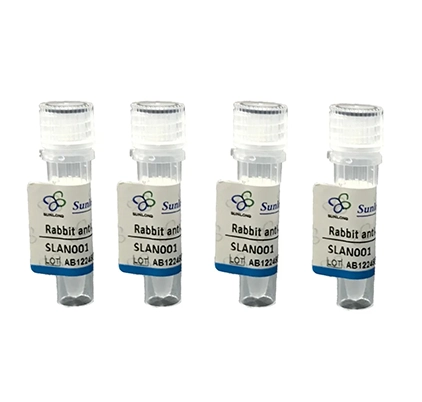
Rabbit Anti-CD171/L1CAM antibody
L1CAM_HUMAN; Neural cell adhesion molecule L1; CAML1; MIC5; N-CAM-L1; NCAM-L1; CD171; L1 cell adhesion molecule; S10; HSAS; MASA; SPG1; HSAS1; N-CAM-L1;
All categories
View History [Clear]
Details
Product Name CD171/L1CAM Chinese Name 神经Cell adhesion molecule配体1抗体 Alias L1CAM_HUMAN; Neural cell adhesion molecule L1; CAML1; MIC5; N-CAM-L1; NCAM-L1; CD171; L1 cell adhesion molecule; S10; HSAS; MASA; SPG1; HSAS1; N-CAM-L1; Research Area Developmental biology Neurobiology Signal transduction Growth factors and hormones Cytoskeleton Immunogen Species Rabbit Clonality Polyclonal React Species Mouse,Rat Applications WB=1:500-2000
not yet tested in other applications.
optimal dilutions/concentrations should be determined by the end user.Theoretical molecular weight 138kDa Cellular localization The cell membrane Form Liquid Concentration 1mg/ml immunogen KLH conjugated synthetic peptide derived from human CD171/L1CAM Lsotype IgG Purification affinity purified by Protein A Buffer Solution 1M TBS(pH7.4) with 1% BSA, 3% Proclin300 and 50% Glycerol. Storage Shipped at 4℃. Store at -20 °C for one year. Avoid repeated freeze/thaw cycles. Attention This product as supplied is intended for research use only, not for use in human, therapeutic or diagnostic applications. PubMed PubMed Product Detail L1cam (L1 cell adhesion molecule isoform 1 precursor) is an axonal glycoprotein belonging to the immunoglobulin supergene family. The ectodomain, consisting of several immunoglobulin-like domains and fibronectin-like repeats (type III), is linked via a single transmembrane sequence to a conserved cytoplasmic domain. This cell adhesion molecule plays an important role in nervous system development, including neuronal migration and differentiation. Mutations in the gene cause three X-linked neurological syndromes known by the acronym CRASH (corpus callosum hypoplasia, retardation, aphasia, spastic paraplegia and hydrocephalus). Alternative splicing of a neuron-specific exon is thought to be functionally relevant. [provided by RefSeq].
Function:
Cell adhesion molecule with an important role in the development of the nervous system. Involved in neuron-neuron adhesion, neurite fasciculation, outgrowth of neurites, etc. Binds to axonin on neurons.
Subcellular Location:
Cell membrane; Single-pass type I membrane protein.
DISEASE:
Defects in L1CAM are the cause of hydrocephalus due to stenosis of the aqueduct of Sylvius (HSAS) [MIM:307000]. Hydrocephalus is a condition in which abnormal accumulation of cerebrospinal fluid in the brain causes increased intracranial pressure inside the skull. This is usually due to blockage of cerebrospinal fluid outflow in the brain ventricles or in the subarachnoid space at the base of the brain. In children is typically characterized by enlargement of the head, prominence of the forehead, brain atrophy, mental deterioration, and convulsions. In adults the syndrome includes incontinence, imbalance, and dementia. HSAS is characterized by mental retardation and enlarged brain ventricles.
Defects in L1CAM are the cause of mental retardation-aphasia-shuffling gait-adducted thumbs syndrome (MASA) [MIM:303350]; also known as corpus callosum hypoplasia, psychomotor retardation, adducted thumbs, spastic paraparesis, and hydrocephalus or CRASH syndrome. MASA is an X-linked recessive syndrome with a highly variable clinical spectrum. Main clinical features include spasticity and hyperreflexia of lower limbs, shuffling gait, mental retardation, aphasia and adducted thumbs. The features of spasticity have been referred to as complicated spastic paraplegia type 1 (SPG1). Some patients manifest corpus callosum hypoplasia and hydrocephalus. Inter- and intrafamilial variability is very wide, such that patients with hydrocephalus, MASA, SPG1, and agenesis of corpus callosum can be present within the same family.
Defects in L1CAM are the cause of spastic paraplegia X-linked type 1 (SPG1) [MIM:303350]. Spastic paraplegia is a degenerative spinal cord disorder characterized by a slow, gradual, progressive weakness and spasticity of the lower limbs.
Note=Defects in L1CAM may contribute to Hirschsprung disease by modifying the effects of Hirschsprung disease-associated genes to cause intestinal aganglionosis.
Defects in L1CAM are a cause of partial agenesis of the corpus callosum (ACCPX) [MIM:304100]. A syndrome characterized by partial corpus callosum agenesis, hypoplasia of inferior vermis and cerebellum, mental retardation, seizures and spasticity. Other features include microcephaly, unusual facies, and Hirschsprung disease in some patients.
Similarity:
Belongs to the immunoglobulin superfamily. L1/neurofascin/NgCAM family.
Contains 5 fibronectin type-III domains.
Contains 6 Ig-like C2-type (immunoglobulin-like) domains.
SWISS:
P32004
Gene ID:
3897
Database links:Entrez Gene: 3897 Human
Entrez Gene: 16728 Mouse
Omim: 308840 Human
SwissProt: P32004 Human
SwissProt: P11627 Mouse
Unigene: 522818 Human
Unigene: 260568 Mouse
Unigene: 10378 Rat
NCAM-L1, also known as L1Cell adhesion molecule (L1CAM), is a cell surface glycoprotein belonging to the neural Cell adhesion molecule family of the immunoglobulin superfamily. L1CAM may play a role in the development of the nervous system.Product Picture
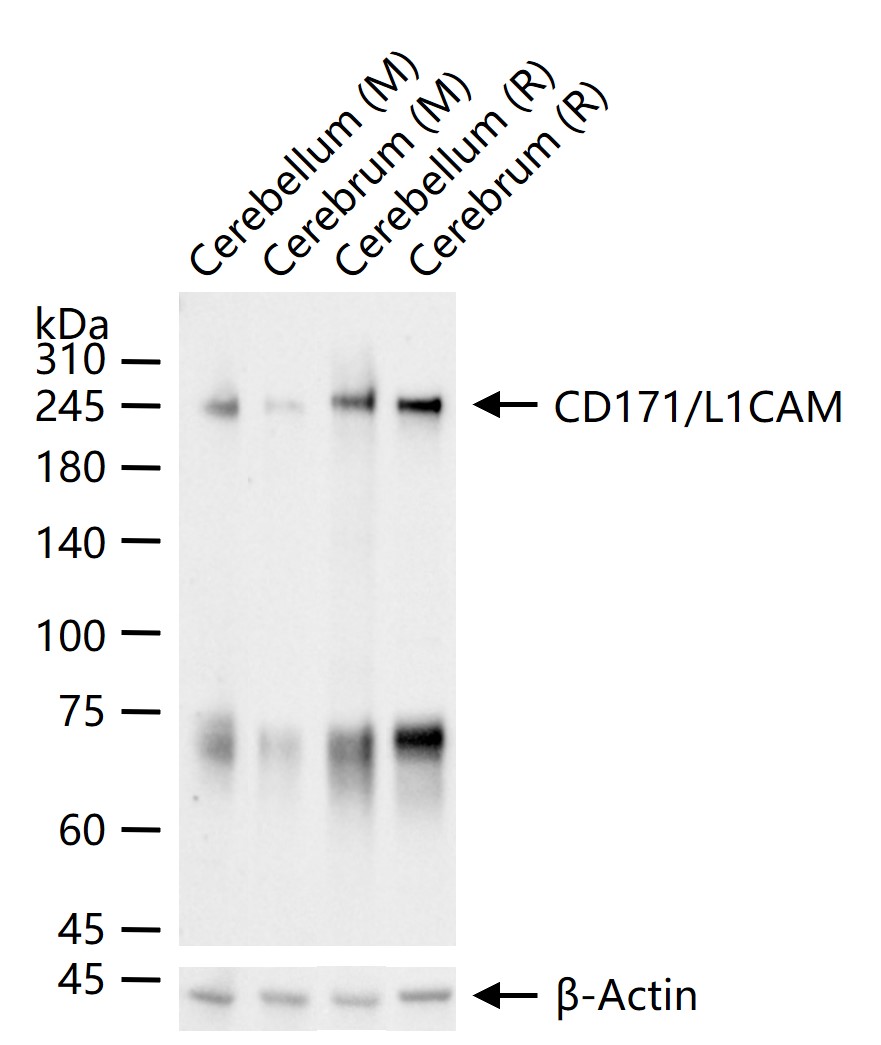
Figure 1. 25 ug total protein per lane of various lysates (see on figure) probed with CD171/L1CAM polyclonal antibody, unconjugated (SL22918R) at 1:1000 dilution and 4°C overnight incubation. Followed by conjugated secondary antibody incubation at r.t. for 60 min
Ordering & shipping
- Minimum order: 1 unit
- Lead time: varies with order quantity and specifications. Please consult your local distributor or our sales team for confirmation
- Payment: T/T 100% in advance; PayPal; Alibaba Trade Assurance
- Shipping: FedEx / DHL / UPS express; cold-chain packing available on request
- Price: USD, per unit (50ul / 100ul)
Partial purchase records(bought amounts latest5)
| Username | Quantity | bought time |
| Ia*** | 1 | 2026-07-30 |
| Da*** | 1 | 2026-07-26 |
| Ma*** | 1 | 2026-06-16 |
| Ja*** | 1 | 2026-05-01 |
| Be*** | 1 | 2026-03-23 |
User Comment(Total0User Comment Num)
- No comment


 +86 571 56623320

 SUNLONG BIOTECH


