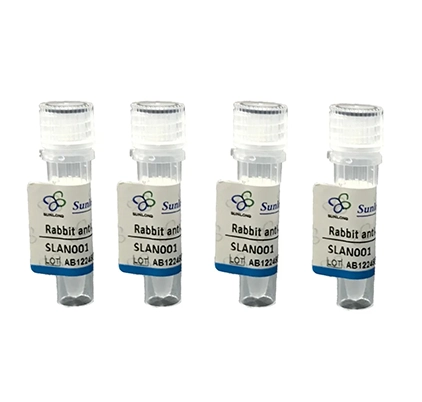
Rabbit Anti-CAT antibody
CATA_HUMAN; Catalase; EC:1.11.1.6. 催化酶;
All categories
View History [Clear]
Details
Product Name CAT Chinese Name 过氧化氢酶抗体 Alias CATA_HUMAN; Catalase; EC:1.11.1.6. Catalase; literatures Research Area Cell biology immunology Developmental biology Kinases and Phosphatases Immunogen Species Rabbit Clonality Polyclonal React Species Pig,Mouse,Rat Applications WB=1:500-2000 (Paraffin sections need antigen repair)
not yet tested in other applications.
optimal dilutions/concentrations should be determined by the end user.Theoretical molecular weight 58kDa Cellular localization cytoplasmic Form Liquid Concentration 1mg/ml immunogen Catalase natural protein from pig liver Lsotype IgG Purification affinity purified by Protein A Buffer Solution 1M TBS(pH7.4) with 1% BSA, 3% Proclin300 and 50% Glycerol. Storage Shipped at 4℃. Store at -20 °C for one year. Avoid repeated freeze/thaw cycles. Attention This product as supplied is intended for research use only, not for use in human, therapeutic or diagnostic applications. PubMed PubMed Product Detail This gene encodes catalase, a key antioxidant enzyme in the bodies defense against oxidative stress. Catalase is a heme enzyme that is present in the peroxisome of nearly all aerobic cells. Catalase converts the reactive oxygen species hydrogen peroxide to water and oxygen and thereby mitigates the toxic effects of hydrogen peroxide. Oxidative stress is hypothesized to play a role in the development of many chronic or late-onset diseases such as diabetes, asthma, Alzheimer's disease, systemic lupus erythematosus, rheumatoid arthritis, and cancers. Polymorphisms in this gene have been associated with decreases in catalase activity but, to date, acatalasemia is the only disease known to be caused by this gene. [provided by RefSeq, Oct 2009]
Function:
Occurs in almost all aerobically respiring organisms and serves to protect cells from the toxic effects of hydrogen peroxide. Promotes growth of cells including T-cells, B-cells, myeloid leukemia cells, melanoma cells, mastocytoma cells and normal and transformed fibroblast cells.
Subunit:
Homotetramer.
Subcellular Location:
Peroxisome.
Post-translational modifications:
The N-terminus is blocked.
DISEASE:
Defects in CAT are the cause of acatalasemia (ACATLAS) [MIM:614097]. A metabolic disorder characterized by absence of catalase activity in red cells and is often associated with ulcerating oral lesions.
Similarity:
Belongs to the catalase family.
SWISS:
O62839
Gene ID:
397568
Database links:Entrez Gene: 847 Human
Entrez Gene: 12359 Mouse
Omim: 115500 Human
SwissProt: P04040 Human
SwissProt: P24270 Mouse
Unigene: 502302 Human
Unigene: 4215 Mouse
Unigene: 3001 Rat
Catalase is an enzyme that catalyzes the decomposition of hydrogen peroxide into oxygen and water, and is present in the peroxisomes of cells. Catalase is a marker enzyme of peroxisomes, accounting for approximately 40% of the total peroxisomal enzymes. Catalase is present in all tissues of all known animals, especially at high concentrations in the liver. Catalase is used in the food industry to remove hydrogen peroxide from milk used in cheese production. Catalase is also used in food packaging to prevent food from being oxidized.
Catalase (CAT) is an enzyme-based scavenger, also known as catalase, and is a conjugated enzyme with iron porphyrin as its prosthetic group. It can promote the decomposition of H2O2 into molecular oxygen and water, scavenging hydrogen peroxide in the body, thereby protecting cells from H2O2 toxicity, and is one of the key enzymes of the biological defense system. The mechanism by which CAT acts on hydrogen peroxide is essentially the disproportionation of H2O2; two H2O2 molecules must successively encounter CAT and collide at the active center for the reaction to occur. The higher the H2O2 concentration, the faster the decomposition rate.
Catalase exists in almost all living organisms. It is ubiquitous in respiring organisms, mainly present in Botany chloroplasts, Mitochondrion, endoplasmic reticulum, and in the liver and red blood cells of animals, and its enzymatic activity provides the organism with an antioxidant defense mechanism. CAT is a heme enzyme, and different sources have different structures. Its activity level varies among different tissues. Hydrogen peroxide decomposes faster in the liver than in organs such as the brain or heart, precisely because of the high CAT content in the liver.
Catalase is used in the food industry to remove hydrogen peroxide from milk used to make cheese. Catalase is also used in food packaging to prevent food from being oxidized. In the textile industry, catalase is used to remove hydrogen peroxide from textiles to ensure that the finished product is free of peroxides. It is also used in the cleaning of contact lenses: after the lenses are soaked in a cleaning solution containing hydrogen peroxide, catalase is used to remove residual hydrogen peroxide before use. In recent years, catalase has begun to be used in the beauty industry. Some facial care products incorporate this enzyme and hydrogen peroxide in order to increase the cellular oxygen supply to the upper epidermal layer.Product Picture 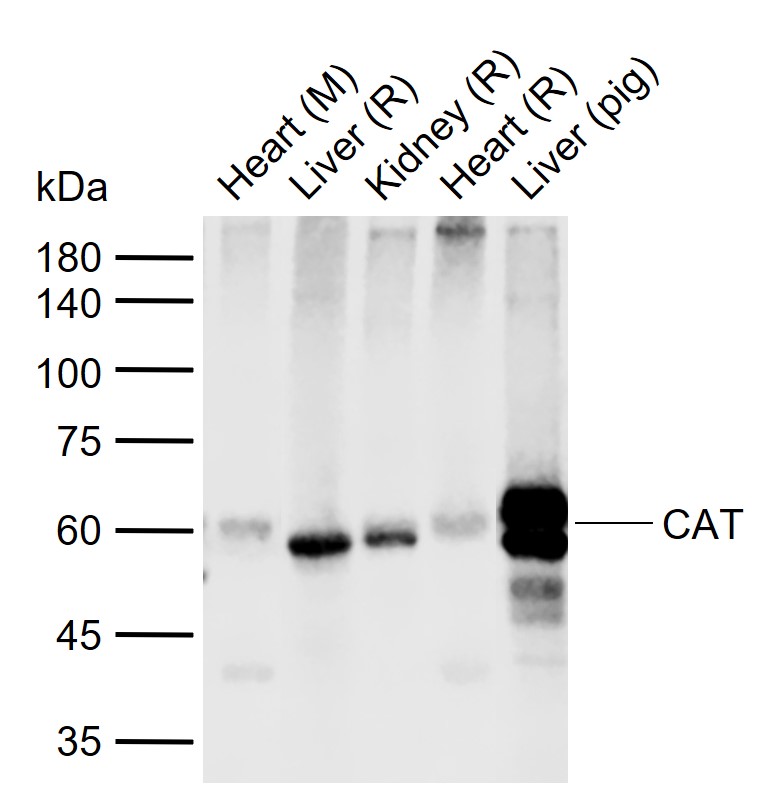 Sample:
Lane 1: Mouse Heart tissue lysates
Lane 2: Rat Liver tissue lysates
Lane 3: Rat Kidney tissue lysates
Lane 4: Rat Heart tissue lysates
Lane 5: Pig Liver tissue lysates
Primary: Anti-CAT (SL2302R) at 1/1000 dilution
Secondary: IRDye800CW Goat Anti-Rabbit IgG at 1/20000 dilution
Predicted band size: 58 kDa
Observed band size: 60 kDa
Ordering & shipping
- Minimum order: 1 unit
- Lead time: varies with order quantity and specifications. Please consult your local distributor or our sales team for confirmation
- Payment: T/T 100% in advance; PayPal; Alibaba Trade Assurance
- Shipping: FedEx / DHL / UPS express; cold-chain packing available on request
- Price: USD, per unit (50ul / 100ul)
Partial purchase records(bought amounts latest1)
| Username | Quantity | bought time |
| Ka*** | 1 | 2026-05-31 |
User Comment(Total0User Comment Num)
- No comment


 +86 571 56623320

 SUNLONG BIOTECH


