Rabbit Anti-COX10 antibody
Heme A farnesyltransferase; Heme O synthase; OTTMUSP00000006085; Protoheme IX farnesyltransferase, mitochondrial precursor; RP23-78H18.1; 2410004F01Rik; AU042636; Cytochrome c oxidase assembly protein; Cytochrome c oxidase subunit X; COX10_HUMAN; Protohem
All categories
View History [Clear]
Details
Product Name COX10 Chinese Name 细胞色素c氧化酶10抗体 Alias Heme A farnesyltransferase; Heme O synthase; OTTMUSP00000006085; Protoheme IX farnesyltransferase, mitochondrial precursor; RP23-78H18.1; 2410004F01Rik; AU042636; Cytochrome c oxidase assembly protein; Cytochrome c oxidase subunit X; COX10_HUMAN; Protoheme IX farnesyltransferase, mitochondrial; Heme O synthase. Research Area Tumour Cell biology Signal transduction Channel protein The new supersedes the old Mitochondrion Immunogen Species Rabbit Clonality Polyclonal React Species Human,Mouse(predicted:Rat) Applications WB=1:500-2000,IHC-P=1:100-500,IHC-F=1:100-500,IF=1:100-500 (Paraffin sections need antigen repair)
not yet tested in other applications.
optimal dilutions/concentrations should be determined by the end user.Theoretical molecular weight 49kDa Cellular localization cytoplasmic Mitochondrion Form Liquid Concentration 1mg/ml immunogen KLH conjugated synthetic peptide derived from human COX10: 161-260/443 Lsotype IgG Purification affinity purified by Protein A Buffer Solution Preservative: 15mM Sodium Azide, Constituents: 1% BSA, 1M PBS, pH 7.4 Storage Shipped at 4℃. Store at -20 °C for one year. Avoid repeated freeze/thaw cycles. Attention This product as supplied is intended for research use only, not for use in human, therapeutic or diagnostic applications. PubMed PubMed Product Detail Cytochrome c oxidase (COX), the terminal component of the mitochondrial respiratory chain, catalyzes the electron transfer from reduced cytochrome c to oxygen. This component is a heteromeric complex consisting of 3 catalytic subunits encoded by mitochondrial genes and multiple structural subunits encoded by nuclear genes. The mitochondrially-encoded subunits function in electron transfer, and the nuclear-encoded subunits may function in the regulation and assembly of the complex. This nuclear gene encodes heme A:farnesyltransferase, which is not a structural subunit but required for the expression of functional COX and functions in the maturation of the heme A prosthetic group of COX. This protein is predicted to contain 7-9 transmembrane domains localized in the mitochondrial inner membrane. A gene mutation, which results in the substitution of a lysine for an asparagine (N204K), is identified to be responsible for cytochrome c oxidase deficiency. In addition, this gene is disrupted in patients with CMT1A (Charcot-Marie-Tooth type 1A) duplication and with HNPP (hereditary neuropathy with liability to pressure palsies) deletion. [provided by RefSeq, Jul 2008]
Function:
Converts protoheme IX and farnesyl diphosphate to heme O.
Subcellular Location:
Mitochondrion membrane; Multi-pass membrane protein.
DISEASE:
Mitochondrial complex IV deficiency (MT-C4D) [MIM:220110]: A disorder of the mitochondrial respiratory chain with heterogeneous clinical manifestations, ranging from isolated myopathy to severe multisystem disease affecting several tissues and organs. Features include hypertrophic cardiomyopathy, hepatomegaly and liver dysfunction, hypotonia, muscle weakness, exercise intolerance, developmental delay, delayed motor development and mental retardation. Some affected individuals manifest a fatal hypertrophic cardiomyopathy resulting in neonatal death. A subset of patients manifest Leigh syndrome. Note=The disease is caused by mutations affecting the gene represented in this entry.
Leigh syndrome (LS) [MIM:256000]: An early-onset progressive neurodegenerative disorder characterized by the presence of focal, bilateral lesions in one or more areas of the central nervous system including the brainstem, thalamus, basal ganglia, cerebellum and spinal cord. Clinical features depend on which areas of the central nervous system are involved and include subacute onset of psychomotor retardation, hypotonia, ataxia, weakness, vision loss, eye movement abnormalities, seizures, and dysphagia. Note=The disease is caused by mutations affecting the gene represented in this entry.
Similarity:
Belongs to the UbiA prenyltransferase family.
SWISS:
Q12887
Gene ID:
1352
Database links:Entrez Gene: 417329 Chicken
Entrez Gene: 1352 Human
Entrez Gene: 70383 Mouse
Entrez Gene: 553384 Zebrafish
Omim: 602125 Human
SwissProt: Q12887 Human
SwissProt: Q8CFY5 Mouse
Unigene: 462278 Human
Unigene: 340211 Mouse
Product Picture 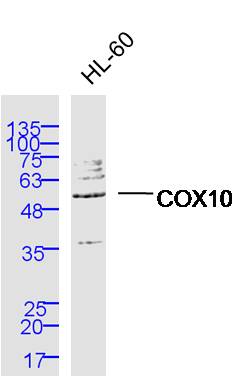 Sample: HL-60 Cell (Human) Lysate at 40 ug
Primary: Anti-COX10 (SL23098R) at 1/300 dilution
Secondary: IRDye800CW Goat Anti-Rabbit IgG at 1/20000 dilution
Predicted band size: 49 kD
Observed band size: 50 kD
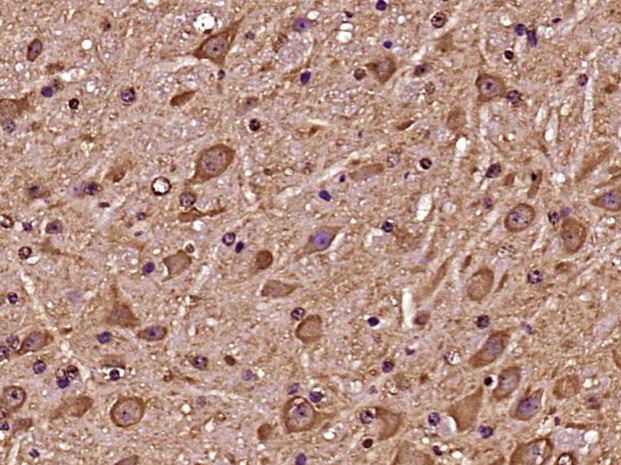 Paraformaldehyde-fixed, paraffin embedded (Mouse brain); Antigen retrieval by boiling in sodium citrate buffer (pH6.0) for 15min; Block endogenous peroxidase by 3% hydrogen peroxide for 20 minutes; Blocking buffer (normal goat serum) at 37°C for 30min; Antibody incubation with (COX10) Polyclonal Antibody, Unconjugated (SL23098R) at 1:400 overnight at 4°C, followed by operating according to SP Kit(Rabbit) (sp-0023) instructionsand DAB staining.
Ordering & shipping
- Minimum order: 1 unit
- Lead time: varies with order quantity and specifications. Please consult your local distributor or our sales team for confirmation
- Payment: T/T 100% in advance; PayPal; Alibaba Trade Assurance
- Shipping: FedEx / DHL / UPS express; cold-chain packing available on request
- Price: USD, per unit (50ul / 100ul)
Partial purchase records(bought amounts latest6)
| Username | Quantity | bought time |
| Pa*** | 1 | 2026-09-03 |
| Ha*** | 1 | 2026-08-20 |
| Xa*** | 1 | 2026-06-08 |
| Th*** | 1 | 2026-05-07 |
| Mi*** | 1 | 2026-04-13 |
User Comment(Total0User Comment Num)
- No comment


 +86 571 56623320

 SUNLONG BIOTECH


