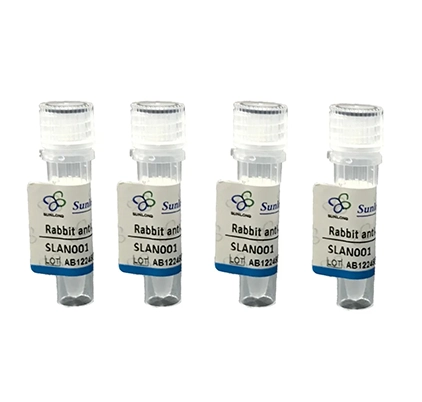
Rabbit Anti-phospho-MCK10 (Tyr513)antibody
MCK10 (phospho Y513); p-MCK10 (phospho Y513); CAK; CD167a; DDR1CD 167; CD167; Cell adhesion kinase; DDR 1; DDR; DDR1; Discoidin domain receptor; Discoidin receptor tyrosine kinase isoform a; EDDR 1; Epithelial discoidin domain receptor 1; Epithelial speci
All categories
View History [Clear]
Details
Product Name phospho-MCK10 (Tyr513) Chinese Name 磷酸化上皮盘状结构域受体1抗体 Alias MCK10 (phospho Y513); p-MCK10 (phospho Y513); CAK; CD167a; DDR1CD 167; CD167; Cell adhesion kinase; DDR 1; DDR; DDR1; Discoidin domain receptor; Discoidin receptor tyrosine kinase isoform a; EDDR 1; Epithelial discoidin domain receptor 1; Epithelial specific receptor kinase; Mammarian carcinoma kinase 10; Neuroepithelial tyrosine kinase; Neurotrophic tyrosine kinase receptor type 4; NTRK 4; PTK 3; PTK 3A protein tyrosine kinase 3A; Receptor tyrosine kinase NEP; RTK 6; TRK E; Tyrosine kinase receptor E; DDR1_HUMAN. Product Type Phosphorylated anti Research Area Tumour Cardiovascular Cell biology Neurobiology Signal transduction Kinases and Phosphatases Channel protein Immunogen Species Rabbit Clonality Polyclonal React Species Human,Mouse,Rat(predicted:Pig,Cow,Horse) Applications WB=1:500-2000 (Paraffin sections need antigen repair)
not yet tested in other applications.
optimal dilutions/concentrations should be determined by the end user.Theoretical molecular weight 99kDa Cellular localization The cell membrane Secretory protein Form Liquid Concentration 1mg/ml immunogen KLH conjugated synthesised phosphopeptide derived from human MCK10 around the phosphorylation site of Tyr513: PA(p-Y)RL Lsotype IgG Purification affinity purified by Protein A Buffer Solution Human,Mouse,Rat(predicted:Pig,Cow,Horse)1M TBS(pH7.4) with 1% BSA, Human,Mouse,Rat(predicted:Pig,Cow,Horse)3% Proclin300 and 50% Glycerol. Storage Shipped at 4℃. Store at -20 °C for one year. Avoid repeated freeze/thaw cycles. Attention This product as supplied is intended for research use only, not for use in human, therapeutic or diagnostic applications. PubMed PubMed Product Detail Receptor tyrosine kinases (RTKs) play a key role in the communication of cells with their microenvironment. These molecules are involved in the regulation of cell growth, differentiation and metabolism. The protein encoded by this gene is a RTK that is widely expressed in normal and transformed epithelial cells and is activated by various types of collagen. This protein belongs to a subfamily of tyrosine kinase receptors with a homology region to the Dictyostelium discoideum protein discoidin I in their extracellular domain. Its autophosphorylation is achieved by all collagens so far tested (type I to type VI). In situ studies and Northern-blot analysis showed that expression of this encoded protein is restricted to epithelial cells, particularly in the kidney, lung, gastrointestinal tract, and brain. In addition, this protein is significantly over-expressed in several human tumors from breast, ovarian, esophageal, and pediatric brain. This gene is located on chromosome 6p21.3 in proximity to several HLA class I genes. Alternative splicing of this gene results in multiple transcript variants.
Function:
Tyrosine kinase that functions as cell surface receptor for fibrillar collagen and regulates cell attachment to the extracellular matrix, remodeling of the extracellular matrix, cell migration, differentiation, survival and cell proliferation. Collagen binding triggers a signaling pathway that involves SRC and leads to the activation of MAP kinases. Regulates remodeling of the extracellular matrix by up-regulation of the matrix metalloproteinases MMP2, MMP7 and MMP9, and thereby facilitates cell migration and wound healing. Required for normal blastocyst implantation during pregnancy, for normal mammary gland differentiation and normal lactation. Required for normal ear morphology and normal hearing (By similarity). Promotes smooth muscle cell migration, and thereby contributes to arterial wound healing. Also plays a role in tumor cell invasion. Phosphorylates PTPN11.
Subunit:
Homodimer. Interacts (via PPxY motif) with WWC1 (via WW domains) in a collagen-regulated manner. Forms a tripartite complex with WWC1 and PRKCZ, but predominantly in the absence of collagen. Interacts (tyrosine phosphorylated) with SHC1. Interacts with SRC. Interacts with MYH9. Interacts with CDH1. Interacts with PTPN11. Interacts with NCK2.
Subcellular Location:
Isoform 1: Cell membrane; Single-pass type I membrane protein.
Isoform 2: Cell membrane; Single-pass type I membrane protein.
Isoform 3: Secreted (Potential).
Isoform 4: Cell membrane; Single-pass type I membrane protein.
Tissue Specificity:
Detected in T-47D, MDA-MB-175 and HBL-100 breast carcinoma cells, A-431 epidermoid carcinoma cells, SW48 and SNU-C2B colon carcinoma cells and Hs 294T melanoma cells (at protein level). Expressed at low levels in most adult tissues and is highest in the brain, lung, placenta and kidney. Lower levels of expression are detected in melanocytes, heart, liver, skeletal muscle and pancreas. Abundant in breast carcinoma cell lines. In the colonic mucosa, expressed in epithelia but not in the connective tissue of the lamina propria. In the thyroid gland, expressed in the epithelium of the thyroid follicles. In pancreas, expressed in the islets of Langerhans cells, but not in the surrounding epithelial cells of the exocrine pancreas. In kidney, expressed in the epithelia of the distal tubules. Not expressed in connective tissue, endothelial cells, adipose tissue, muscle cells or cells of hematopoietic origin.
Post-translational modifications:
Autophosphorylated in response to fibrillar collagen binding.
Similarity:
Belongs to the protein kinase superfamily. Tyr protein kinase family. Insulin receptor subfamily.
Contains 1 F5/8 type C domain.
Contains 1 protein kinase domain.
SWISS:
Q08345
Gene ID:
780
Database links:Entrez Gene: 780 Human
Entrez Gene: 12305 Mouse
Omim: 600408 Human
SwissProt: Q08345 Human
SwissProt: Q03146 Mouse
Unigene: 631988 Human
Unigene: 5021 Mouse
Unigene: 7807 Rat
Product Picture
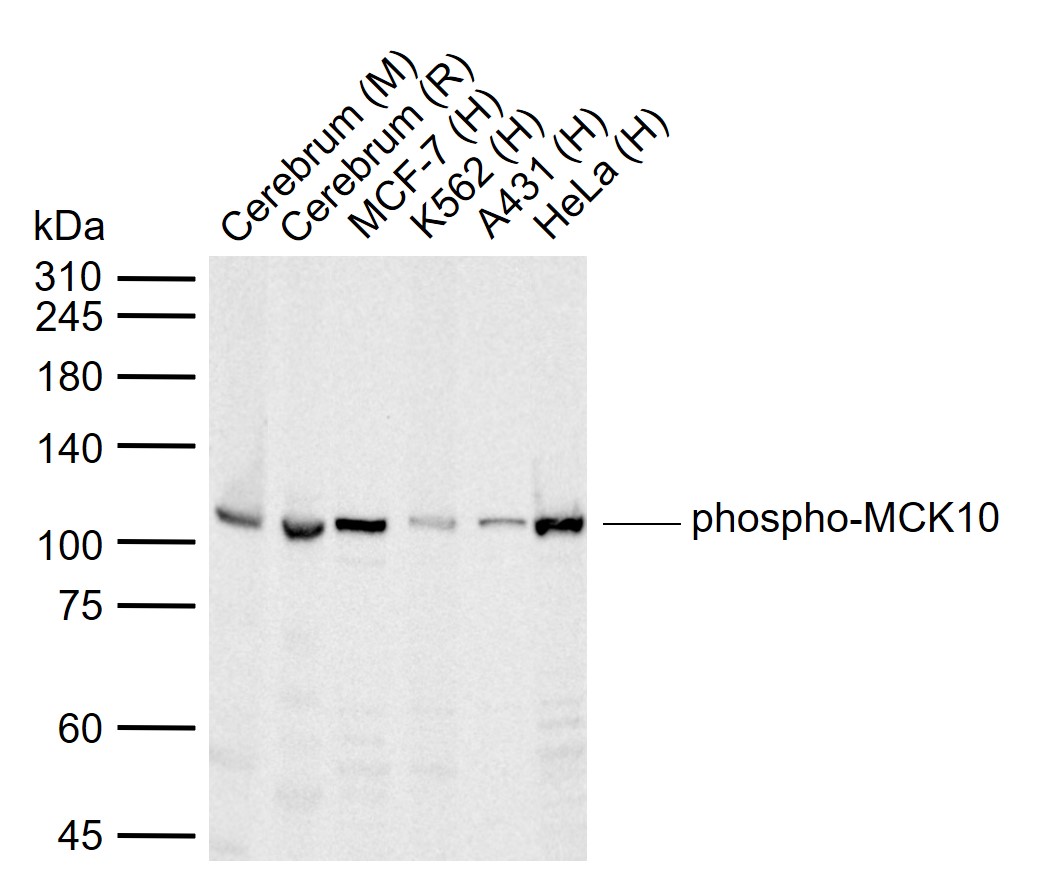
Figure 1. Sample: Lane 1: Mouse Cerebrum tissue lysates Lane 2: Rat Cerebrum tissue lysates Lane 3: Human MCF-7 cell lysates Lane 4: Human K562 cell lysates Lane 5: Human A431 cell lysates Lane 6: Human HeLa cell lysates Primary: Anti-phospho-MCK10 (Tyr513) (SL6269R) at 1/1000 dilution Secondary: IRDye800CW Goat Anti-Rabbit IgG at 1/20000 dilution Predicted band size: 99 kDa Observed band size: 105 kDa
Ordering & shipping
- Minimum order: 1 unit
- Lead time: varies with order quantity and specifications. Please consult your local distributor or our sales team for confirmation
- Payment: T/T 100% in advance; PayPal; Alibaba Trade Assurance
- Shipping: FedEx / DHL / UPS express; cold-chain packing available on request
- Price: USD, per unit (50ul / 100ul)
Partial purchase records(bought amounts latest1)
| Username | Quantity | bought time |
| Pa*** | 1 | 2026-06-08 |
User Comment(Total0User Comment Num)
- No comment


 +86 571 56623320

 SUNLONG BIOTECH


