Details
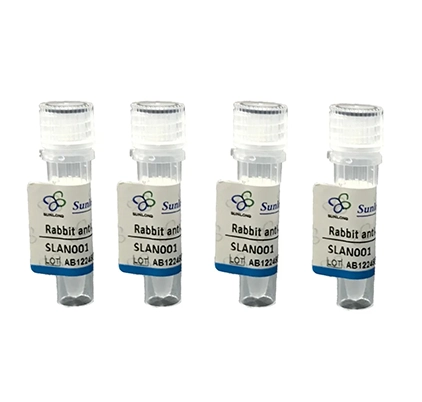
Product Name Caveolin-2 Chinese Name 细胞质膜微囊蛋白-2抗体 Alias CAV; CAV2; CAV2_HUMAN; Caveolae protein 20 kD; Caveolin 2; Caveolin2; Caveolin 2 isoform a and b; Caveolin 2 isoform c; Caveolin-2; MGC12294. Research Area Cardiovascular Cell biology Signal transduction Apoptosis Immunogen Species Rabbit Clonality Polyclonal React Species Human,Rat(predicted:Mouse) Applications IHC-P=1:100-500,IHC-F=1:100-500,ICC/IF=1:100-500,IF=1:100-500 (Paraffin sections need antigen repair)
not yet tested in other applications.
optimal dilutions/concentrations should be determined by the end user.Theoretical molecular weight 18kDa Cellular localization The nucleus cytoplasmic The cell membrane Form Liquid Concentration 1mg/ml immunogen KLH conjugated synthetic peptide derived from human Caveolin-2: 41-140/162 Lsotype IgG Purification affinity purified by Protein A Buffer Solution Human,Rat(predicted:Mouse)1M TBS(pH7.4) with 1% BSA, Human,Rat(predicted:Mouse)3% Proclin300 and 50% Glycerol. Storage Shipped at 4℃. Store at -20 °C for one year. Avoid repeated freeze/thaw cycles. Attention This product as supplied is intended for research use only, not for use in human, therapeutic or diagnostic applications. PubMed PubMed Product Detail May act as a scaffolding protein within caveolar membranes. Interacts directly with G-protein alpha subunits and can functionally regulate their activity. Acts as an accessory protein in conjunction with CAV1 in targeting to lipid rafts and driving caveolae formation. The Ser-36 phosphorylated form has a role in modulating mitosis in endothelial cells. Positive regulator of cellular mitogenesis of the MAPK signaling pathway. Required for the insulin-stimulated nuclear translocation and activation of MAPK1 and STAT3, and the subsequent regulation of cell cycle progression.
Function:
May act as a scaffolding protein within caveolar membranes. Interacts directly with G-protein alpha subunits and can functionally regulate their activity. Acts as an accessory protein in conjunction with CAV1 in targeting to lipid rafts and driving caveolae formation. The Ser-36 phosphorylated form has a role in modulating mitosis in endothelial cells. Positive regulator of cellular mitogenesis of the MAPK signaling pathway. Required for the insulin-stimulated nuclear translocation and activation of MAPK1 and STAT3, and the subsequent regulation of cell cycle progression.
Subunit:
Monomer or homodimer.
Subcellular Location:
Nucleus. Cytoplasm. Golgi apparatus membrane; Peripheral membrane protein. Cell membrane; Peripheral membrane protein. Membrane, caveola; Peripheral membrane protein.
Tissue Specificity:
Expressed in endothelial cells, smooth muscle cells, skeletal myoblasts and fibroblasts.
Post-translational modifications:
Phosphorylated on serine and tyrosine residues. CAV1 promotes phosphorylation on Ser-23 which then targets the complex to the plasma membrane, lipid rafts and caveolae. Phosphorylation on Ser-36 appears to modulate mitosis in endothelial cells (By similarity). Phosphorylation on both Tyr-19 and Tyr-27 is required for insulin-induced 'Ser-727' phosphorylation of STAT3 and its activation. Phosphorylation on Tyr-19 is required for insulin-induced phosphorylation of MAPK1 and DNA binding of STAT3. Tyrosine phosphorylation is induced by both EGF and insulin.
Similarity:
Belongs to the caveolin family.
SWISS:
P51636
Gene ID:
858
Database links:Entrez Gene: 858 Human
Entrez Gene: 12390 Mouse
Omim: 601048 Human
SwissProt: P51636 Human
SwissProt: Q9WVC3 Mouse
Unigene: 212332 Human
Unigene: 603096 Human
Unigene: 396075 Mouse
Unigene: 81070 Rat
Caveolin is an important suppressor in cell growth-related signaling pathways and tumor development. Caveolae are specialized membrane structures within the cell membrane that participate in various cellular activities, including molecular transport, cell adhesion, and signal transduction. Caveolin-1 is an important structural protein in caveolae, inhibits cell growth, and interacts with signaling molecules associated with the development and progression of various human tumors. Caveolin acts as a scaffolding protein in the integration of signal transduction. Caveolins constitute a protein family and are the major structural components of hairpin-like domains in the plasma membrane. Caveolin acts as a scaffolding protein in the integration of signal transduction. To date, three caveolins (Caveolin-1, 2, and 3) have been identified, which have different tissue distributions.Product Picture
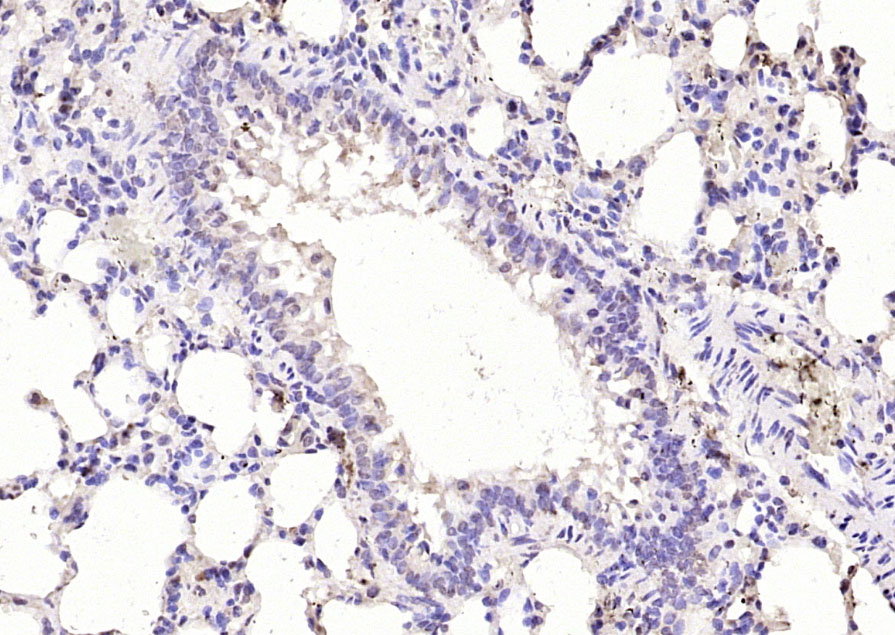
Figure 1. Paraformaldehyde-fixed, paraffin embedded (rat lung); Antigen retrieval by boiling in sodium citrate buffer (pH6.0) for 15min; Block endogenous peroxidase by 3% hydrogen peroxide for 20 minutes; Blocking buffer (normal goat serum) at 37°C for 30min; Antibody incubation with (Caveolin-2) Polyclonal Antibody, Unconjugated (SL6310R) at 1:200 overnight at 4°C, followed by operating according to SP Kit(Rabbit) (sp-0023) instructionsand DAB staining
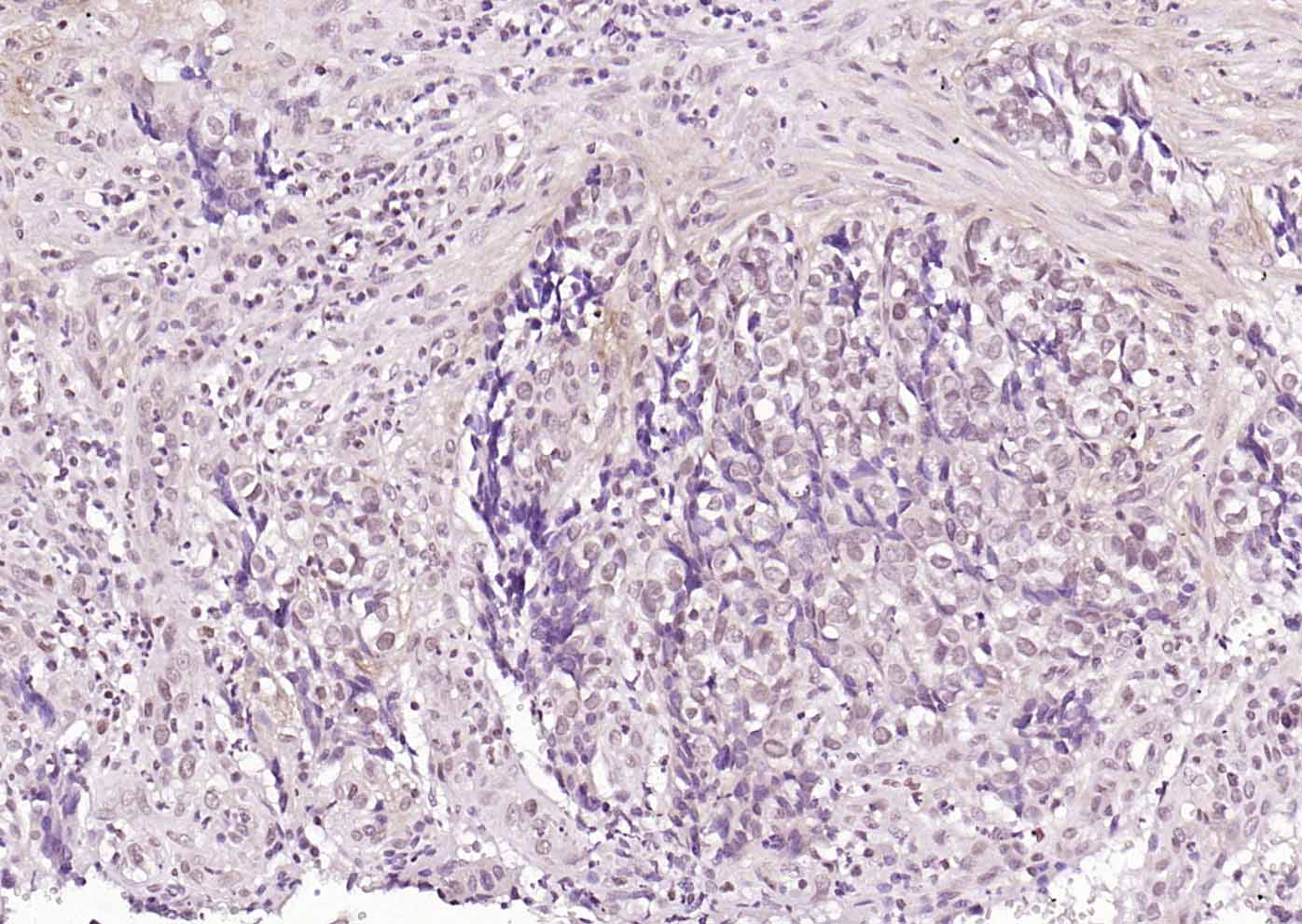
Figure 2. Paraformaldehyde-fixed, paraffin embedded (Human esophageal cancer); Antigen retrieval by boiling in sodium citrate buffer (pH6.0) for 15min; Block endogenous peroxidase by 3% hydrogen peroxide for 20 minutes; Blocking buffer (normal goat serum) at 37°C for 30min; Incubation with (Caveolin-2) Polyclonal Antibody, Unconjugated (SL6310R) at 1:200 overnight at 4°C, followed by operating according to SP Kit(Rabbit) (sp-0023) instructionsand DAB staining
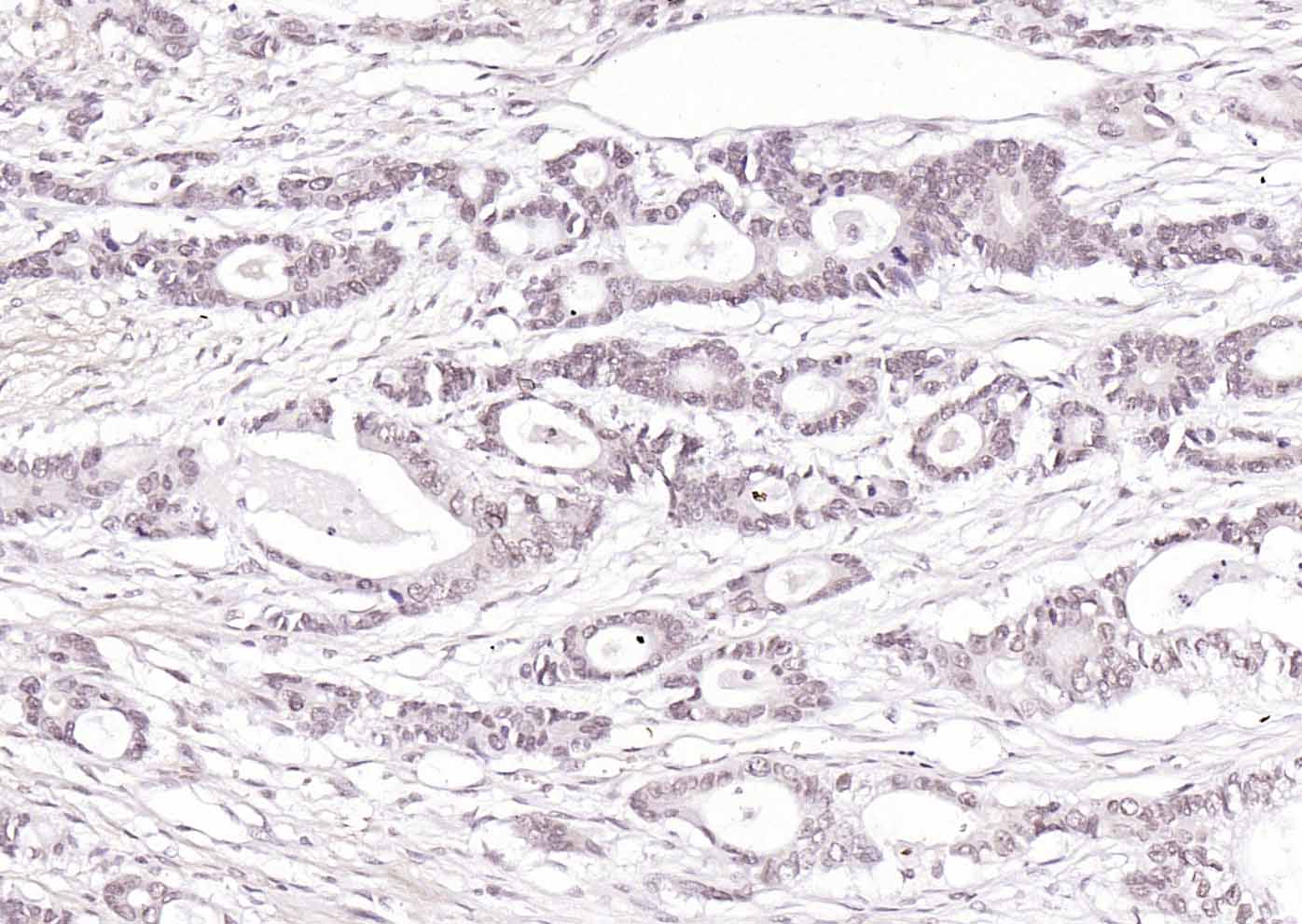
Figure 3. Paraformaldehyde-fixed, paraffin embedded (human rectal carcinoma); Antigen retrieval by boiling in sodium citrate buffer (pH6.0) for 15min; Block endogenous peroxidase by 3% hydrogen peroxide for 20 minutes; Blocking buffer (normal goat serum) at 37°C for 30min; Incubation with (Caveolin-2) Polyclonal Antibody, Unconjugated (SL6310R) at 1:200 overnight at 4°C, followed by operating according to SP Kit(Rabbit) (sp-0023) instructionsand DAB staining
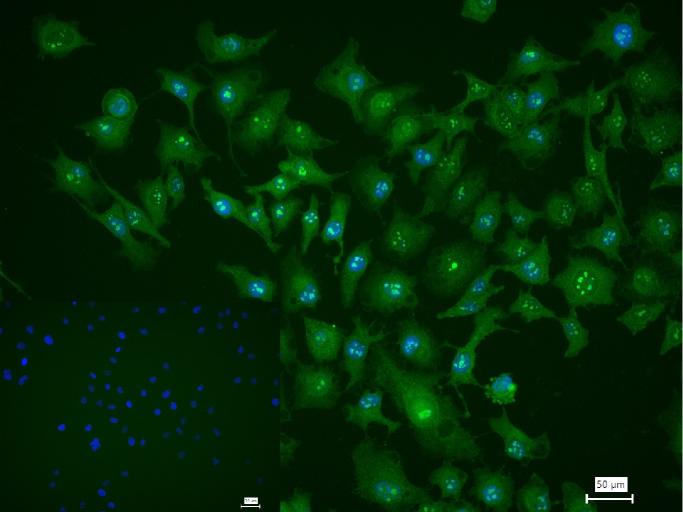
Figure 4. 4% Paraformaldehyde-fixed HUVEC (H) cell; Triton X-100 at r.t. for 20 min; Antibody incubation with (Caveolin-2) polyclonal Antibody, unconjugated (SL6310R) 1:200, 90 min at 37°C; followed by conjugated Goat Anti-Rabbit IgG antibody (green, SL0295G-FITC) at 37°C for 90 min, DAPI (blue, C02-04002) was used to stain the cell nuclei. PBS instead of the primary antibody was used as the blank control
Ordering & shipping
- Minimum order: 1 unit
- Lead time: varies with order quantity and specifications. Please consult your local distributor or our sales team for confirmation
- Payment: T/T 100% in advance; PayPal; Alibaba Trade Assurance
- Shipping: FedEx / DHL / UPS express; cold-chain packing available on request
- Price: USD, per unit (50ul / 100ul)
Partial purchase records(bought amounts latest4)
| Username | Quantity | bought time |
| Ja*** | 1 | 2026-09-08 |
| Wi*** | 1 | 2026-06-15 |
| Ed*** | 1 | 2026-06-12 |
| Xa*** | 1 | 2026-04-22 |
User Comment(Total0User Comment Num)
- No comment


 +86 571 56623320

 SUNLONG BIOTECH


